
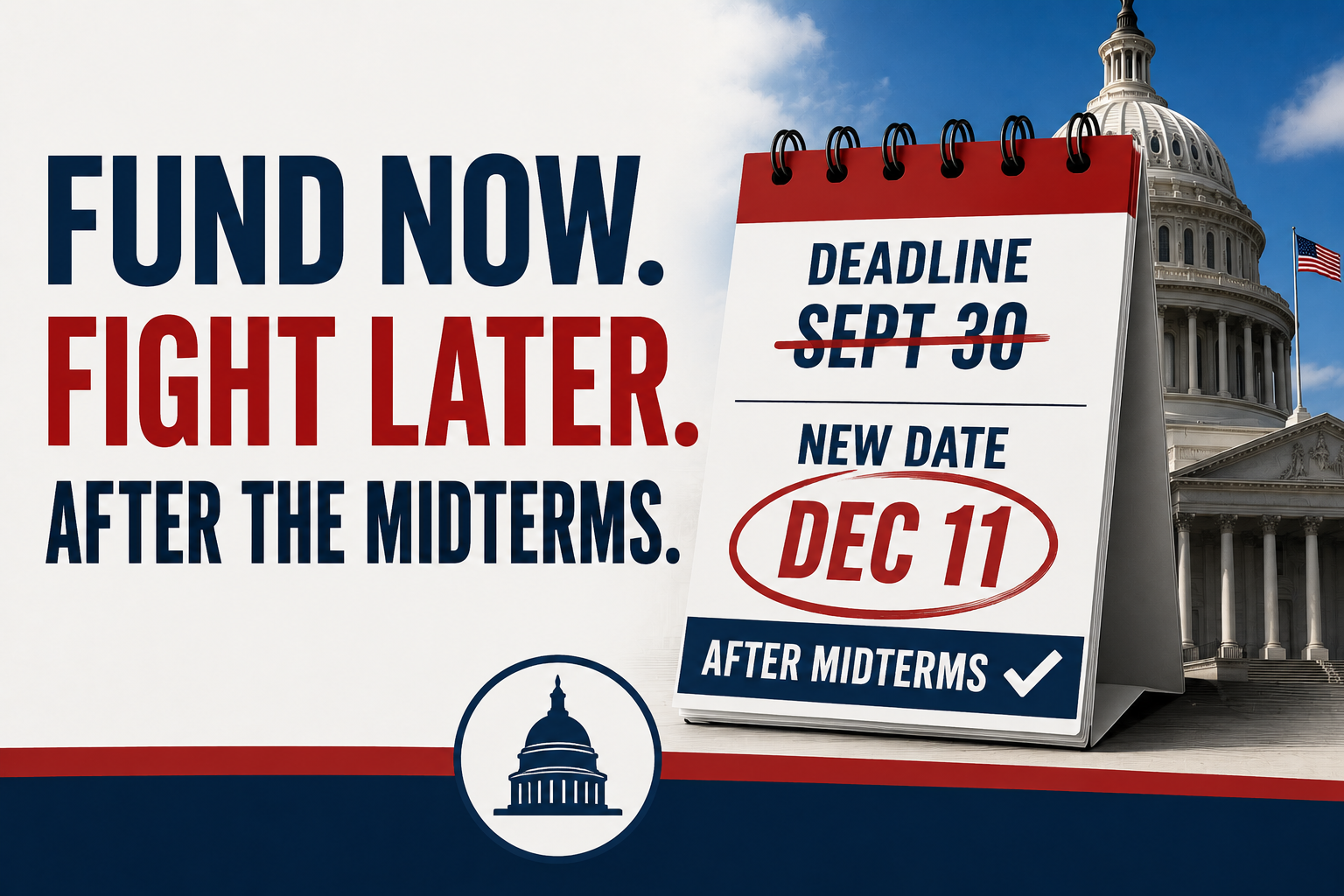
Today, the House is voting on a bill that has almost nothing to do with policy and everything to do with timing. The actual government funding deadline is not until September 30, a full month away. Lawmakers are voting weeks early anyway, on a bill that would extend current spending levels through December 11, and the reason is not complicated once you see the calendar next to it. December 11 is safely after the November midterms. Late September is not.
The short answer: yes, the timing is deliberate, and it is not really about the money. Both parties have strong incentive to keep a shutdown fight as far away from Election Day as possible, since being blamed for closing the government right before voters go to the polls tends to be politically costly. None of this, importantly, would actually stop an election from happening.
What is actually happening in Congress today
The bill up for a vote is a continuing resolution, often shortened to a CR, which is Congress’s way of keeping the government funded at existing levels for a set period without passing the full slate of annual appropriations bills. Instead of resolving the underlying budget disputes, a CR just buys more time. Today’s version, already passed by the Senate, would extend funding through December 11, roughly four weeks earlier than the actual deadline requires. It needs a two thirds majority to pass under the expedited process being used to bring it to the floor. The White House has publicly urged its passage, with officials saying the president opposes what they called another “futile” shutdown fight.
Why push the fight to December instead of solving it now
Senate Appropriations Committee leaders from both parties have described this bill as a deliberate effort to keep spending disputes from colliding with the campaign season. Committee Democrats, including ranking member Patty Murray, framed their support around specific provisions they wanted included, while Republican leadership and the White House framed it around simply avoiding disruption. Whatever each side’s stated reason, the practical effect is the same: instead of a possible shutdown fight landing in the final weeks before voters cast ballots, it now lands in mid December, well after results are certified.
This is not a new instinct in Washington. Government shutdowns have shown up near election season before, and the political fallout has generally landed on whichever side voters decided to blame. The 35 day shutdown that stretched from December 2018 into January 2019, still the longest in American history, unfolded just after that year’s midterms rather than before them, which is itself often cited as a reason parties prefer to have these fights land after voters have already spoken rather than before.
Would a shutdown actually affect your vote
Here is the part worth being clear about: a federal government shutdown would not cancel an election, close a polling place, or stop your ballot from being counted. Elections in the United States are administered and funded primarily by state and county governments, not by the federal agencies that go dark during a funding lapse.
That said, a shutdown is not entirely irrelevant to elections either. Federal support functions that some local election offices rely on can be disrupted. The Department of Homeland Security has stated it would suspend cybersecurity and physical security assessments for local election offices if funding lapses, work normally carried out by the Cybersecurity and Infrastructure Security Agency. The federal Election Assistance Commission, which helps certify voting equipment and guides local officials on using federal grant money, can also become harder to reach during a lapse. None of that stops an election from happening, but it can mean less federal support reaching local election offices at exactly the moment they might want it most.
Why this matters to voters
If you hear shutdown talk resurface in December, the headline that will actually matter to you as a voter is not whether polling places will open. They will. What is worth watching instead is which party owns the blame if a fight does eventually happen, since that political dynamic, more than the funding mechanics themselves, tends to be what actually follows lawmakers into their next election. For now, today’s vote is Congress agreeing, across party lines, that neither side particularly wants to find out what that blame game looks like with midterm ballots already in voters’ hands.
Watch
Senate approves funding bill to avoid a shutdown before the election
References
House to Vote on Government Funding Bill (WMAL)
Senators Unveil Bipartisan Funding Bill to Avert Shutdown Until After Midterms (Common Dreams)
A government shutdown could still happen, with consequences for elections (Votebeat)
2026 United States federal government shutdowns (Wikipedia)

- Why Is Congress Racing to Fund the Government Before the Midterms? - August 31, 2026
- Can the President Cancel or Postpone an Election? - August 10, 2026
- Trump Just Taxed 60 Countries. Here Is What That Costs You. - July 24, 2026