
On April 28, 2026, the US Department of Justice announced the indictment of Dr. David M. Morens, 78, a former senior advisor at the National Institute of Allergy and Infectious Diseases (NIAID). The charges against him are federal: conspiracy against the United States, destruction and falsification of records in a federal investigation, and concealment of federal records. The DOJ alleged he was part of a scheme to evade Freedom of Information Act requests tied directly to COVID-19 research grants. This indictment did not emerge from nowhere. It is the culmination of a two-year congressional investigation that reviewed more than one million pages of documents, held 25 hearings, and produced a 500-page final report. That investigation raised serious questions about what the NIH knew, what it hid, and how US taxpayer money funded research in Wuhan, China, that some officials now believe may be connected to the origin of the pandemic. This article presents the full factual record of the COVID cover-up NIH investigation: the funding trail, the deleted records, the hidden emails, the congressional findings, the federal charges, and what NIH itself says in response. Because this is a contested topic, both the congressional findings and the countervailing evidence are presented here. Readers can assess the facts and draw their own conclusions.
What Is the NIH and Why Does Its COVID Role Matter?
The National Institutes of Health is the primary federal biomedical research funding agency in the United States, with an annual budget of approximately $48 billion. It operates under the Department of Health and Human Services and is made up of 27 institutes and centers, including the National Institute of Allergy and Infectious Diseases (NIAID), which Dr. Anthony Fauci directed from 1984 until his retirement in December 2022.
A peer-reviewed analysis published in Open Forum Infectious Diseases (Oxford Academic) by researchers at the University of Virginia found that the NIH disbursed more than $4 billion in funding to large consortiums and clinical trials to develop COVID-19 diagnostics, therapeutics, and vaccines. Approximately 56% of all NIH COVID-19 funding went to vaccine and therapeutic development. This scale of investment makes transparency and accountability in how those funds were allocated and overseen a matter of direct public interest.
At the center of the COVID cover-up NIH investigation is a much smaller grant: a $3.75 million, five-year award the NIH made in 2014 to EcoHealth Alliance, a New York-based nonprofit, to study the risk of bat coronavirus emergence in China. Some of that work was subcontracted to the Wuhan Institute of Virology. That single grant became the thread congressional investigators pulled for two years.
What Is Gain-of-Function Research and Why Was It Controversial?
According to the Congressional Research Service’s July 2025 report on oversight of gain-of-function research, gain-of-function (GOF) research refers to studies that alter an organism to give it new or enhanced abilities, including increased transmissibility, pathogenicity, or host range. In the context of virus research, GOF experiments can involve engineering viruses so they spread more easily or infect new species, with the stated scientific goal of understanding how pandemics might emerge and how to prepare countermeasures against them.
Concerns over GOF research emerged prominently in 2011 and 2012 around NIH-funded studies on the H5N1 avian influenza virus. These concerns, combined with a series of laboratory biosafety incidents, led the White House Office of Science and Technology Policy in October 2014 to issue a pause on selected GOF research involving influenza, MERS, and SARS viruses. The pause affected 18 federally funded research projects.
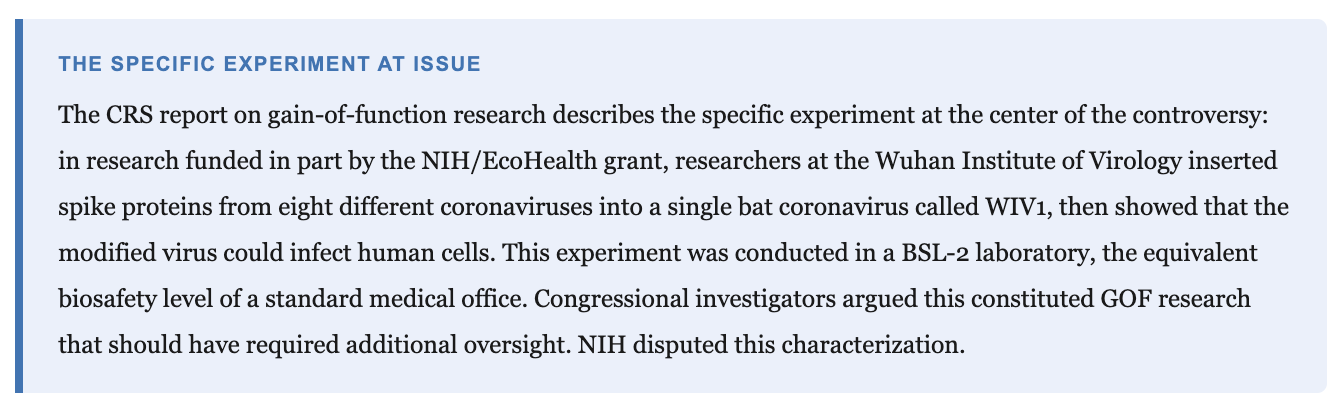
What makes the EcoHealth Alliance grant significant to this investigation is the question of whether it should have been captured by that 2014 pause. A separate CRS report on global pandemics and GOF research confirmed that in testimony to the House Select Committee on the Coronavirus Pandemic, NIH concluded the EcoHealth research did not meet the criteria of the 2014 pause. Congressional Republicans disputed that conclusion.
What the Federal Indictment Actually Says
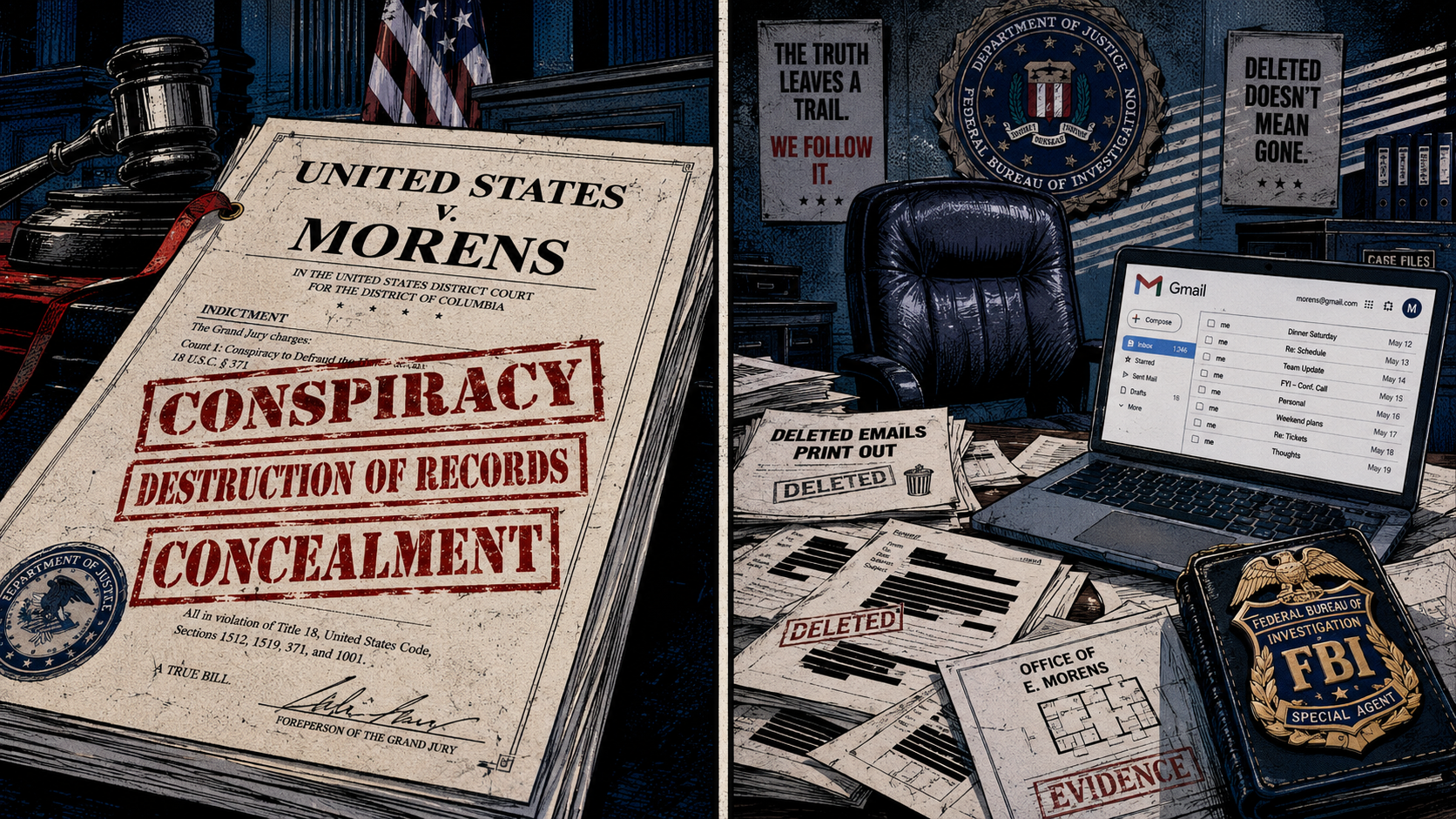
According to the DOJ’s official press release, David M. Morens, 78, of Chester, Maryland, served as a senior advisor in NIAID’s Office of the Director from 2006 through 2022. He is charged with:
- Conspiracy against the United States — up to 5 years in federal prison if convicted
- Destruction, alteration, or falsification of records in a federal investigation — up to 20 years per count if convicted
- Concealment, removal, or mutilation of federal records — additional charges under federal records law
- Aiding and abetting
The DOJ alleges Morens was part of “a scheme to evade Freedom of Information Act requests in connection with COVID-19 research grants.” The indictment also includes allegations that Morens received illegal gratuities from EcoHealth Alliance’s Peter Daszak.
Acting Attorney General Todd Blanche stated: “These allegations represent a profound abuse of trust at a time when the American people needed it most — during the height of a global pandemic. As alleged in the indictment, Dr. Morens and his co-conspirators deliberately concealed information and falsified records in an effort to suppress alternative theories regarding the origins of COVID-19.”
FBI Director Kash Patel stated: “Not only did Morens allegedly engage in the illegal obfuscation of his communications, but he received kickbacks for doing so.”
What Congress Found: The Key Allegations From the Investigation
The House Oversight Committee’s summary of the Select Subcommittee’s findings and the full congressional hearing transcript identify the following specific allegations, all of which are Republican majority committee findings and are disputed by Democratic minority members:
On record keeping: Dr. Morens used his personal Gmail account to conduct official government business specifically to avoid FOIA requests. When subpoenaed, he produced 30,000 pages of emails from that Gmail account. In congressional testimony, Morens acknowledged that using his personal email to avoid FOIA was “wrong.”
On EcoHealth Alliance: The committee found EcoHealth used US taxpayer dollars to facilitate research at the Wuhan Institute of Virology; failed to report a potentially dangerous experiment conducted at WIV as required under the grant terms; was nearly two years late in submitting its Year Five progress report; and that its president, Peter Daszak, “omitted a material fact” about his access to unanalyzed virus samples at the WIV when seeking to have its grant reinstated. HHS subsequently commenced debarment proceedings against EcoHealth, and the DOJ opened an investigation into EcoHealth’s pandemic-era activities.
On the “Proximal Origin” paper:Congressional hearing testimony examined emails suggesting Dr. Fauci was shown a draft of the “Proximal Origin of SARS-CoV-2” paper before its publication in Nature Medicine in March 2020 and that he cited it publicly to downplay the lab leak theory. However, co-author Dr. Kristian Andersen testified under oath before the committee that “Dr. Fauci and Dr. Collins played no role in the paper.” Congressional Democrats issued a minority report stating the evidence did not support the conclusion that the paper was produced to suppress the lab leak theory.
On COVID origins: The committee’s majority report concluded that COVID-19 most likely originated from a laboratory leak at the Wuhan Institute of Virology, not from natural zoonotic transmission. The White House published a dedicated page summarizing these findings as the administration’s official position.
What NIH Says in Response
The NIH’s own published position directly contradicts some of the congressional majority’s conclusions. NIAID’s official analysis of the bat coronavirus research it funded, published on its own website, states:
“The chimeric viruses that were studied were so far distant from an evolutionary standpoint from SARS-CoV-2 that they could not have possibly been the source of SARS-CoV-2 or the COVID-19 pandemic.”
NIAID published a phylogenetic tree showing the evolutionary distance between the bat coronaviruses studied under the EcoHealth grant and SARS-CoV-2, concluding the funded viruses were too divergent from SARS-CoV-2 to have caused the pandemic. The NIH position is that the research it funded did not produce or contribute to SARS-CoV-2.
The Democratic minority on the Select Subcommittee also released its own report challenging many of the majority’s conclusions, stating the evidence showed the viruses studied at the WIV with EcoHealth funding were too distantly related to SARS-CoV-2 to have caused the pandemic, and defending Fauci’s conduct throughout the pandemic.
What the Scientific Community Says
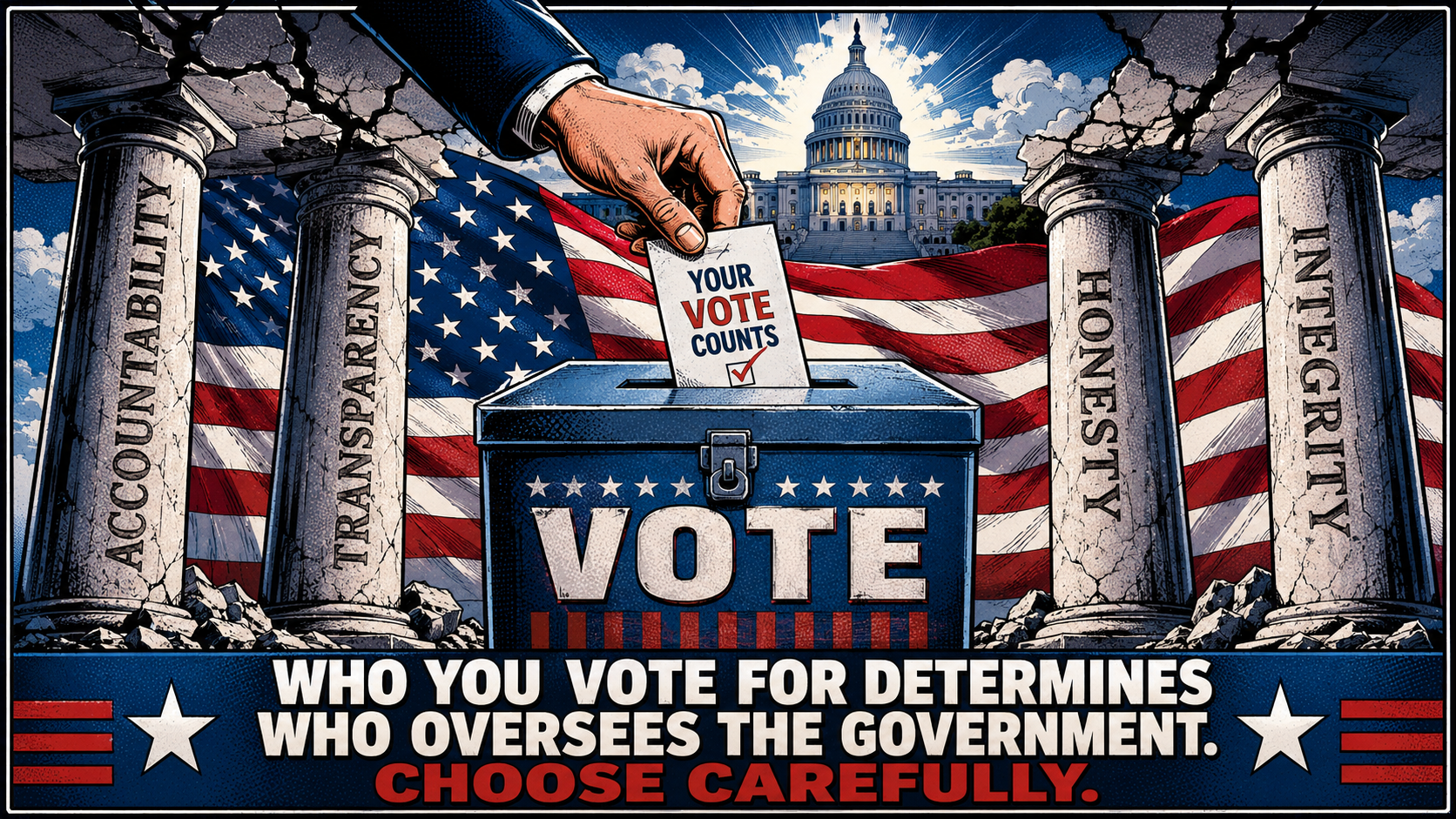
The origin of COVID-19 remains a matter of active scientific dispute. Neither the natural spillover theory nor the lab leak theory has been proven conclusively, and scientists who have examined the evidence have reached different conclusions.
A peer-reviewed paper published in the Proceedings of the National Academy of Sciences, calling for an independent inquiry into SARS-CoV-2 origins, documented that much of the collaborative research at the WIV was part of an active US-China scientific research program funded by NIH, the Defense Threat Reduction Agency, and USAID, coordinated through EcoHealth Alliance and involving researchers at several US universities. The paper’s authors stated they did not know whether the pandemic originated from natural exposure to an infected animal or a laboratory-associated incident, and called for full transparency from all institutions involved in the research.
A separate peer-reviewed analysis on gain-of-function research and COVID origins published in NIH’s own PubMed Central database documented the history of collaborative experiments between US and Chinese researchers, including a 2015 experiment by Ralph Baric of the University of North Carolina and Zhengli-Li Shi of the WIV that created chimeric coronaviruses during the period of the US GOF pause.
The US intelligence community’s official assessment, issued by President Biden in 2021 and updated before he left office, found that “two hypotheses are plausible: natural exposure to an infected animal and a laboratory-associated incident.” The IC noted that China’s cooperation would likely be needed to reach a conclusive assessment.
The Broader Accountability Question: What the Investigation Revealed About Government Oversight
Regardless of where one stands on the origin question, the congressional investigation surfaced documented failures in how the federal government oversees the research it funds. The CRS gain-of-function oversight report confirmed that NIH acknowledged EcoHealth had violated its grant terms and that the NIH grant system had weaknesses in monitoring subgrantees conducting research in foreign countries.
In his opening remarks at the May 2026 Senate whistleblower hearing, Chairman Rand Paul stated: “This hearing is about more than one witness, one assessment, or one agency. It is about a federal apparatus that told the American people to trust the science while hiding the machinery that shaped the science.”
Even the Select Subcommittee’s Democratic members, while disputing many of the majority’s conclusions about COVID origins and Fauci’s conduct, agreed that NIH needed stronger grant oversight mechanisms and that EcoHealth’s conduct in managing its grant warranted accountability. Bipartisan consensus on the need for stronger oversight of federally funded research is one concrete takeaway from the investigation that survived partisan disagreement on the larger questions.
Why This Matters for Choosing Leaders: The Election Connection
For readers following election updates in the US, the NIH COVID investigation raises a question that extends beyond any individual case or agency: what does it take for government institutions to remain accountable to the public they serve?
The investigation documented a pattern in which official government communications were conducted on personal accounts to avoid public records law, in which grant oversight failed to catch non-compliance for years, and in which congressional investigators faced active resistance from agencies, states, and individuals who withheld or deleted documents. Whether or not those actions are ultimately proven to constitute criminal conspiracy in court, they represent documented failures of the transparency that democratic accountability requires.
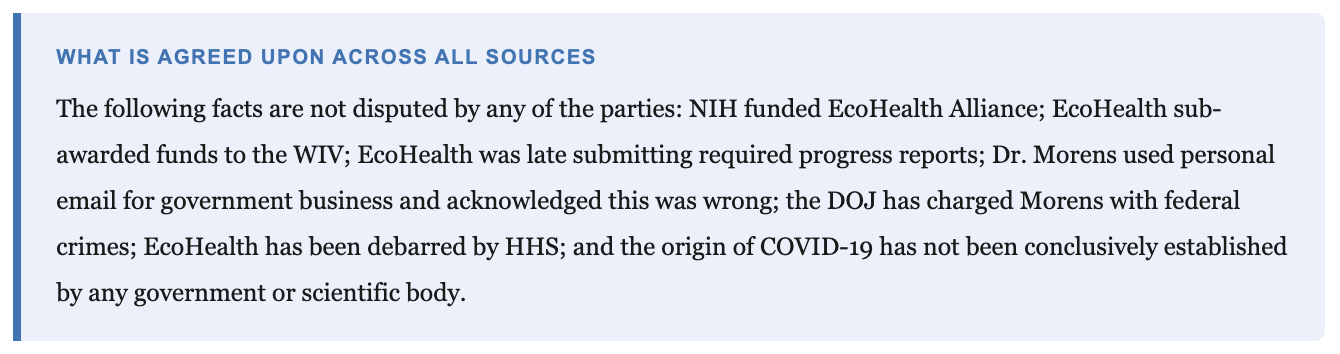
The 2026 midterm elections will determine the composition of Congress for the next two years. The legislators elected in November will oversee NIH’s budget, conduct investigations into federal agency conduct, and determine whether the reforms proposed in response to the COVID investigation’s findings are enacted into law. The Select Subcommittee’s final report specifically called on the 119th Congress to continue its work, stating: “Accountability, transparency, honesty, and integrity will regain this trust.”
When voters evaluate candidates this November, the COVID investigation offers a concrete case study in what government accountability looks like in practice, what it costs when it breaks down, and what institutional reforms are required to restore it. Across party lines, the investigation’s bipartisan findings on NIH grant oversight, FOIA compliance, and the need for independent scientific review of federally funded research provide a factual baseline against which candidates’ positions on public health transparency can be measured.
The Bottom Line
The COVID cover-up NIH investigation is not a single event. It is a documented record built over two years across more than one million pages of government documents. A senior NIH official now faces federal charges. A nonprofit that received NIH funding to conduct research in Wuhan has been debarred. The DOJ has opened a separate investigation into that nonprofit’s pandemic-era activities. And the origin of COVID-19 remains officially unresolved, with the US intelligence community and scientific bodies presenting competing theories supported by different bodies of evidence.
What is not in dispute is that federal grant oversight failed, that officials used personal communications to avoid public records law, and that Congress spent two years trying to find answers that multiple government agencies resisted providing. Whatever a jury ultimately decides about Dr. Morens, and whatever science ultimately concludes about COVID-19’s origin, those institutional failures are documented and real. They are the reason the investigation exists, the reason the indictment was filed, and the reason this question will continue to matter for election updates in the US long after the 2026 midterms are decided.
References:
U.S. Department of Justice. Former Senior NIAID Official Indicted for Concealing Federal Records During COVID-19 Pandemic
The White House. Lab Leak: The True Origins of COVID-19
House Committee on Oversight and Government Reform. WSJ Opinion: Evidence Revealed by COVID Select Subcommittee Shows Corruption at Highest Levels of NIH
U.S. News & World Report. Trump Administration Indicts Former NIH Official Over COVID Records
Open Forum Infectious Diseases. The Origins of SARS-CoV-2: A Critical Review
U.S. Congress. House Event 116185, 118th Congress

- Why Is the Justice Department Suing States Over Voter Rolls, and Why Does It Keep Losing? - August 28, 2026
- Can Felons Vote? Virginia’s Court Ruling and Ballot Measure Are Rewriting the Rules Right Now - August 26, 2026
- Does the SAVE Act Require Proof of Citizenship to Vote? Here’s Where the Fight Actually Stands - August 13, 2026