
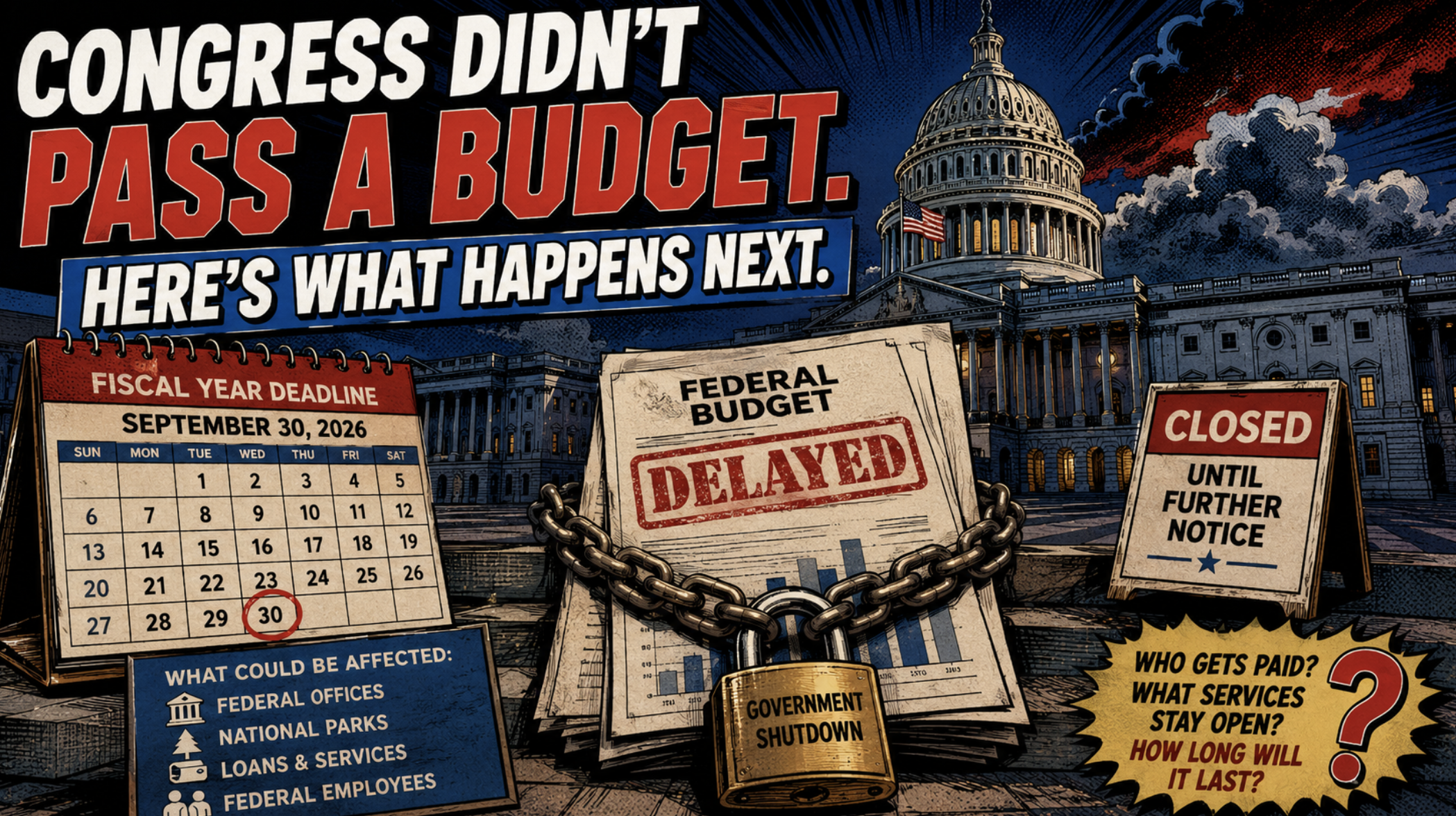
Every year, Congress has one of the biggest jobs in Washington: deciding how the federal government will be funded. It’s something you’ll hear about on the news, especially as deadlines get closer, but many Americans aren’t exactly sure what happens if lawmakers can’t reach an agreement.
The short answer is that parts of the federal government can shut down. But despite the name, a government shutdown doesn’t mean everything suddenly stops.
Here’s how it works.
Why does Congress have a budget deadline?
The federal government’s fiscal year starts on October 1 and runs through September 30 of the following year.
Before October arrives, Congress is expected to pass spending bills that fund federal agencies and programs. If lawmakers need more time to negotiate, they can pass what’s called a Continuing Resolution, often shortened to a CR. This temporarily keeps the government funded while budget talks continue.
If Congress doesn’t pass either a budget or a Continuing Resolution before funding runs out, parts of the government begin to shut down.
What is a government shutdown?
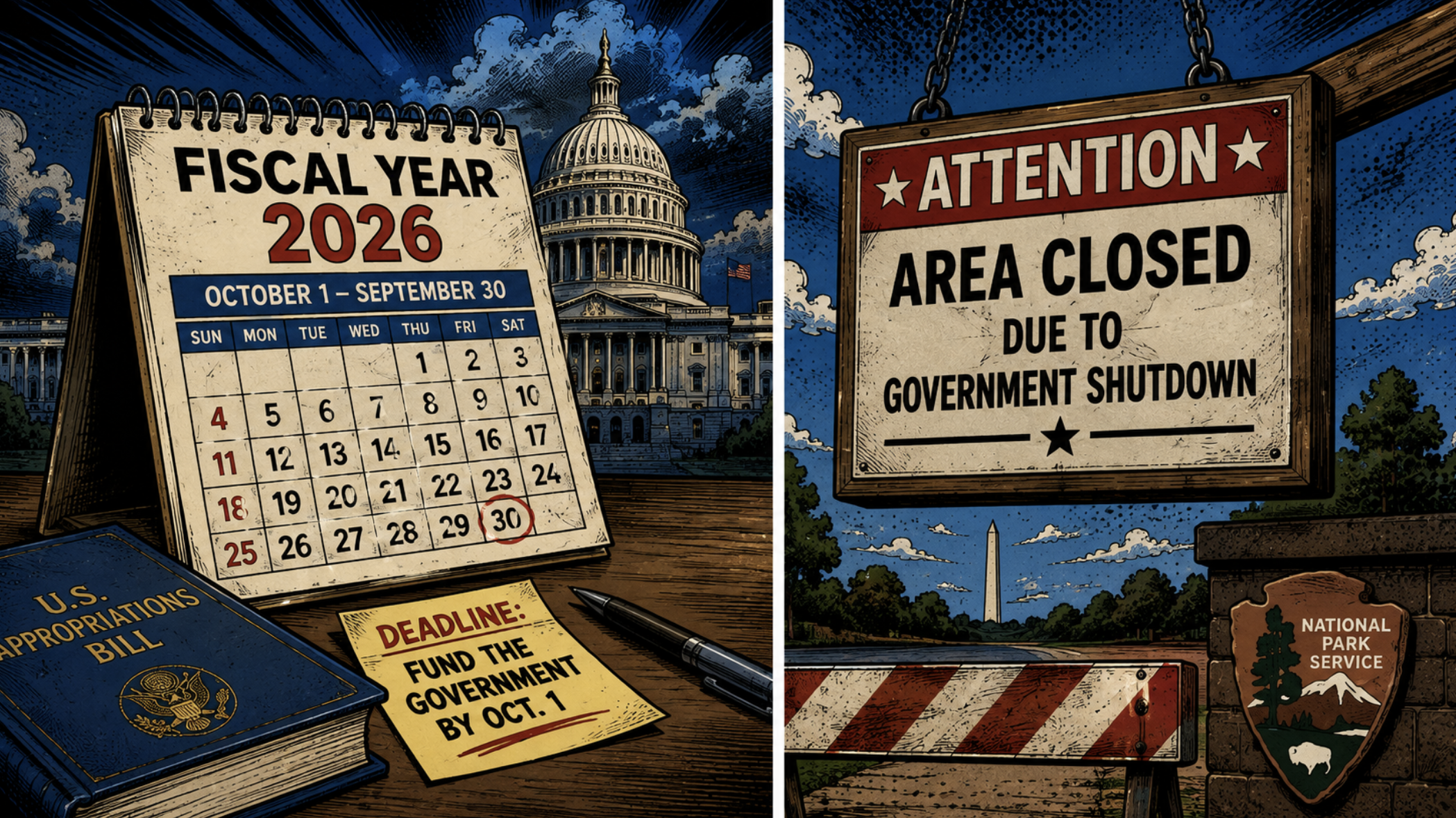
A government shutdown happens when certain federal agencies no longer have the funding they need to keep operating.
That doesn’t mean every government office closes its doors. Essential services continue running while many nonessential operations are put on hold until Congress approves new funding.
Who still goes to work?
Even during a shutdown, many federal employees continue working because their jobs are considered essential to public safety and national security.
This usually includes:
Active duty military
TSA officers
Air traffic controllers
Border Patrol agents
Federal law enforcement
Many emergency personnel
Certain healthcare workers
In some cases, these employees are required to keep working even though they may not receive a paycheck until the shutdown ends.
Who stays home?
Employees whose jobs aren’t considered essential are often placed on temporary unpaid leave, also known as a furlough.
Depending on the situation, that can affect:
Administrative offices
Some research programs
National park services
Museums and historical sites
Certain regulatory agencies
Various permitting and licensing offices
Every shutdown is a little different, so the exact list of affected agencies can change.
What about Social Security and Medicare?
One of the biggest misconceptions is that a government shutdown means Social Security checks stop showing up.
In most cases, that’s not true.
Social Security benefits generally continue because they’re funded differently than the annual budget. Medicare also continues operating. However, people applying for new benefits or trying to reach customer service could experience delays if staffing is reduced.
How could it affect you?
Even if you don’t work for the federal government, a shutdown can still have an impact.
You might experience delays for certain government services, longer wait times at federal offices, or reduced access to places like national parks and museums.
Federal employees and government contractors can also feel financial pressure if paychecks are delayed, and a lengthy shutdown can create uncertainty for businesses and financial markets.
How does a shutdown end?
A shutdown ends once Congress passes new funding legislation and the President signs it into law.
Sometimes lawmakers agree on a short term Continuing Resolution that keeps the government open while negotiations continue. Other times they pass a full budget package that funds the government for a longer period.
Once funding is restored, furloughed employees return to work. In recent shutdowns, Congress has also approved back pay for many federal workers who were affected.
Why should voters care?
The federal budget isn’t just another political fight in Washington. It determines how government agencies operate, how taxpayer dollars are spent, and whether millions of Americans experience disruptions to services they rely on.
Disagreements over spending are nothing new, but when Congress can’t reach a deal before funding expires, the effects can extend far beyond Capitol Hill. Understanding how the process works gives voters a better picture of what’s happening when budget negotiations dominate the headlines.
Watch: How the Federal Budget Process Actually Works
References:
U.S. House of Representatives – Appropriations Committee – https://appropriations.house.gov/
U.S. Senate Committee on Appropriations – https://www.appropriations.senate.gov/
Congressional Budget Office (CBO) – https://www.cbo.gov/
Congress.gov – https://www.congress.gov/
Congressional Research Service (CRS) – https://crsreports.congress.gov/
U.S. Government Accountability Office (GAO) – https://www.gao.gov/

- Five Myths About States Banning ICE From Polling Places - October 12, 2026
- The Secret Ballot Is Newer Than You Think, and It Took a Body Count to Get Here - October 6, 2026
- Why Is Election Day Always a Tuesday in November? - September 4, 2026