
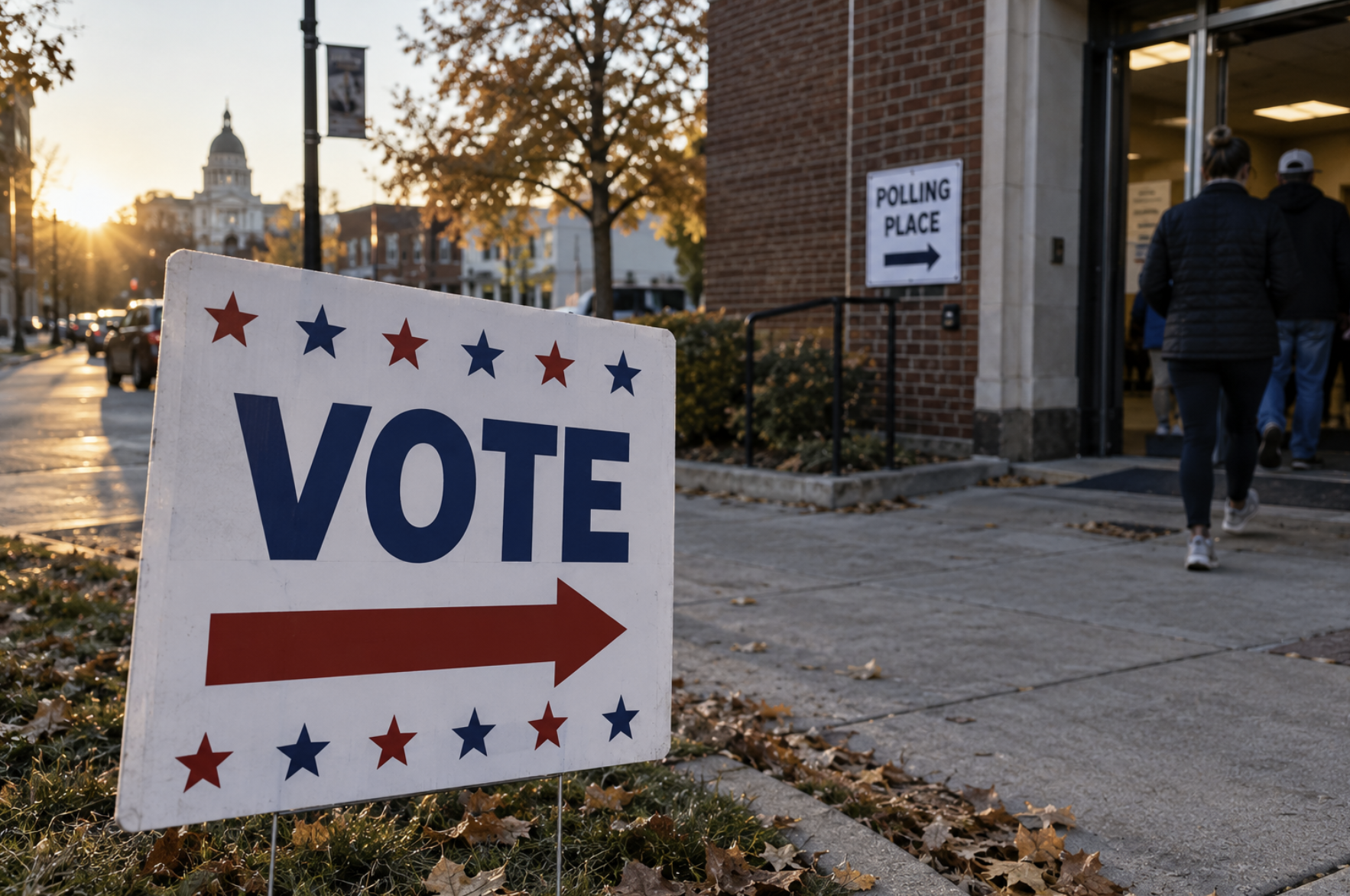
If you have ever squeezed in a trip to the polls before work, during a lunch break, or right after clocking out, you have probably wondered at some point why Election Day lands on a Tuesday of all days. Not a weekend, not a day off, just a regular workday in the middle of November. It feels almost arbitrary. It is not. The answer goes back nearly two centuries, and it has almost nothing to do with anyone thinking Tuesday was a good day for democracy.
The short answer: Election Day is a Tuesday in November because of horses, harvests, and church calendars, all baked into a law Congress passed in 1845 and never really updated.
Blame the farmers and their horses
Before 1845, states could hold federal elections on any day they wanted within a five week window before early December, which caused a real problem: results from states that voted early could leak out and influence how people voted in states that had not gone to the polls yet. Congress fixed this by picking a single day for the whole country, and the choice of day came straight out of agrarian life. Most Americans in the 1840s were farmers, and many lived a full day’s travel by horse and buggy from the nearest polling place. Voting could not happen on a Sunday, which was set aside for church, and it could not happen on a Wednesday either, since that was traditionally market day, when farmers sold their goods in town. Tuesday threaded the needle: farmers could travel by horse on Monday and still make it to the polls on Tuesday without missing church or market day.
Blame the calendar for the November part
November got picked for equally practical reasons. Spring and early summer were planting season, and late summer through early fall was harvest season, both terrible times to ask farmers to drop everything and travel to vote. November sat in the sweet spot, after the harvest was in but before winter weather made travel genuinely dangerous.
Why it is never just the first Tuesday of the month
Here is the detail that trips most people up: Election Day is technically defined as the Tuesday after the first Monday in November, not simply the first Tuesday of the month. That oddly specific phrasing exists to make sure Election Day never lands on November 1st. Two reasons drove that choice. Some Christian traditions observe November 1st as All Saints Day, making it a poor fit for a secular civic event, and merchants traditionally used the first day of the month to close out the previous month’s financial books, which made it an inconvenient day to also run a national election. So lawmakers built in a one day buffer, and it has quietly held for nearly two hundred years.
Whether you actually get the day off depends entirely on where you live
Unlike the choice of Tuesday itself, whether you get any accommodation for it today is a total patchwork. There is no federal law requiring employers to give anyone time off to vote. According to a landscape review by the Movement Advancement Project, only 5 states currently make Election Day an official public holiday and separately require paid time off to vote. Another 9 states treat it as a public holiday without requiring paid leave. A larger group, 17 states, requires paid time off to vote without making the day itself a holiday. The remaining 19 states plus Washington DC offer neither protection, meaning roughly a third of the country lives somewhere with no formal accommodation at all for voting on a workday.
Is anyone trying to change this
Periodically, yes. Proposals to make Election Day a federal holiday show up in Congress fairly regularly, generally framed around removing the workday itself as a barrier to voting, and similar arguments come up around expanding early voting and mail voting as workarounds to the Tuesday problem rather than changing the date itself. None of these efforts has ever gone far enough to actually move the needle nationally, which is part of why a scheduling decision built around 1840s horse travel is still the law of the land.
Why this matters to you
The practical takeaway is worth checking before your next Election Day rather than after it: look up whether your state requires paid time off to vote, since roughly a third of the country has no such protection and would not know it without checking. And the next time Tuesday in November rolls around and you are rearranging your schedule to fit in a trip to the polls, you can at least blame it on a decision made for people traveling by horse, not on anyone deciding your workday should be less convenient than it needs to be.
Watch:
Why US elections are held on the first Tuesday after first Monday of November, Explained
References
Why Is Election Day a Tuesday in November? (History)
Why Are U.S. Elections Held on Tuesdays? (Britannica)
Election Day Holidays and Paid Time Off to Vote (Movement Advancement Project)
Election Day: Frequently Asked Questions (Congressional Research Service, Congress.gov)

- Five Myths About States Banning ICE From Polling Places - October 12, 2026
- The Secret Ballot Is Newer Than You Think, and It Took a Body Count to Get Here - October 6, 2026
- Why Is Election Day Always a Tuesday in November? - September 4, 2026