
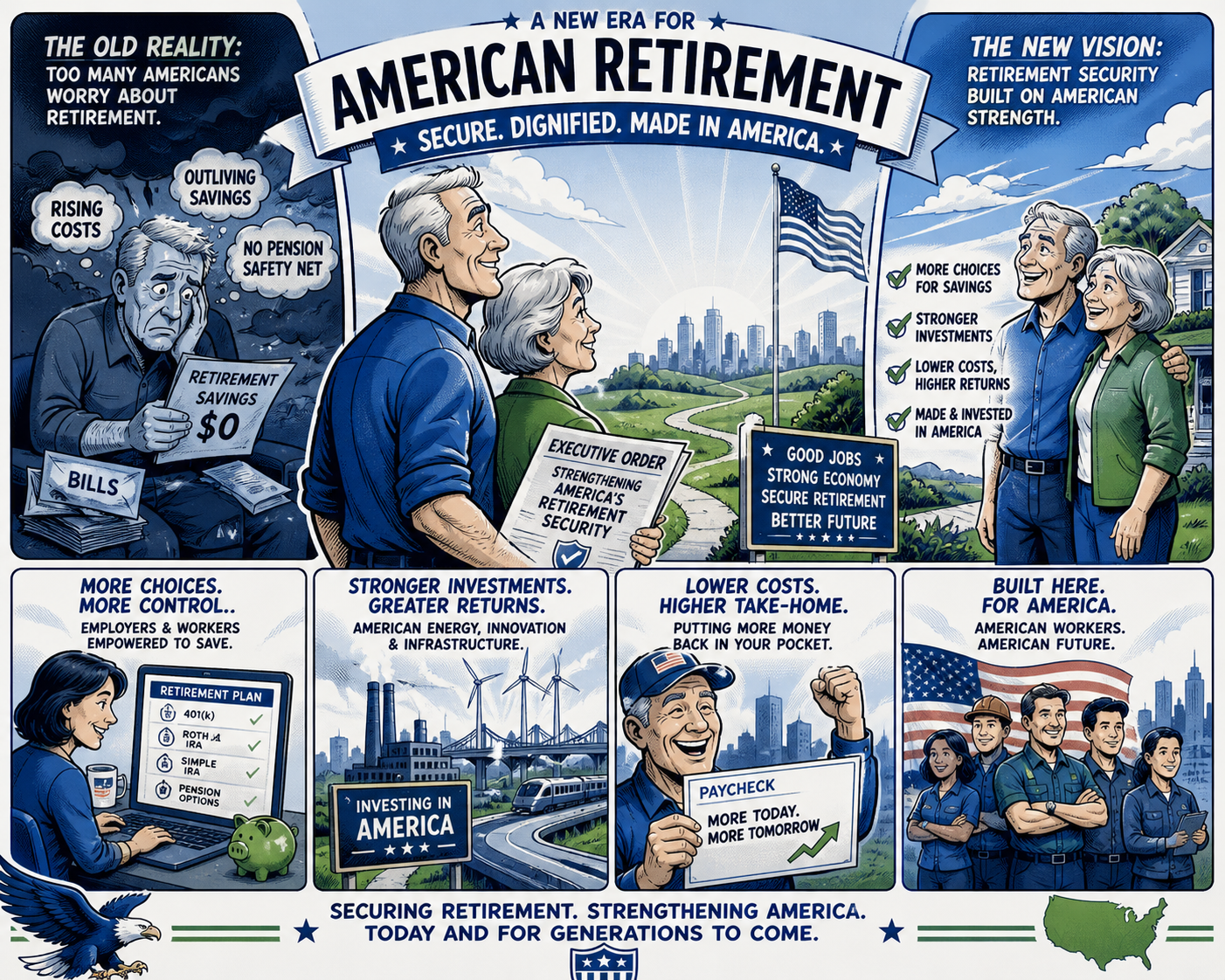
President Donald Trump signed an executive order on April 30, 2026, directing the creation of TrumpIRA.gov, a federal platform designed to connect workers without employer-sponsored retirement plans to low-cost Individual Retirement Accounts (IRAs) offered by private institutions. The order also aligns with the Saver’s Match program, which provides up to 1,000 dollars in annual federal matching contributions for eligible lower-income savers.
Roughly half of private-sector workers lack access to workplace retirement plans. This initiative seeks to narrow that gap through a combination of information, choice, and targeted incentives. Here are the 6 key things to know about the order and its potential effects.
1. TrumpIRA.gov: A Centralized Platform for IRA Comparison
The executive order requires the Treasury Department to establish TrumpIRA.gov by January 1, 2027. The website will serve as a marketplace listing private-sector IRAs that meet criteria for low costs, transparency, and fiduciary standards. Users will be able to filter and compare plans based on fees, investment options, and other features.
The platform does not create new government accounts. It directs individuals to qualifying private offerings and provides information on the Saver’s Match. This approach aims to reduce complexity and information barriers that often discourage saving among workers without employer plans.
2. Integration with the Saver’s Match IRA Program
The order coordinates with the Saver’s Match, a provision from the 2022 SECURE 2.0 Act that takes effect in 2027. Eligible low- and moderate-income workers can receive up to 1,000 dollars per year in direct government matching contributions to their IRA. TrumpIRA.gov will help users identify qualifying accounts and understand eligibility.
Who qualifies for the federal saver’s match IRA program? Details will be refined in Treasury guidance, but the program generally targets lower-income households. This direct match replaces the previous tax credit structure and is designed to increase participation rates.
3. Focus on Workers Without Employer Plans
The initiative primarily addresses independent contractors, gig economy workers, part-time employees, small-business staff, and self-employed individuals who lack access to 401(k)-style plans. By offering a straightforward way to open and manage IRAs, the order seeks to provide portable, tax-advantaged savings options that follow workers across jobs.
It also encourages philanthropic contributions to IRAs of lower-income individuals without endangering the donor organization’s tax status. This expands potential support channels beyond traditional employer or government mechanisms.
4. Potential Reach and Limitations for Low-Income Workers
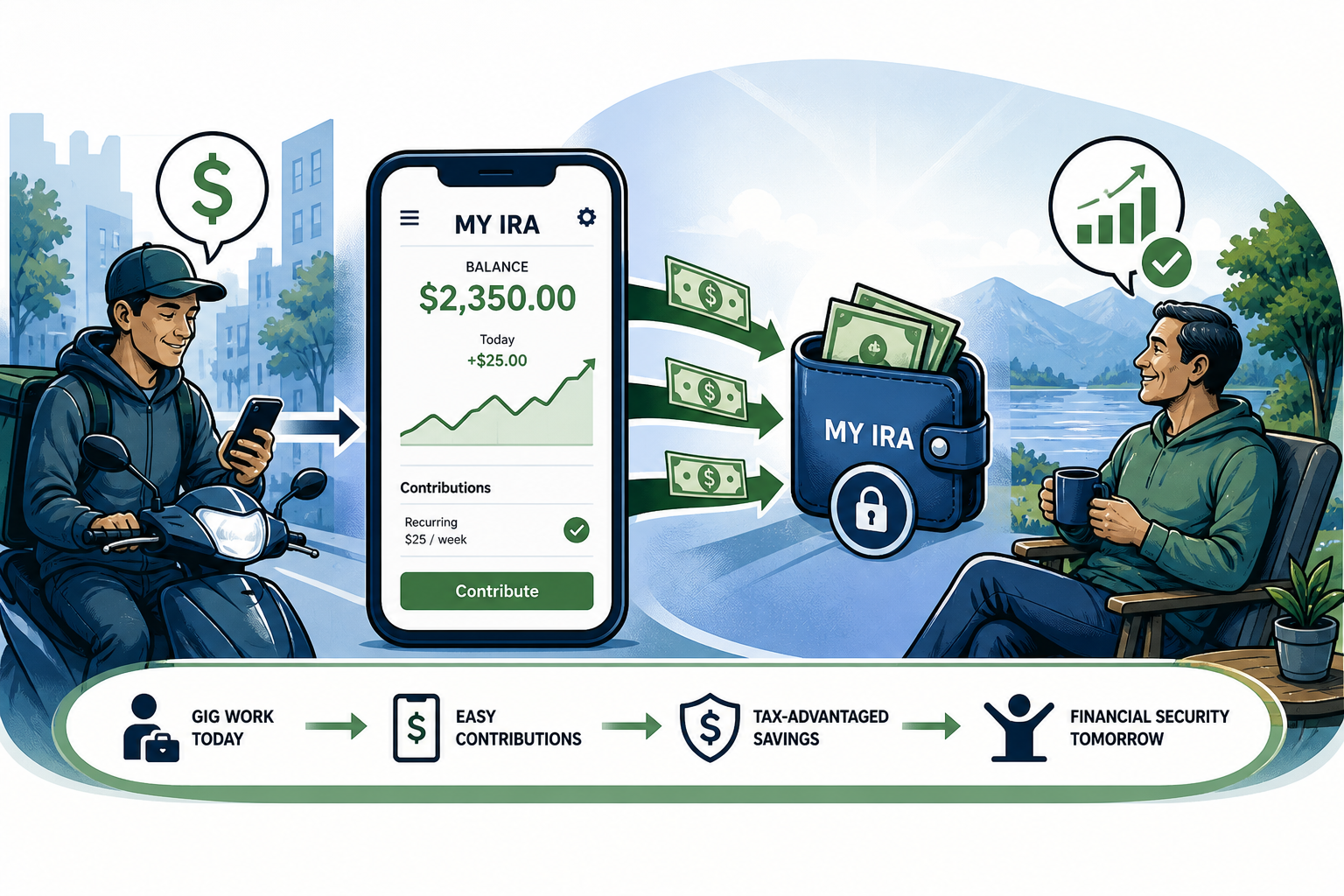
The platform and match aim to help lower-wage earners overcome common obstacles such as high fees and minimum balance requirements. By highlighting low-cost options and providing matching funds, the program could improve savings rates among households that have historically saved the least for retirement.
However, success depends on several factors: clear communication, user-friendly design, participation by financial institutions, and actual enrollment by eligible workers. Estimates suggest the matching component could involve significant federal outlays, though exact costs will depend on uptake.
5. Broader Context of Retirement Savings Policy Changes U.S.
The executive order operates within the existing framework of tax-advantaged accounts rather than creating a new mandatory system. It relies on private providers while using federal resources for coordination and incentives. This model contrasts with state-level auto-IRA programs that have enrolled over a million workers in more than 20 states.
The order reflects ongoing debates about the appropriate federal role in retirement security. It emphasizes portability and choice while addressing coverage gaps without imposing new requirements on employers.
6. Political and Governance Implications
Trump’s Retirement-Savings Executive Order fits into a pattern of using executive authority to address retirement issues amid divided government. Retirement security frequently appears in election updates in the US, with both parties addressing concerns about inadequate savings, Social Security sustainability, and workforce participation.
The initiative highlights federalism in action: states have pioneered auto-enrollment approaches, while the federal government provides a national information tool and matching incentive. Future legislative efforts may build on or modify these elements depending on election outcomes and congressional priorities.
Implementation Timeline and Considerations
Now through late 2026: Treasury develops the platform, sets standards for participating plans, and issues guidance on the Saver’s Match.
January 1, 2027: TrumpIRA.gov becomes operational and the Saver’s Match program launches.
Ongoing: Monitoring of participation rates, costs, and outcomes will inform potential adjustments.
Workers should review official Treasury and IRS communications for eligibility details and plan options once available. Financial advisors can provide personalized guidance on integrating these accounts into broader retirement strategies.
Significance for Workers and Policy
Trump’s Retirement-Savings Executive Order represents a targeted effort to expand access for the large segment of the workforce without employer plans. By establishing a comparison platform and enhancing matching contributions, it seeks to encourage saving through choice and incentives rather than mandates.
In the context of retirement savings policy changes U.S., the order underscores persistent challenges in coverage and adequacy while testing a market-oriented federal approach. Its long-term impact will depend on implementation effectiveness, participation levels, and how it interacts with state initiatives and broader economic conditions.
As details emerge and the platform launches, workers, employers, and policymakers will have an opportunity to assess whether this model meaningfully improves retirement outcomes for millions of Americans.
Retirement policy does not operate in isolation. Changes to savings programs often align with broader tax reforms that affect income, benefits, and long-term financial planning. Understanding how these policies connect can help you see the full impact on your finances. For a deeper look at how recent tax changes influence take-home pay and family benefits, read Big Beautiful Tax Bill: What It Means for Your Paycheck, Family Benefits, and Taxes. These developments are also closely tied to ongoing election updates in the US, where tax and retirement policies remain central issues.
References:
White House. Fact Sheet: Retirement-Savings Access for American Workers
Cato Institute. Trump to Sign Executive Order Expanding Retirement Plan Access

- What Is Actually Happening in France Right Now, and Why It Matters for the Race to Replace Macron - October 19, 2026
- How a 1971 Supreme Court Case Still Decides Who Makes Your Local Ballot - October 14, 2026
- The Supreme Court Is About to Decide a Major Voter Roll Case. Here Is the Timeline That Got Us Here - September 24, 2026