
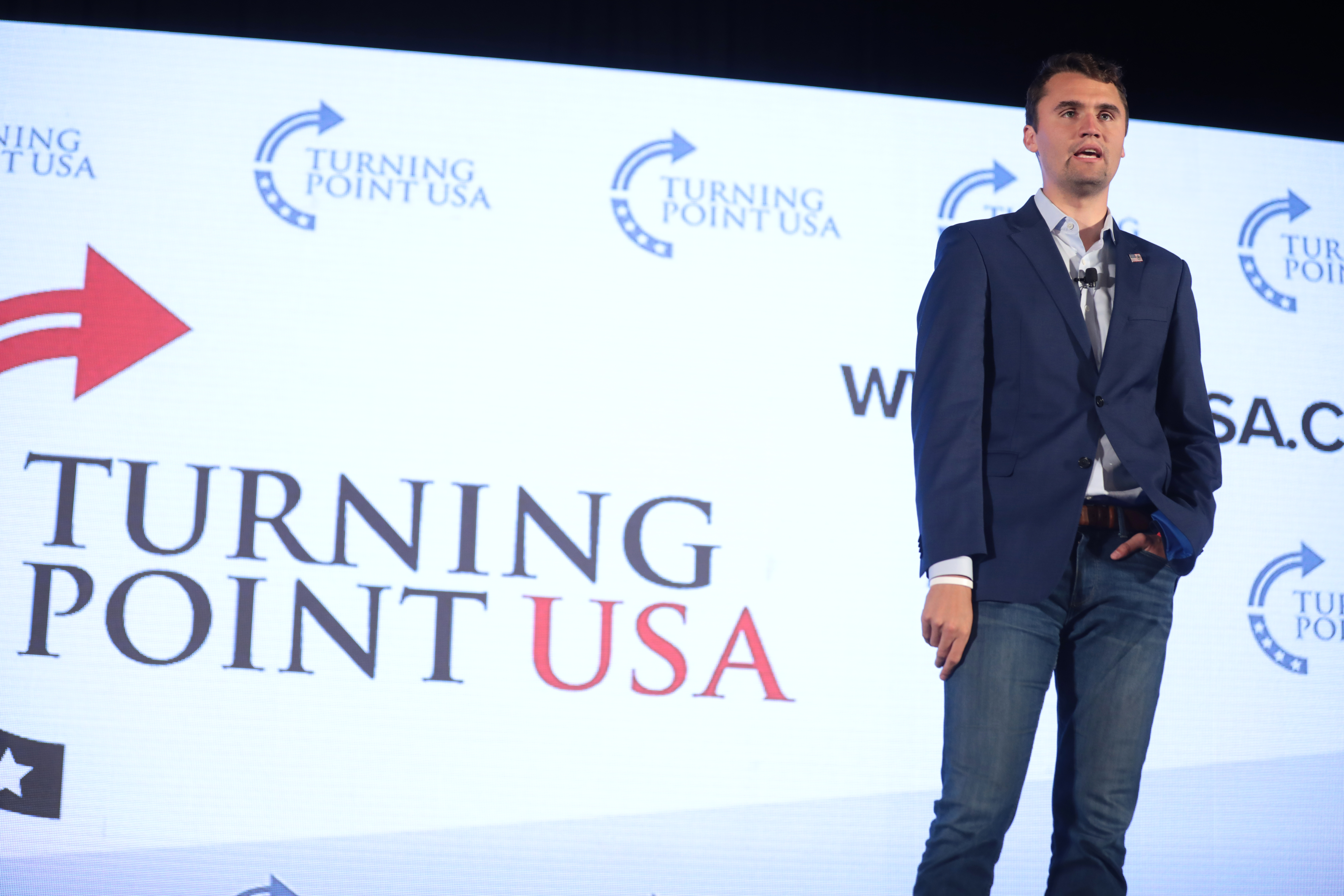
Charlie Kirk speaking at Politicon 2019 by Gage Skidmore, CC BY-SA 2.0, via Wikimedia Commons.
The assassination of Charlie Kirk in September 2025 left a major void in American conservative politics. At just 31 years old, Kirk had built Turning Point USA (TPUSA) into the largest conservative youth movement in the country, with chapters on hundreds of college and high school campuses. His sudden death raises an urgent question: can TPUSA survive without the man who embodied its identity?
With the U.S. elections approaching, the fate of TPUSA could reshape how young conservatives participate in politics, how Republican campaigns mobilize voters, and whether Democrats gain further ground with younger generations.
The Origins of Turning Point USA
Turning Point USA was founded in 2012 by Charlie Kirk and Arizona businessman Bill Montgomery. Kirk was only 18 at the time, fresh out of high school, when he decided to forgo college and instead launch a nonprofit that would challenge what he viewed as liberal dominance on U.S. campuses.
According to Wikipedia, TPUSA’s mission was to promote free markets, limited government, and individual liberty. From its start, TPUSA framed itself as a counterweight to progressive student organizations, using bold messaging and aggressive recruitment to capture attention.
Within a few years, the group established chapters across the country. By 2016, TPUSA had a visible presence on hundreds of campuses. Today, it claims more than 1,000 chapters nationwide, with a reach that extends from high schools to universities.
Building a National Conservative Brand
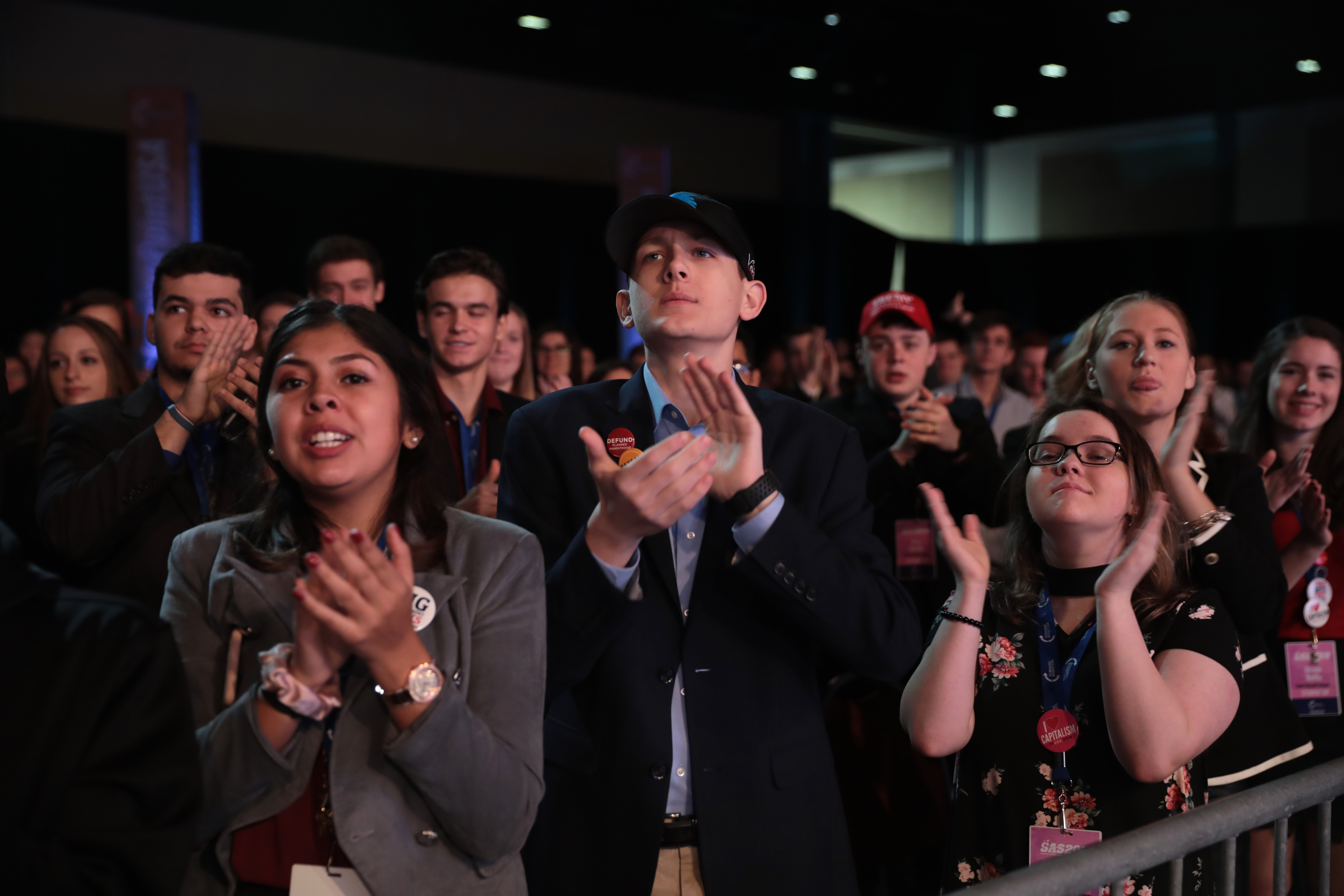
Student Action Summit attendees by Gage Skidmore, CC BY-SA 2.0, via Wikimedia Commons.
From the beginning, TPUSA leveraged media and branding to grow its influence. In addition to campus chapters, the organization launched national events such as the Student Action Summit, attracting thousands of conservative students each year.
TPUSA’s affiliate organizations expanded its scope:
Turning Point Action – a political arm founded in 2019 that engaged directly in electoral politics.
TPUSA Faith – focused on mobilizing young Christians around conservative social issues.
Turning Point Endowment – set up to provide long-term financial stability.
These initiatives gave TPUSA a presence beyond campuses, embedding it in the broader conservative movement.
Funding and Financial Growth
TPUSA’s rise was fueled by significant financial backing. According to ProPublica’s Nonprofit Explorer, the organization reported $85 million in revenue and $81 million in expenses in 2023, with nearly $45 million in assets.
The group’s finances have grown rapidly. In 2012, its first year, TPUSA operated on a budget of just a few hundred thousand dollars. By 2019, revenue surpassed $28 million, and it nearly tripled again by 2021.
Funding has come from a mix of individual donors, conservative foundations, and political allies. The money has been used for staff expansion—TPUSA had about 458 employees in 2023—as well as media production, campus organizing, and large national events.
IncFact classifies TPUSA as a nonprofit civic organization operating in the advocacy space, confirming its position as one of the most financially robust youth-focused advocacy groups in the U.S.
The Role of TPUSA in U.S. Elections
While TPUSA is a nonprofit and does not directly endorse candidates, its activities have played a clear role in youth voter mobilization. Through campus events, social media, and affiliate groups like Turning Point Action, TPUSA became a training ground for young conservative activists.
Data from CIRCLE at Tufts University shows that nearly half of voters aged 18–29 participated in the 2024 elections in states where registration and voting were accessible. Where barriers were higher, turnout lagged. TPUSA capitalized on these dynamics by pushing conservative youth to organize around voter access issues favorable to their base.
According to Brookings, younger generations—Millennials and Gen Z—are reshaping American politics. They make up an increasing share of the electorate and have leaned Democratic in recent elections. However, groups like TPUSA sought to slow or reverse that trend by building conservative communities on campuses and online.
Pew Research reports that young voters are more likely to identify with the Democratic Party, but conservative organizations have carved out a vocal minority that exerts significant influence. TPUSA was one of the main drivers of this counter-movement.
The Centrality of Charlie Kirk
The success of TPUSA was closely tied to Charlie Kirk’s personal brand. Kirk was more than just a founder; he was the face, voice, and strategist of the organization. His daily podcast, frequent appearances on Fox News, and constant presence on social media kept TPUSA in the national spotlight.
As Vox reported, Kirk transformed Gen Z conservative politics by blending activism with media influence. He was often described as the Republican Party’s “youth whisperer,” channeling energy from college campuses into broader political narratives.
This level of centralization meant TPUSA’s identity became inseparable from Kirk himself—a fact that now complicates the group’s future.
Controversies and Criticisms
TPUSA’s growth has been shadowed by controversy. The organization has faced criticism for tactics that many saw as polarizing or harmful to academic discourse.
In 2016, TPUSA launched the Professor Watchlist, a website that named professors accused of promoting left-wing bias. Critics argued it was a form of intimidation. (Wikipedia)
Watchdog groups have raised questions about TPUSA’s ties to “dark money” networks and its blurred lines between nonprofit activity and electoral politics.
Progressive organizations accused TPUSA of spreading misinformation and amplifying conspiracy theories through its events and media content.
While supporters saw TPUSA as a bold counterweight to liberal dominance on campuses, detractors viewed it as deepening polarization in American education and politics.
The Leadership Crisis After Kirk’s Death
With Charlie Kirk’s assassination in 2025, TPUSA now faces a leadership crisis.
No clear successor has been identified as of late 2025. While TPUSA has a board of directors and senior staff, none have Kirk’s public recognition or media clout.
The organization’s heavy reliance on Kirk for fundraising may lead to donor uncertainty. Movements tied to a single charismatic leader often struggle after losing them.
Kirk’s polarizing yet effective communication style will be difficult to replicate.
This situation mirrors other movements in U.S. history where organizations faltered after losing a central figure. Without deliberate restructuring, TPUSA risks declining influence in the years ahead.
Opportunities for Renewal
Despite these challenges, TPUSA also has opportunities to adapt and survive.
Martyr Effect: The death of a leader can sometimes energize a movement. Reports suggested TPUSA received a surge of new chapter requests after Kirk’s assassination (New York Post).
Institutionalization: By strengthening its board and diversifying its leadership, TPUSA could transition from a personality-driven group to a sustainable institution.
Issue Expansion: Data from CIRCLE shows young voters care about issues like the economy, mental health, and education. TPUSA could broaden its focus to engage youth on these concerns.
Implications for the U.S. Elections
The future of Turning Point USA matters because of its role in mobilizing the conservative youth vote. The organization’s trajectory will affect both the 2026 midterms and the 2028 presidential election.
If TPUSA maintains momentum, it could keep young conservatives engaged and ensure their voices remain a factor in national politics. If it weakens, Democrats may gain further ground among younger voters, potentially shifting electoral outcomes.
As Brookings notes, younger voters are already reshaping the American political map. TPUSA’s survival or collapse will help determine how the conservative movement responds to this generational shift.
Legacy of TPUSA Under Charlie Kirk
Under Charlie Kirk, TPUSA:
Became the largest conservative youth organization in the U.S.
Created a national network of student activists.
Gave conservatives a strong presence on traditionally liberal campuses.
Attracted controversy and criticism for divisive tactics.
Whatever its future, TPUSA under Kirk demonstrated how one figure could mobilize youth on a massive scale. His assassination has transformed the organization’s story into a pivotal test of whether movements can outlast their founders.
Conclusion: Can TPUSA Survive Without Charlie Kirk?
The fate of Turning Point USA will depend on whether it can transition from being the personal project of Charlie Kirk to a lasting institution. With substantial finances, chapters across the country, and a strong brand, it has the infrastructure to survive. But without Kirk’s leadership, media presence, and fundraising power, the challenge is formidable.
For Republicans, TPUSA’s future is critical to keeping young conservatives engaged in the coming U.S. elections. For Democrats, its decline could mean gaining further ground with Millennials and Gen Z.
Either way, TPUSA remains a symbol of how the conservative youth movement reshaped American politics and how fragile such movements can be when tied to one leader.
References
ProPublica. Turning Point USA Nonprofit Explorer
CIRCLE (Tufts University). Youth Voting and Civic Engagement
Brookings Institution. Younger Voters Are Poised to Upend American Politics
Pew Research Center. Age, Generational Cohorts, and Party Identification
IncFact. Turning Point USA Company Profile
Vox. Charlie Kirk Remade Gen Z Conservative Politics
New York Post. Turning Point USA Flooded with Chapter Requests After Kirk’s Death

- A Supreme Court Case You Probably Missed Could Open the Door to a Lot More Election Lawsuits - October 9, 2026
- Dark Money Is Pouring Into the 2026 Midterms. Here Are Five Myths About How It Actually Works - September 21, 2026
- The Supreme Court Just Blocked Trump’s Mail Ballot Restrictions. Here’s What That Means - September 17, 2026