
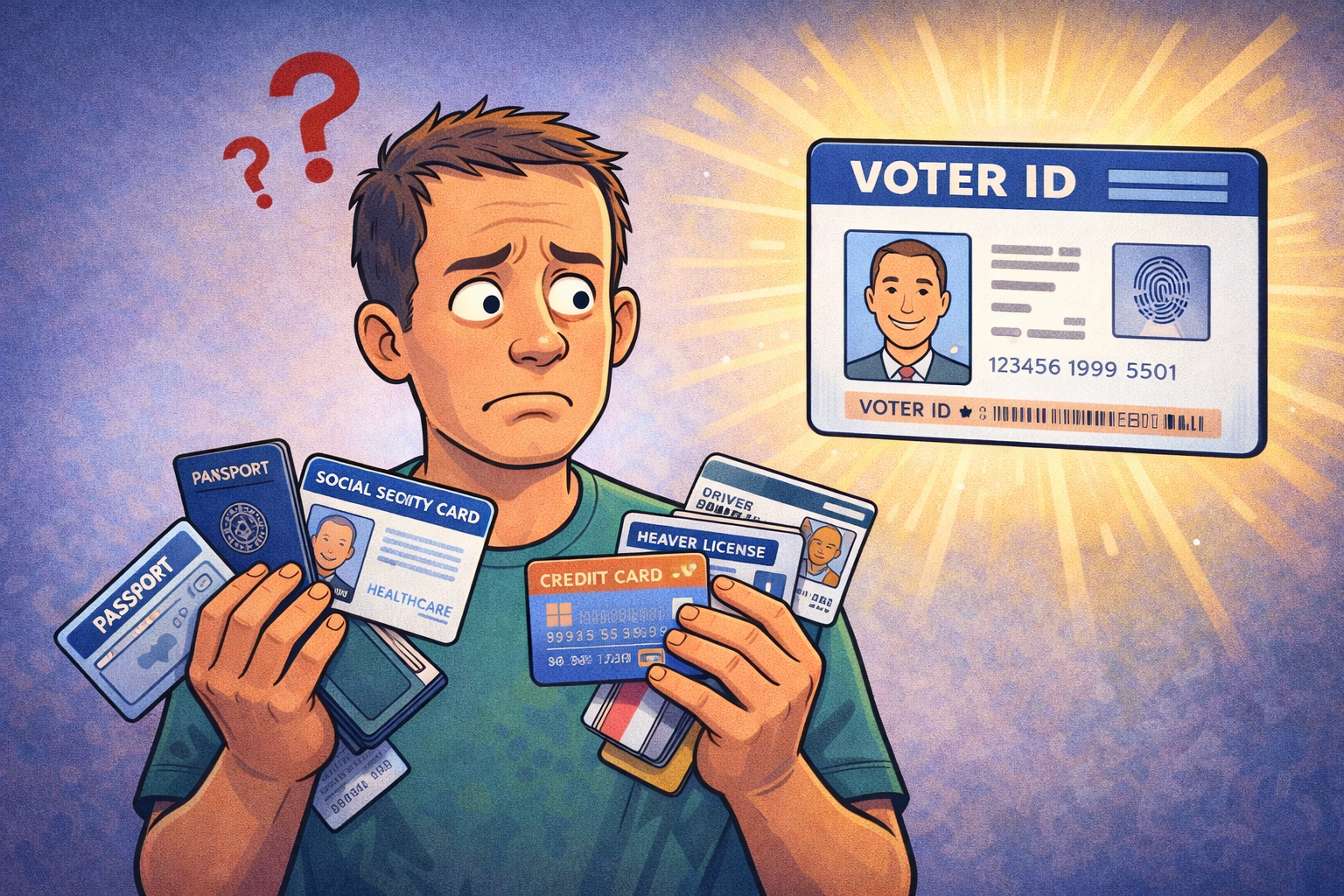
Debates over election integrity and ballot access have made Voter ID requirements in the USA one of the most discussed election policies in recent years. While some states require voters to present government-issued photo identification at the polls, others allow alternative verification methods or require no identification at all. Because election laws are primarily set at the state level, the rules vary across the country.
The issue has gained renewed attention following recent political statements from President Donald Trump supporting stricter national voter identification standards. As election security continues to dominate policy discussions, understanding how voter ID laws function is essential for voters and policymakers alike.
What Are Voter ID Requirements
Voter ID requirements in the USA refer to state laws that determine whether voters must present identification before casting a ballot. These laws are intended to verify voter identity and prevent in-person voter impersonation.
The federal government provides an overview of identification rules at USA.gov’s Voter ID Requirements page, which explains that some states require photo identification, others accept non-photo documents such as utility bills, and some do not require ID at polling locations.
The U.S. Constitution grants states primary authority to administer elections. As a result, there is no single nationwide voter ID standard.
Categories of Voter ID Laws
States generally fall into three classifications.
Strict Photo ID States
Voters must present a government-issued photo ID. If they do not have acceptable identification, they may cast a provisional ballot, but it will only be counted if proper ID is provided within a specified timeframe.
Common acceptable IDs include:
- Driver’s licenses
- State-issued ID cards
- U.S. passports
- Military identification
Non-Strict Photo ID States
Voters are asked for photo ID but may sign an affidavit or provide alternative documentation if they lack one.
Non-Photo or No ID States
Some states verify voter identity through:
- Signature matching
- Voter registration databases
- Utility bills or bank statements
- Partial Social Security number verification
Because requirements change, voters should confirm their state’s rules before Election Day.
The Legal Foundation: Supreme Court Ruling
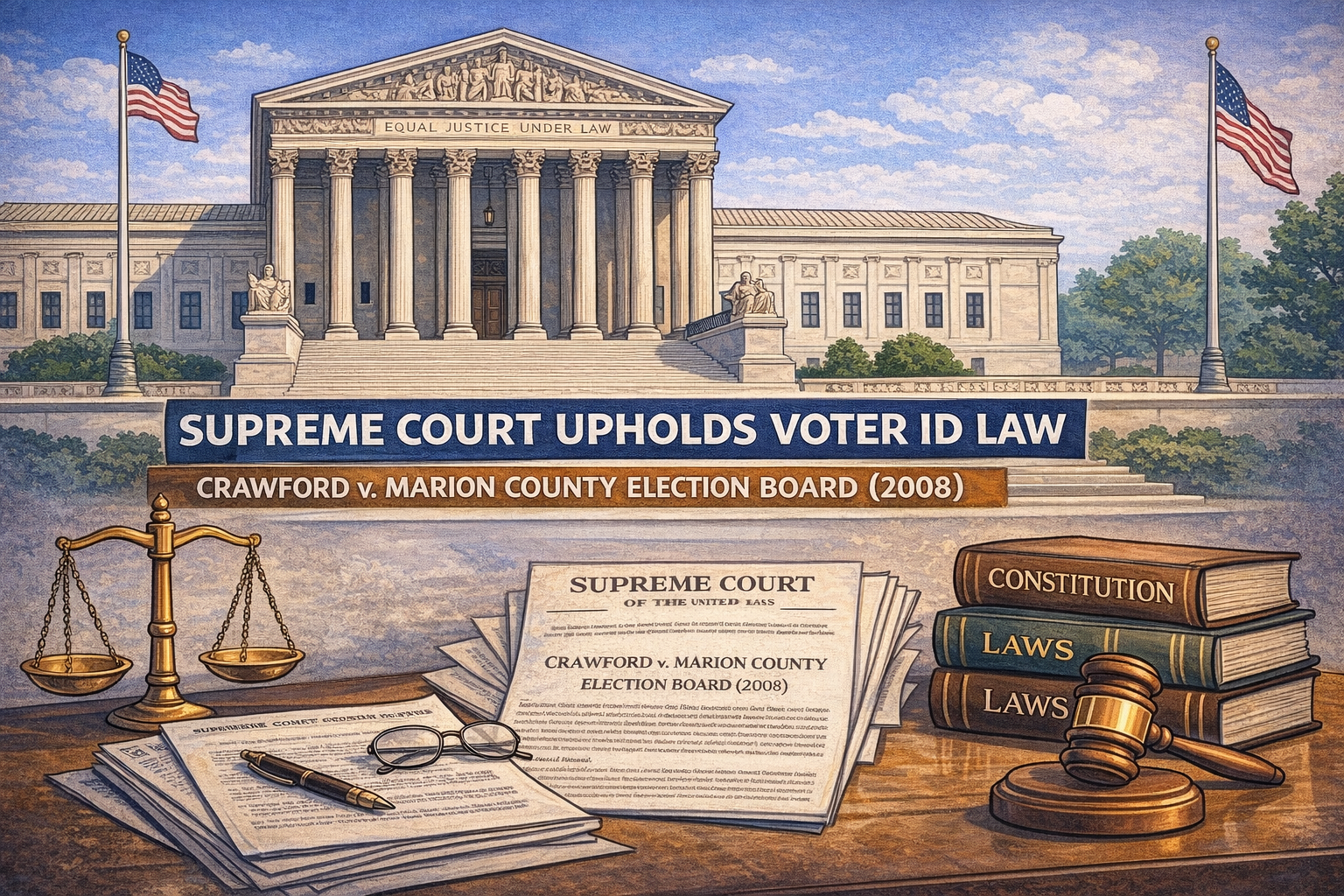
The constitutionality of voter ID laws was addressed in the 2008 Supreme Court case Crawford v. Marion County Election Board. The Court upheld Indiana’s photo ID law, ruling that the state’s interest in preventing voter fraud and maintaining public confidence justified the requirement.
The decision established that voter ID laws are constitutional if they do not impose an undue burden on voters.
Since Crawford, states have continued to enact, revise, or repeal identification laws through legislation and ballot initiatives.
President Trump’s Position on Voter ID
Voter ID returned to national headlines after President Donald Trump reiterated support for stronger identification requirements in federal elections. A White House press release titled Voter ID Overwhelmingly Popular With Literally Everyone Except… argued that voter ID laws enjoy broad public support.
President Trump has repeatedly advocated for a national voter ID standard, framing it as a measure to strengthen election security and restore confidence in election outcomes. Supporters argue that standardized federal requirements could eliminate inconsistencies between states.
However, implementing a national voter ID mandate would likely require congressional action and could face constitutional challenges due to state authority over election administration.
Why Supporters Favor Voter ID Laws
Supporters argue that voter ID laws:
Protect election integrity
Deter voter impersonation
Increase public trust in results
Align voting procedures with identification requirements used in other areas of life
Advocates contend that identification is required for activities such as air travel, banking, and purchasing restricted goods, and argue that voting should meet similar verification standards.
Some polling data cited in political statements suggests broad public support for identification requirements, although interpretations vary depending on question wording and survey design.
Why Critics Oppose Strict Voter ID Laws
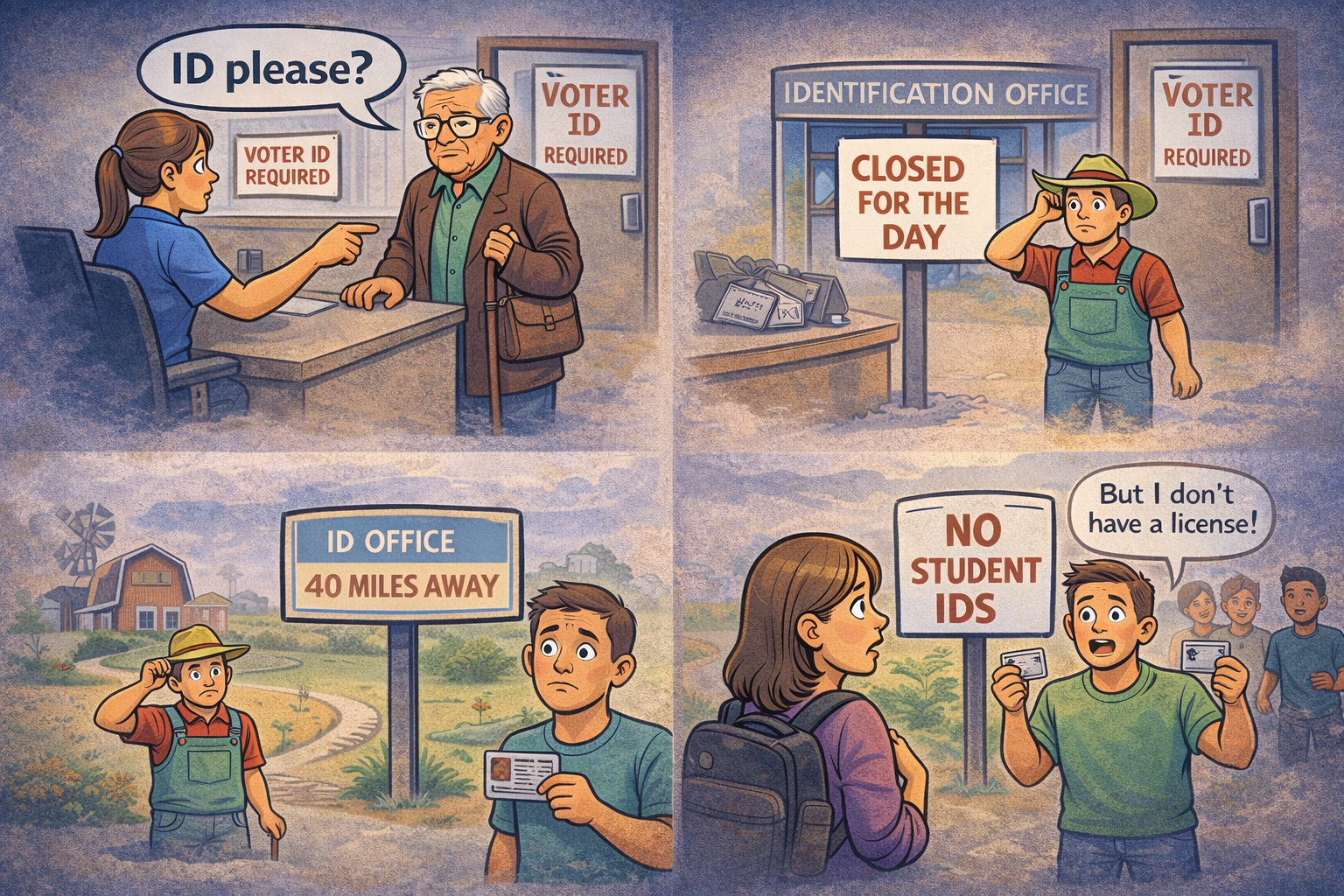
Opponents argue that strict voter ID laws may:
Disproportionately affect elderly voters
Create barriers for low-income individuals
Impact rural communities with limited access to identification offices
Affect students and individuals without driver’s licenses
Critics maintain that documented cases of in-person voter impersonation are rare and that strict identification laws risk reducing participation among eligible voters.
The debate centers on balancing fraud prevention with equal access to the ballot.
Do Voter ID Laws Affect Turnout
Academic research on turnout effects shows mixed conclusions.
Some studies indicate minimal overall impact. Others suggest that strict photo ID laws may reduce turnout among certain demographic groups.
Implementation matters. Many states that require photo identification also provide free ID cards to eligible voters. Outreach and administrative flexibility can mitigate potential access barriers.
Because election administration varies widely, effects differ by state.
Voter ID and Broader Election Security Measures
Voter ID is only one component of election security. States also use:
Voter registration database verification
Signature matching for mail ballots
Chain-of-custody procedures
Poll worker oversight
Post-election audits
Election security debates frequently expand beyond identification requirements to include mail-in voting policies and ballot processing procedures.
These discussions often feature prominently in election updates in the US, particularly during presidential election cycles.
Federal Versus State Authority
The Elections Clause of the Constitution gives states authority over the “Times, Places and Manner” of elections, while Congress retains authority to regulate federal elections.
Because of this structure:
States set identification rules
Federal courts review constitutionality
Congress can legislate for federal contests
A national voter ID mandate would likely require federal legislation and face judicial scrutiny.
How This Could Affect Regular Americans
Most voter ID laws affect voters directly only on Election Day. However, the broader debate can influence:
Federal legislation
Campaign messaging
Public confidence in results
Legal challenges and court decisions
If federal voter ID legislation were enacted, states might need to adjust administrative procedures, which could alter voting logistics nationwide.
For regular Americans, the practical takeaway is preparation. Checking ID requirements in advance prevents ballot complications.
What Voters Should Do Before Election Day
To ensure compliance with Voter ID requirements in the USA, voters should:
Confirm registration status
Review accepted identification types
Renew expired identification early
Understand provisional ballot procedures
Check deadlines for absentee and mail voting
Reliable information is available through official state election offices and the federal guidance page at USA.gov.
Voter ID requirements in the USA vary significantly by state and remain a defining issue in election policy debates. The Supreme Court has upheld voter ID laws under certain conditions, and states retain primary authority over election administration. Recent statements from President Trump supporting stricter identification standards have brought renewed attention to the issue.
Regardless of political position, informed preparation remains the most practical step for voters. Understanding your state’s identification requirements ensures participation in the democratic process without disruption.
References
USA.gov. Voter ID Requirements
White House Press Release. Voter ID Overwhelmingly Popular With Literally Everyone Except…
Department of Justice. U.S. Supreme Court. Crawford v. Marion County Election Board (2008)
National Conference of State Legislatures. Voter Identification Requirements by State
