
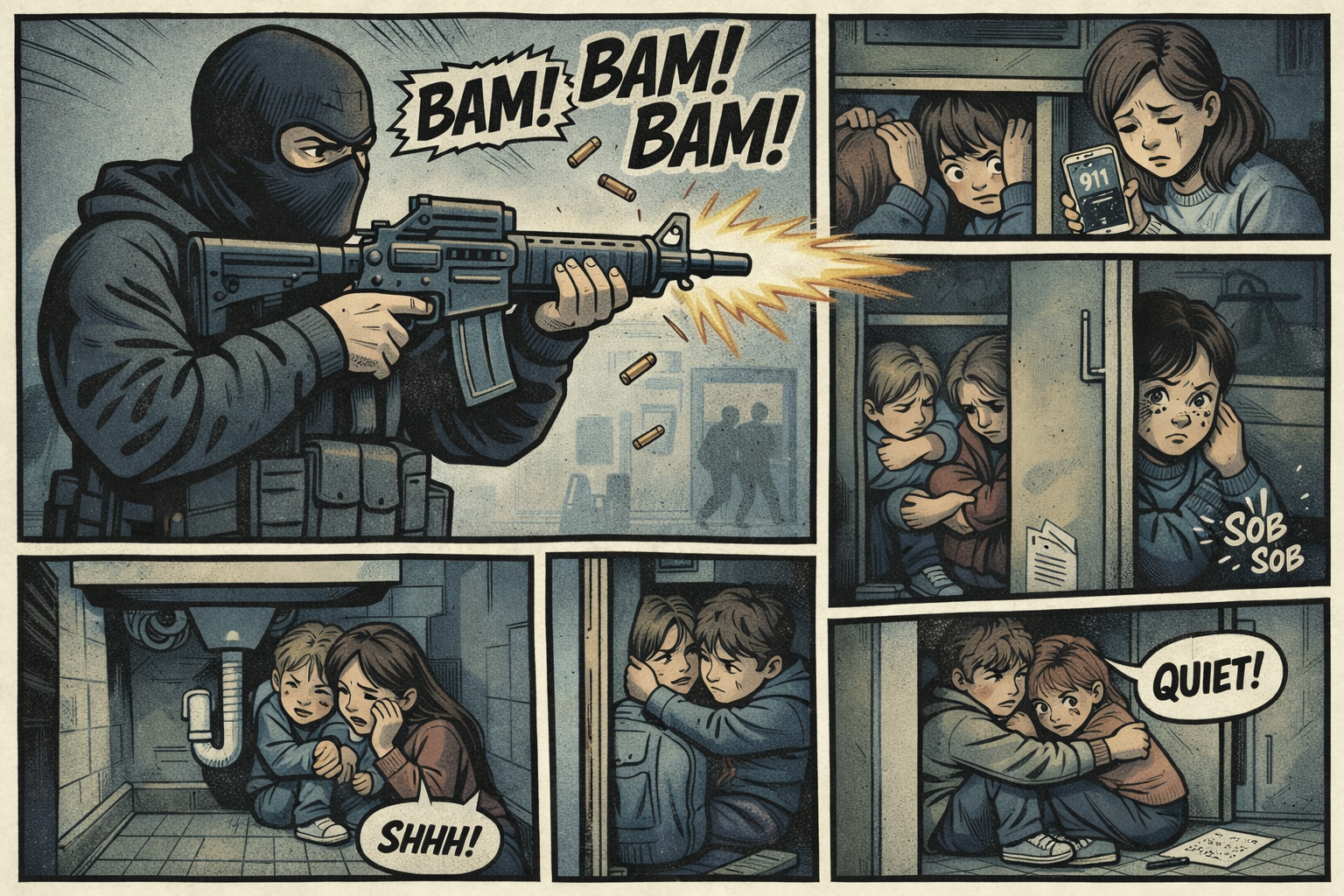
The recent school shooting in Tumbler Ridge, Canada, has once again raised urgent questions about preparedness, response, and safety inside schools. While investigations continue, families across North America are asking a practical and pressing question: what to do during a school shooting.
School shootings remain statistically rare compared to other forms of violence, but when they occur, preparation and clarity matter. This guide outlines evidence-based safety steps for students and parents, explains how schools respond to active threats, and highlights official emergency guidance from federal safety agencies.
Understanding an Active Shooter Situation in a School
An active shooter situation involves an individual actively engaged in killing or attempting to kill people in a confined and populated area. According to the U.S. Department of Homeland Security’s official Active Shooter Preparedness Booklet, these incidents are often unpredictable and evolve rapidly.
Schools train staff and students to follow specific school lockdown procedures designed to reduce exposure and allow law enforcement to respond effectively.
The key principle emphasized across federal guidance is simple: act quickly, stay calm, and follow instructions.
Immediate Response: Run, Hide, Tell
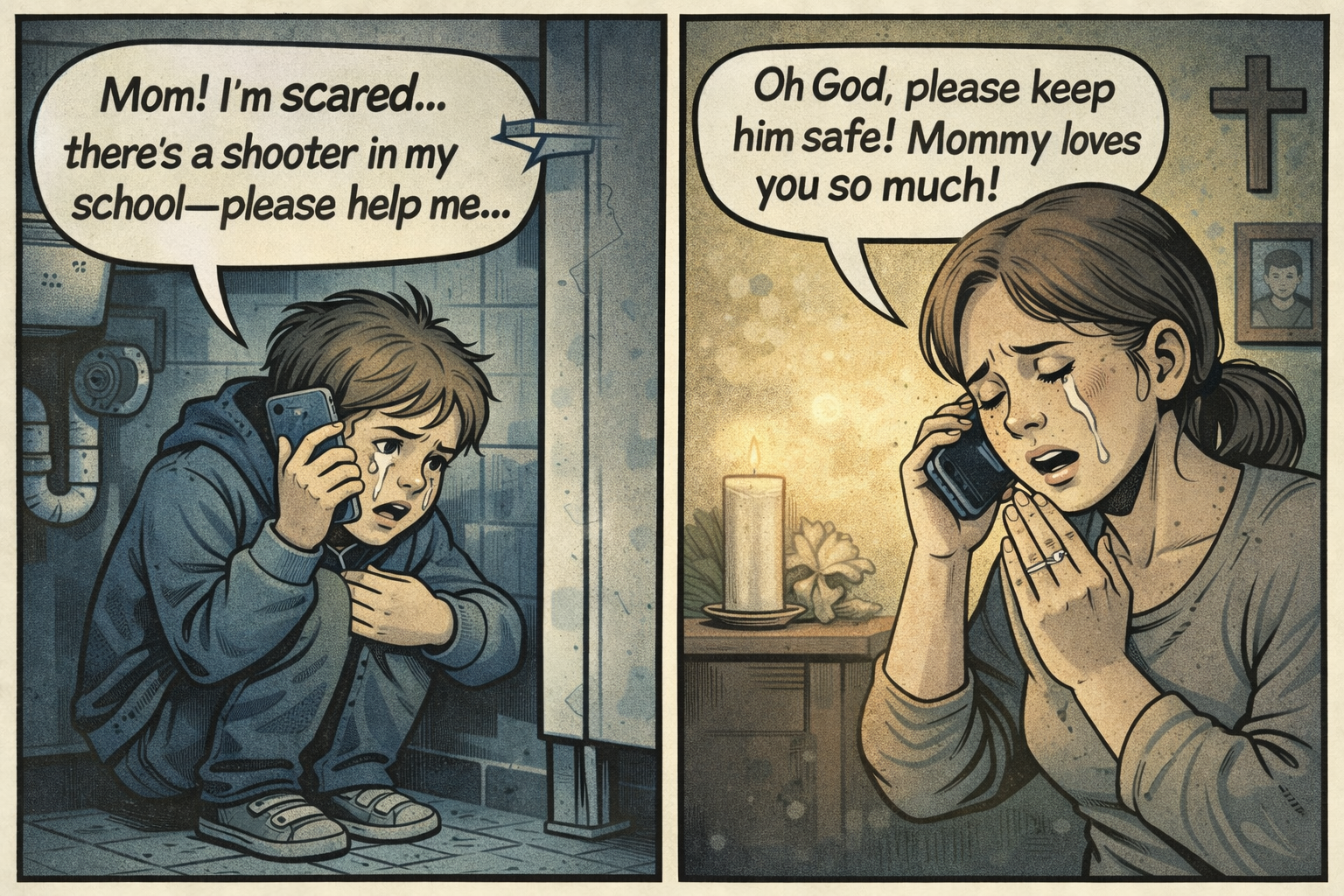
Federal agencies consistently promote a structured response model. Both the Department of Homeland Security and Ready.gov describe variations of the Run, Hide, Tell or Run, Hide, Fight protocol.
According to Ready.gov’s Active Shooter Hazard Information Sheet, the recommended steps are:
1. Run, if safe to do so
- Leave belongings behind
- Help others escape if possible
- Keep hands visible when encountering law enforcement
- Call emergency services once safe
2. Hide, if evacuation is not possible
- Lock and barricade doors
- Silence phones and electronic devices
- Stay out of the shooter’s view
- Remain quiet
3. Tell or Report
- Provide clear information to emergency responders
- Avoid spreading unverified details
In extreme situations where lives are in immediate danger and no escape is possible, federal guidance acknowledges that individuals may need to defend themselves as a last resort. However, law enforcement emphasizes avoidance and concealment first.
What Students Should Do During a School Shooting
Students often rely on teachers for direction. The safest response is to follow school staff instructions immediately.
Key school shooting safety steps for students include:
Stay calm and listen carefully
Do not open locked doors for anyone unless verified by law enforcement
Avoid pulling fire alarms unless directed, as false alarms can increase risk
Keep hands empty and visible when police arrive
The FBI’s official Active Shooter Safety Resources stress that students should understand their school’s emergency plan before an incident occurs. Familiarity with exits, safe rooms, and communication systems improves response time during a crisis.
What Parents Should Do If There Is a School Shooting
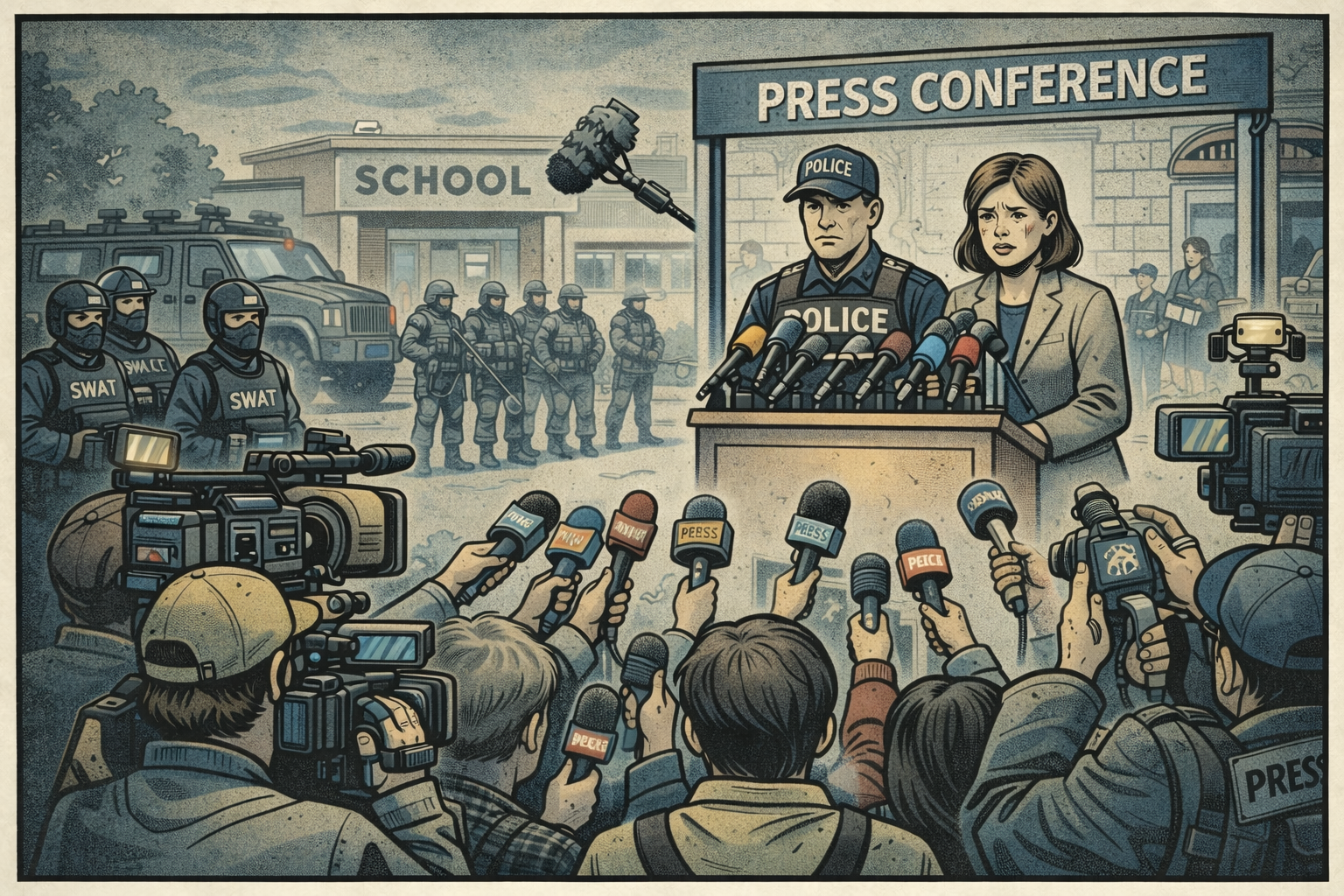
Parents play a critical role in preventing chaos during an emergency. Law enforcement agencies consistently warn against rushing to the school unless instructed.
Recommended steps for parents:
Monitor official updates from school districts and local authorities
Avoid spreading rumors on social media
Do not attempt to enter the school campus
Wait for reunification instructions
The U.S. Department of Education’s Guide on Responding to an Active Shooter in K-12 Settings explains that schools activate coordinated reunification plans after securing the scene. These plans are designed to ensure student safety and accurate identification before release.
Interference from outside can slow emergency operations.
How Schools Respond During an Active Shooter Incident
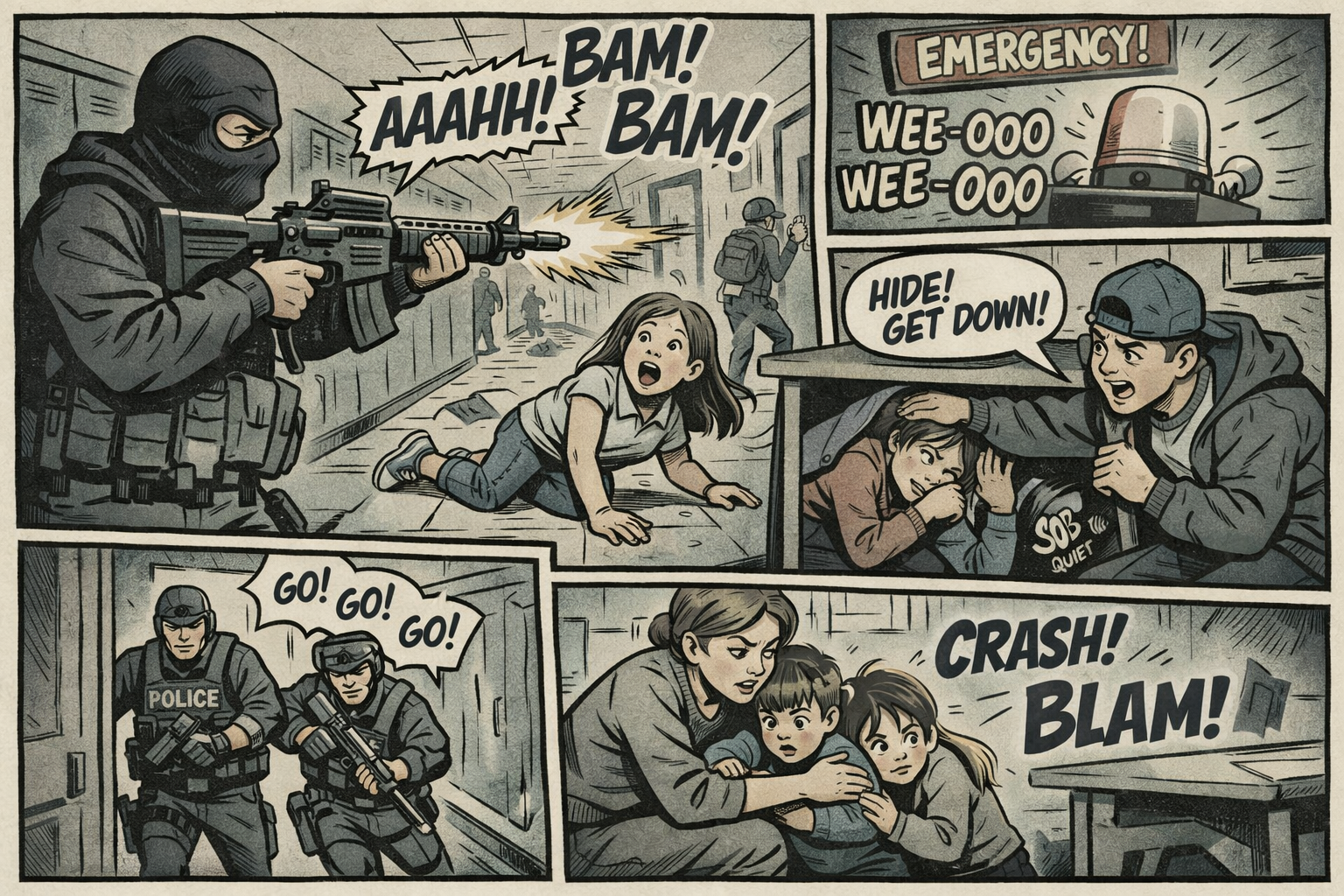
Schools follow structured emergency response plans developed in coordination with local law enforcement and emergency management officials.
These plans typically include:
Immediate lockdown announcement
Securing classrooms and common areas
Communication with law enforcement
Coordination with emergency medical services
Controlled reunification process
Modern schools conduct drills to prepare staff and students for emergencies. These drills are designed to reduce panic and reinforce automatic safety responses.
What We Know About School Shootings
Research shows that while school shootings receive intense media coverage, they remain statistically uncommon events.
The Brookings Institution’s analysis, School Shootings: What We Know About Them and What We Can Do to Prevent Them, highlights several consistent findings:
Most perpetrators are current or former students
Many incidents show warning signs before violence occurs
Prevention efforts often focus on threat assessment and mental health intervention
Preparedness does not eliminate risk, but it improves response outcomes.
After the Immediate Threat: Mental Health and Recovery
The aftermath of a school shooting often includes psychological trauma. Students, teachers, and parents may experience stress reactions, anxiety, or difficulty concentrating.
Schools typically provide:
Counseling services
Trauma-informed support
Crisis intervention teams
Parents should monitor children for changes in sleep, mood, or behavior and seek professional support when needed.
Why Preparation Matters
The recent Canada shooting has once again placed firearm regulation at the center of public debate. While Canada’s legal framework differs from that of the United States, the broader policy tension remains similar: how can governments protect public safety while respecting legal rights? That balance continues to shape legislative discussions, particularly during election updates in the US, when gun policy often becomes a defining issue for voters and lawmakers alike.
RTTE has previously examined this tension in Can You Protect the Constitution Without Compromising Gun Rights and Public Safety?, which explores how constitutional protections and safety concerns intersect in American law. As policymakers respond to tragedy, the long-term challenge is sustaining public trust in institutions designed to safeguard both rights and security.
References
U.S. Department of Homeland Security. Active Shooter Preparedness Booklet
Federal Bureau of Investigation. Active Shooter Safety Resources
U.S. Department of Education REMS Technical Assistance Center. Responding to an Active Shooter in K-12 Schools
Brookings Institution. School Shootings: What We Know About Them and What We Can Do to Prevent Them
Ready.gov. Active Shooter Hazard Information Sheet

- What Is Actually Happening in France Right Now, and Why It Matters for the Race to Replace Macron - October 19, 2026
- How a 1971 Supreme Court Case Still Decides Who Makes Your Local Ballot - October 14, 2026
- The Supreme Court Is About to Decide a Major Voter Roll Case. Here Is the Timeline That Got Us Here - September 24, 2026