

Photo: BGM-109 Tomahawk Ship-Launched Cruise Missile, courtesy of Wikimedia Commons. Image licensed under CC BY-SA 4.0.
As Ukrainian President Volodymyr Zelensky continues to call on Western allies to respond decisively to renewed Russian aggression, the discussion over deterrence has resurfaced. Modern warfare often begins with diplomatic statements, but it is underpinned by credible force. The Tomahawk cruise missile is one of the clearest symbols of that force. It is a precision weapon that can strike far from home shores, allowing the United States to project power quickly and without deploying large numbers of troops.
Across decades of operations, from the Gulf War to today’s global tensions, the Tomahawk has been the United States Navy’s most visible and flexible deterrent. As leaders issue warnings or calls for restraint, the presence of destroyers armed with Tomahawk launchers sends a clear message that the United States retains both capability and intent. (BBC News. Live Coverage: Global Tensions and Zelensky’s Response)
The Birth of a New Kind of Weapon
The Tomahawk missile was developed in the late stages of the Cold War when the United States needed a weapon that could deliver precision strikes without the risks associated with manned aircraft. Designed by the U.S. Navy in partnership with Raytheon, it entered service in the early 1980s. The Tomahawk’s official designation, BGM-109, refers to a subsonic, long-range cruise missile that can carry either a conventional or nuclear warhead.
According to the Smithsonian National Air and Space Museum, the first versions of the missile used a combination of terrain contour mapping and digital scene-matching technology to navigate at very low altitudes, allowing it to evade radar and deliver accurate strikes hundreds of miles away.
The missile made its combat debut during the 1991 Gulf War. U.S. ships in the Persian Gulf and Red Sea launched Tomahawks that destroyed Iraqi radar and communication centers with high precision. These strikes were televised globally, introducing audiences to a new era of warfare in which accuracy, not volume of fire, became the primary standard of military capability. (PBS Frontline. Weapons: The Tomahawk Missile)
Pricing
The Tomahawk missile’s cost has often been discussed as a measure of how modern warfare balances technology and expense. While prices fluctuate depending on upgrades and contracts, open-source estimates provide a general idea of what each missile costs. Reports such as those from ET Now News offer insight into this complex valuation.
Key points on pricing include:
Each Tomahawk missile is estimated to cost between 1.5 million and 2 million U.S. dollars, depending on production lot and included upgrades.
The Department of Defense does not publicly release per-unit prices for operational variants, leading to reliance on open-source figures.
Costs vary based on whether research, maintenance, and long-term sustainment are included.
Analysts believe this price range accurately represents modern Block IV and Block V models.
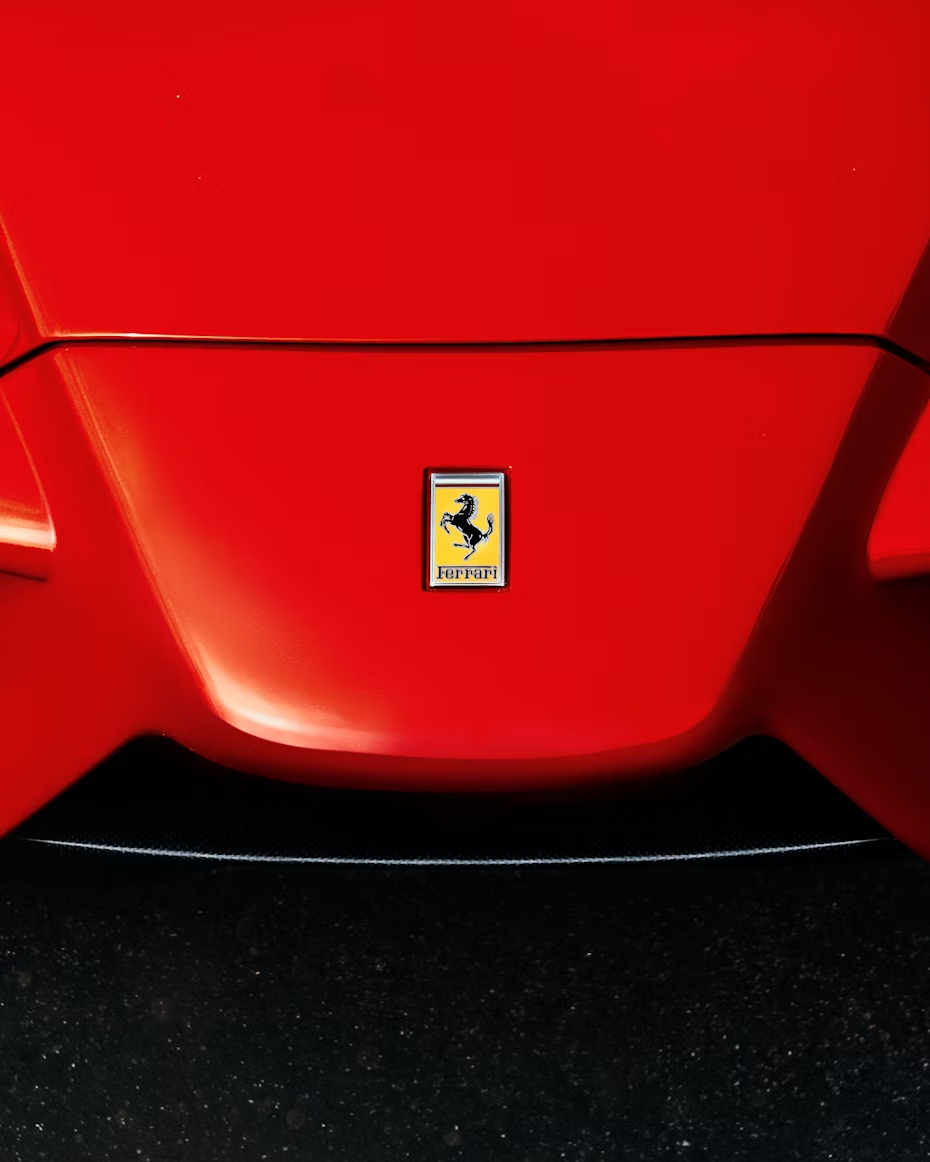
To illustrate the scale, one Tomahawk’s estimated cost is roughly comparable to a Ferrari Daytona SP3, though this analogy is intended for context rather than as an official valuation.
Precision
The Tomahawk missile is known for its accuracy and reliability. According to research published by the Johns Hopkins Applied Physics Laboratory, the missile combines GPS, inertial navigation, and terrain contour mapping to achieve precision within a few meters of its target.
The missile carries a 1,000-pound conventional warhead and has a range of more than 1,000 miles, depending on the variant. It can also be reprogrammed mid-flight, allowing operators to redirect it to new targets if intelligence changes after launch.
The Tomahawk can be launched from both surface ships and submarines, giving it flexibility across multiple theaters of operation. Its flight path allows it to approach targets at low altitudes and unpredictable angles, reducing its chances of interception by air defense systems. These characteristics make it one of the most effective cruise missiles ever produced.
The Symbolism of a Launch
Each Tomahawk launch carries strategic meaning beyond its immediate military purpose. The decision to use these missiles often serves to demonstrate resolve without committing to a full-scale conflict.
From Iraq in 1991 to Syria in 2017, U.S. presidents have ordered limited Tomahawk strikes to deter aggression or respond to violations of international norms. The PBS Frontline archives describe the missile as both “a scalpel and a signal.” It is precise enough to target specific installations and symbolic enough to remind adversaries of U.S. military reach.
Televised footage of Tomahawk launches has become a recurring feature of modern conflicts. The missile’s bright flare and low-trajectory flight path represent the point where diplomatic warnings end and military action begins. Each launch sends a visible signal that the United States is prepared to act when it believes deterrence has failed.
The Economics and Politics of Deterrence
The Tomahawk’s high cost makes every launch a strategic and economic calculation. Firing one represents a significant financial commitment, but it is still far less expensive and politically risky than deploying ground forces.
The missile’s export to allied nations also demonstrates its value as a tool of shared deterrence. In 2023, Australia announced plans to purchase Tomahawk missiles from the United States to strengthen its long-range strike capability. The Australian Department of Defence said the acquisition would “enhance Australia’s ability to deter and respond to potential security challenges in the Indo-Pacific region.”
This purchase underscores how the missile’s role extends beyond the United States. For allies, owning Tomahawks provides both a practical and political advantage. It gives them a credible means to deter regional threats and a way to demonstrate strategic alignment with Washington.
At the same time, analysts have warned that reliance on precision weapons can make the decision to use force appear more acceptable. Because Tomahawk strikes carry relatively low risk to personnel, they may lower the threshold for limited military action. This dynamic continues to shape debates over deterrence and restraint in U.S. foreign policy.
Why the World Still Fears It
The world continues to fear the Tomahawk missile because of its proven record and its reach. A single U.S. destroyer or submarine equipped with Tomahawks can place critical targets hundreds of miles inland at risk. The missile’s launch requires no large buildup of troops, and its approach is nearly impossible to detect before impact.
Its long service history contributes to its psychological power. The Tomahawk has been used successfully in multiple conflicts over four decades, and few modern weapons have such a consistent record of operational success. Even as countries invest in hypersonic technology, the Tomahawk’s reliability and adaptability ensure that it remains a cornerstone of conventional deterrence.
More than any other U.S. missile, the Tomahawk represents both precision and certainty. It strikes accurately, communicates political resolve, and reminds adversaries that American military capability is both immediate and enduring.
References:
BBC News. Live Coverage: Global Tensions and Zelensky’s Response
Smithsonian National Air and Space Museum. The Tomahawk and U.S. Cruise Missile Technology
Smithsonian National Air and Space Museum. Cruise Missile, Ship-Launched, Tomahawk BGM-109
Johns Hopkins Applied Physics Laboratory. Technical Digest: Tomahawk Guidance and Control Systems
PBS Frontline. Weapons: The Tomahawk Missile
ET Now News. Explained: What Are Tomahawk Missiles, What’s Their Average Cost, Why Are They So Expensive?
U.S. Navy. Fact File: Tomahawk Cruise Missile
Australian Department of Defence. Missiles Power Up ADF’s Range

- Five Myths About How the Electoral College Actually Works - September 29, 2026
- Why Does the President’s Party Almost Always Lose Seats in the Midterms? - September 9, 2026
- Why Is Congress Racing to Fund the Government Before the Midterms? - August 31, 2026