
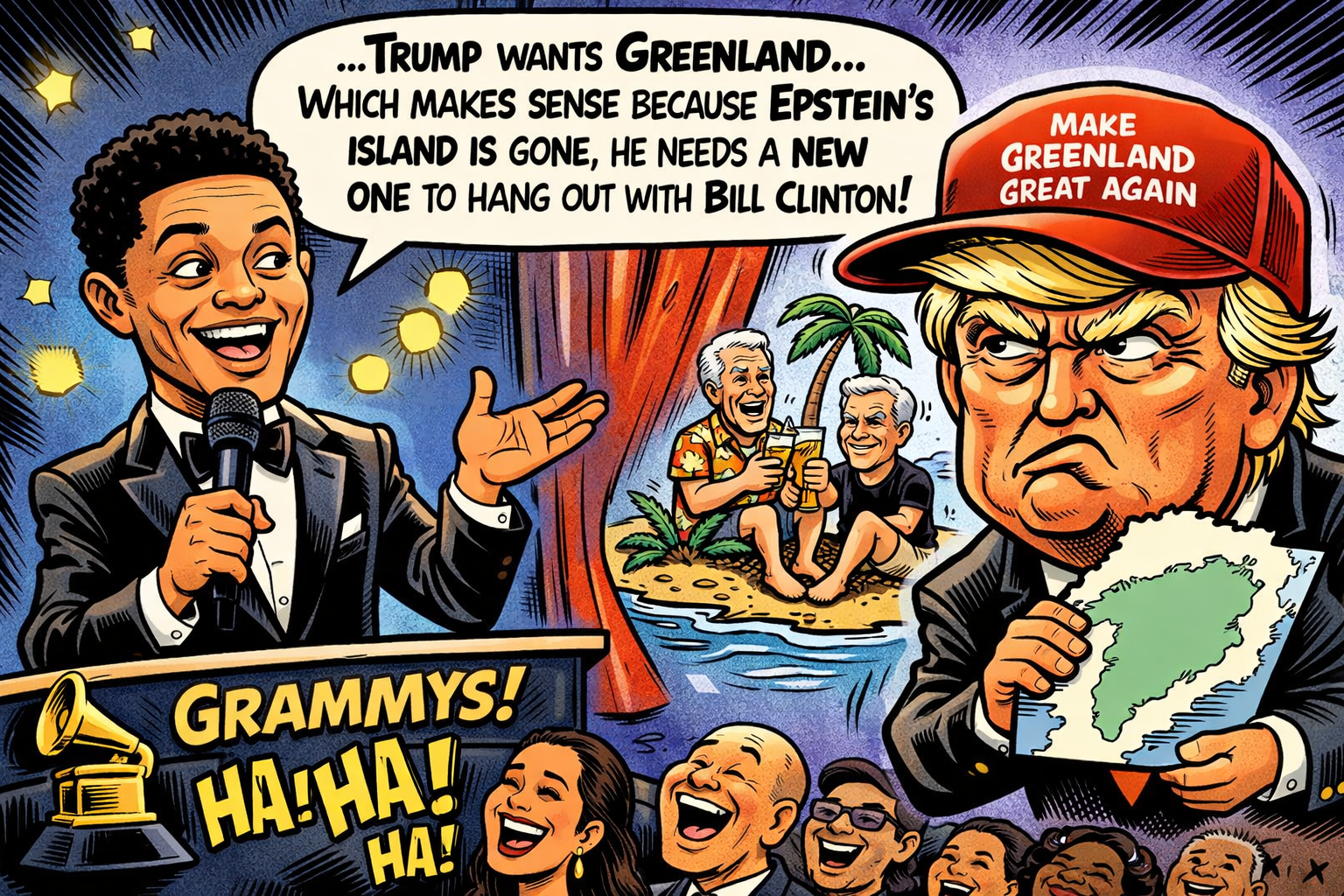
 Recent remarks by Trevor Noah involving Donald Trump, followed by public discussion about potential legal action against both the comedian and CBS, have revived a recurring constitutional question: can a public figure sue a comedian for satire or political commentary?
While the news centers on personalities, the legal framework governing satire, defamation, and political speech in the United States is well established. As similar disputes continue to surface in election updates in the US, the issue turns on how the First Amendment protects criticism of those in power.
Trevor Noah on Grammys
The controversy surrounding Trevor Noah stems from political commentary delivered in a satirical format. Legal threats against comedians are not new, particularly when jokes touch on reputation or past allegations. However, history shows that such threats rarely result in successful lawsuits, largely due to strong constitutional protections for political expression.
This incident follows a familiar pattern rather than introducing new legal ground.
What the First Amendment Protects
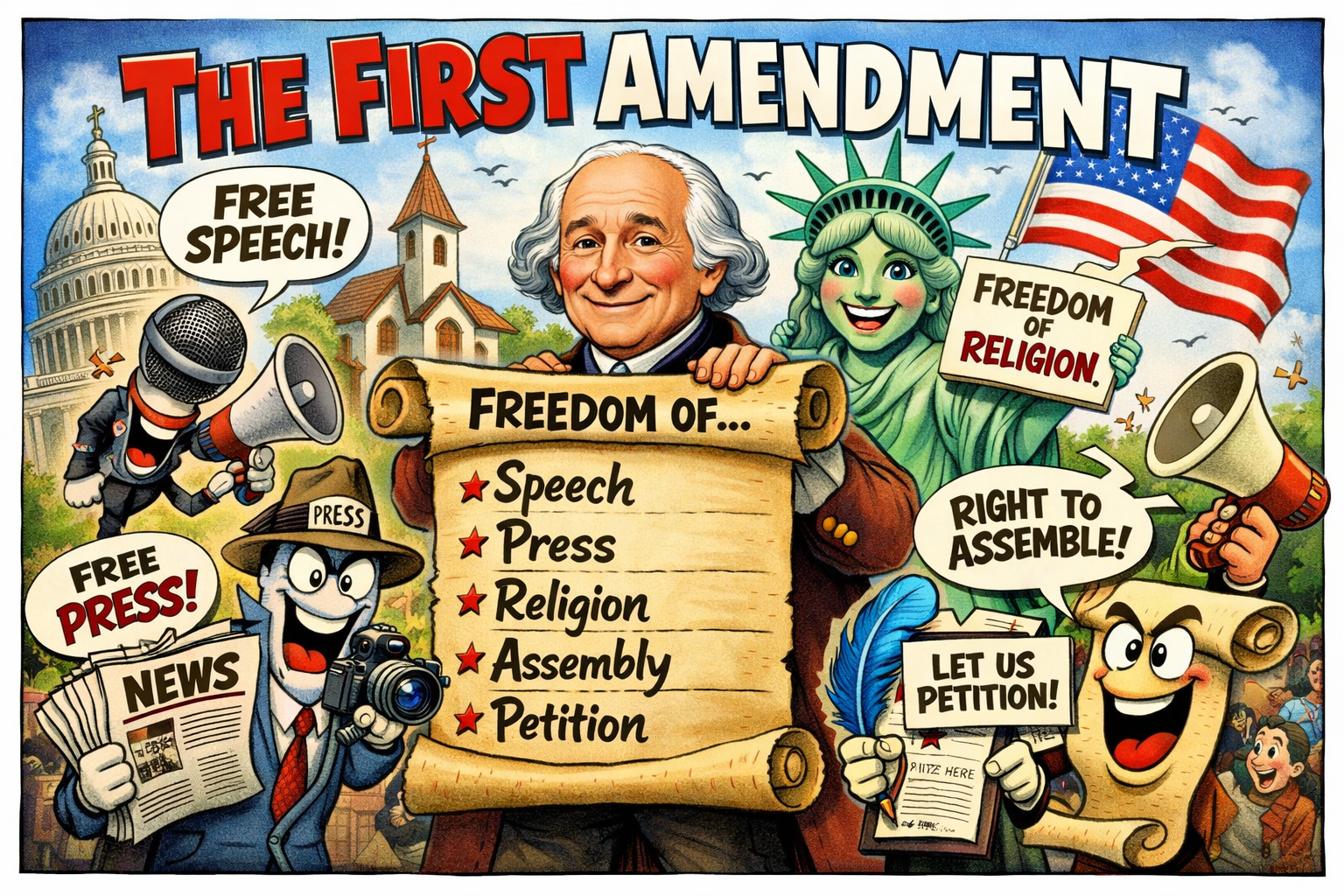
The First Amendment provides broad protection for freedom of speech, especially speech related to public affairs and government officials. According to the U.S. Courts’ explanation of what free speech means, political expression sits at the core of constitutional protection because it allows citizens to engage in democratic debate without fear of punishment.
This protection applies not only to journalists, but also to commentators, satirists, and entertainers whose work contributes to public discussion.
Satire and Comedians Under U.S. Law
Satire is treated differently from factual reporting under U.S. law. Courts focus on whether a reasonable audience would interpret the speech as commentary rather than a literal statement of fact. The First Amendment Center at Middle Tennessee State University’s explanation of satire makes clear that parody and exaggeration are protected because audiences understand they are not intended to convey factual claims.
The Library of Congress’ review of landmark cases confirming that satire is protected free speech further shows that courts have consistently upheld satire even when it causes offense or reputational discomfort.
Cases Involving Comedians and Public Figures
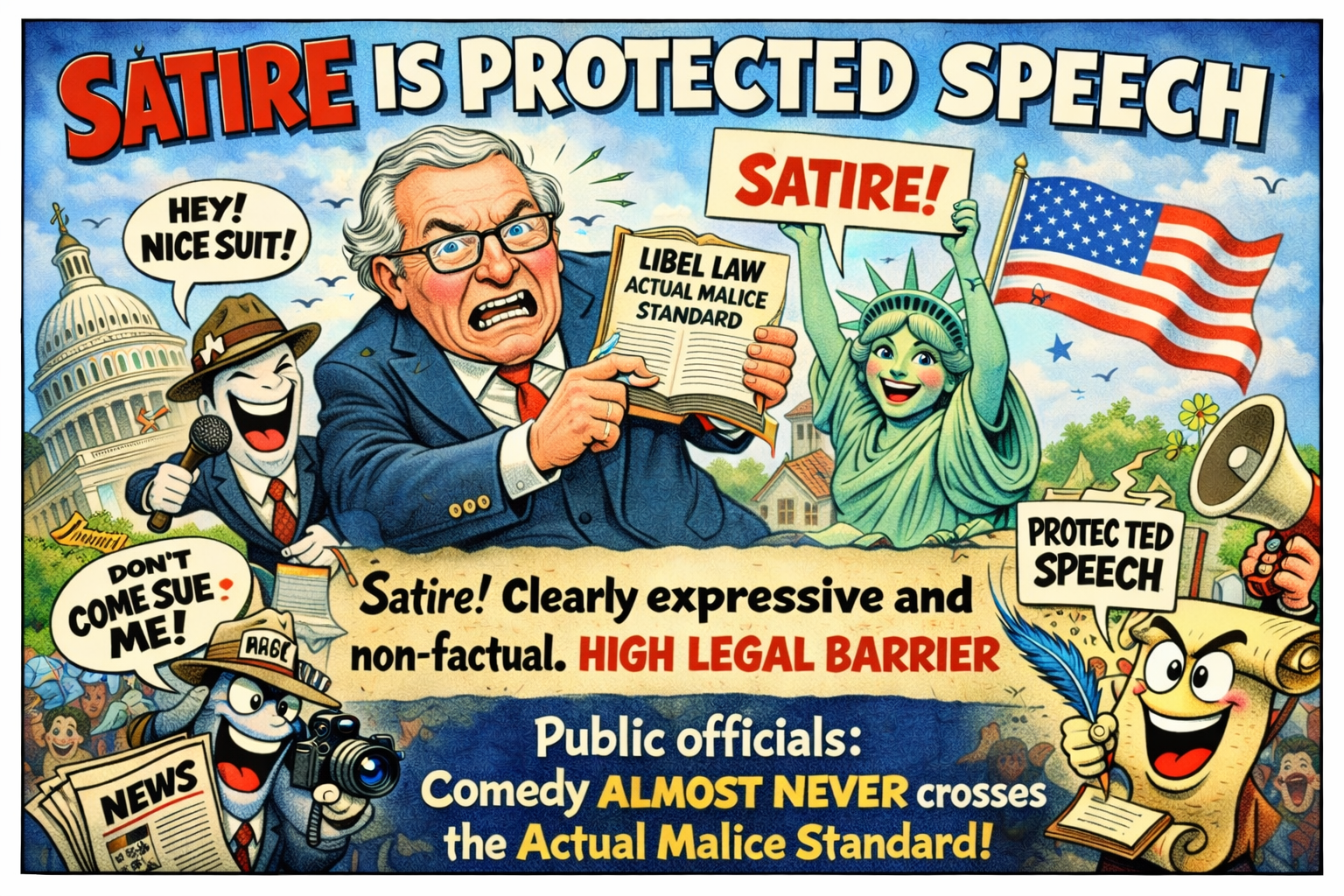
Defamation claims brought by public officials against comedians face a high legal barrier. The Congressional Research Service’s overview of defamation and the First Amendment explains that public figures must prove actual malice, meaning the speaker knowingly made a false statement of fact or acted with reckless disregard for the truth.
Cornell Law School’s constitutional analysis of defamation under the First Amendment clarifies that satire almost never meets this standard because it does not present itself as factual reporting. As a result, lawsuits against comedians and satirical programs are typically dismissed or fail early in litigation.
Heightened Scrutiny, Media Coverage, and Reputation
Public officials operate under heightened media scrutiny, particularly during election cycles or moments of controversy. U.S. law reflects this reality by prioritizing open debate over reputational protection for those who hold power.
The Congressional Research Service’s explanation of freedom of speech and the First Amendment notes that this legal framework exists to prevent public officials from using lawsuits to suppress criticism. While satire can influence public perception, courts view reputational discomfort as an expected consequence of public office rather than a legal injury.
When Free Speech Collides With Reputation
The First Amendment strongly protects satire, political commentary, and expressive opinion, particularly when directed at public officials. The actual malice standard creates a high legal barrier that comedy almost never crosses. As long as satire remains clearly expressive and non-factual, courts continue to treat it as protected speech rather than defamation.
References:
First Amendment Center at Middle Tennessee State University. Satire.
Congressional Research Service. Defamation and the First Amendment.
Cornell Law School. Defamation.
Congressional Research Service. Freedom of Speech and the First Amendment.
Library of Congress. Satire Is Protected Free Speech.
The White House. Restoring Freedom of Speech and Ending Federal Censorship.
U.S. Courts. What Does Free Speech Mean?.

- Early Voting Just Started for the 2026 Midterms, and the Story Behind It Goes Back Further Than You’d Think - September 18, 2026
- When Elections End in a Dead Heat: The Wild (and Totally Legal) Ways America Breaks a Tie - August 19, 2026
- China vs America AI 2026: The Race That Closed Overnight and the Election Claim That Divides Washington - July 21, 2026