

Immigration policy continues to influence election updates in the US, and few local decisions attract as much scrutiny as sanctuary city policies. New York City has spent an estimated $6.5 billion on migrant and sanctuary-related services in recent years, according to city budget disclosures and public reporting. While New York’s spending is the largest in the country, it is not an isolated case. Other U.S. cities have committed millions of dollars to similar policies, raising questions about cost, responsibility, and the role of local governments in federal immigration enforcement.
To understand why these costs exist, it is necessary to first understand what a Sanctuary City is and how these policies function in practice.
What Is a Sanctuary City?
A Sanctuary City is a city, county, or state that limits its cooperation with federal immigration enforcement agencies, particularly U.S. Immigration and Customs Enforcement. These policies do not prevent the federal government from enforcing immigration law. Instead, they define how local governments use their own personnel, data, and resources.
Sanctuary policies commonly include:
- Limiting compliance with ICE detainer requests unless accompanied by a judicial warrant
- Prohibiting local law enforcement from asking residents about immigration status
- Restricting the sharing of personal information with federal immigration authorities
- Allowing access to local services regardless of immigration status
The U.S. Department of Justice formally identified jurisdictions that limit cooperation with federal immigration enforcement in its announcement, Justice Department Publishes List of Sanctuary Jurisdictions.
Why Sanctuary Policies Exist
Local officials who support sanctuary policies argue that separating immigration enforcement from local policing improves public safety. Their position is that immigrants are more likely to report crimes, cooperate with investigations, and seek medical care when they do not fear deportation over routine interactions.
Another core argument is constitutional. Immigration enforcement is a federal responsibility, and local governments are not legally required to assist in that enforcement. The Congressional Research Service explains that under the Tenth Amendment, the federal government cannot compel states or cities to enforce federal immigration law, as outlined in Immigration Enforcement and Sanctuary Jurisdictions.
New York’s $6.5 Billion in Sanctuary-Related Spending
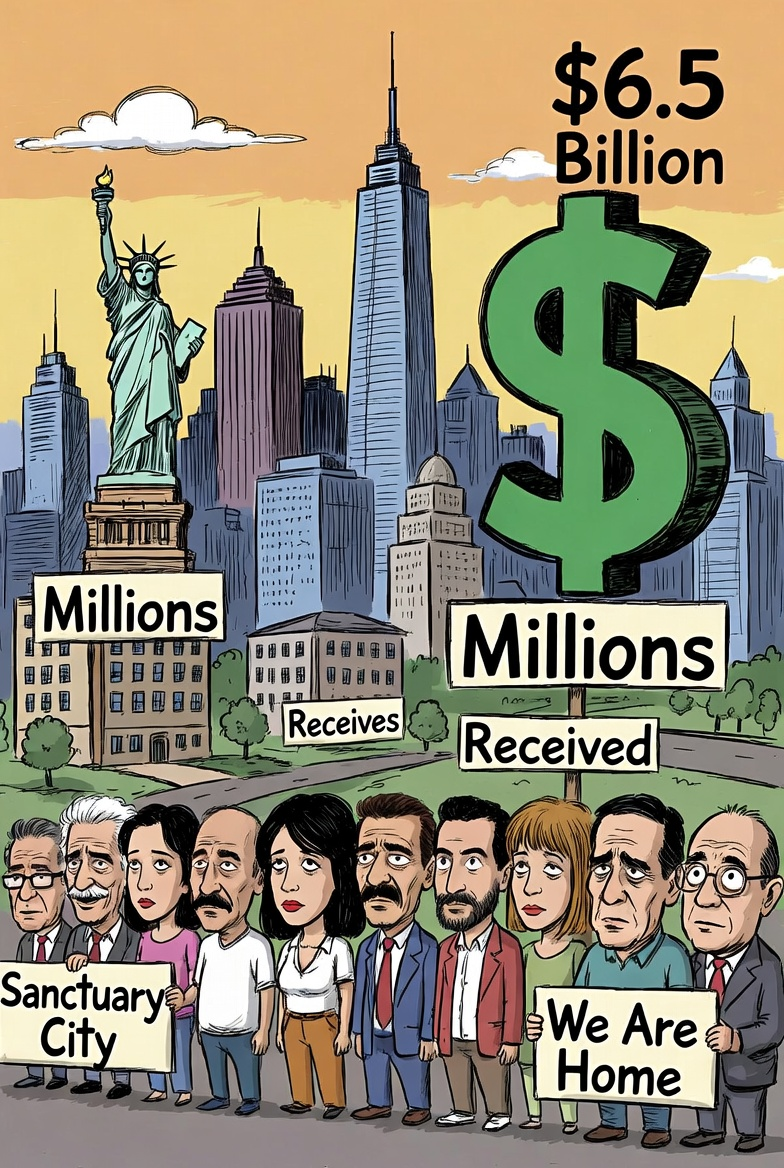
New York City’s estimated $6.5 billion in spending reflects costs associated with emergency shelter operations, housing facilities, healthcare services, food assistance, education, and legal support for migrants. Much of this spending increased after 2022, when the city experienced a surge in asylum seekers and was required to provide shelter under state and local law.
City officials have stated that these expenses are driven by legal obligations and humanitarian needs. Critics argue that sanctuary policies limit coordination with federal authorities, increasing the duration and cost of local care.
While not all spending is directly caused by sanctuary laws, New York’s Sanctuary City status places a greater share of responsibility on local systems rather than federal agencies.
How Much Other Cities Have Spent on Sanctuary-Related Services
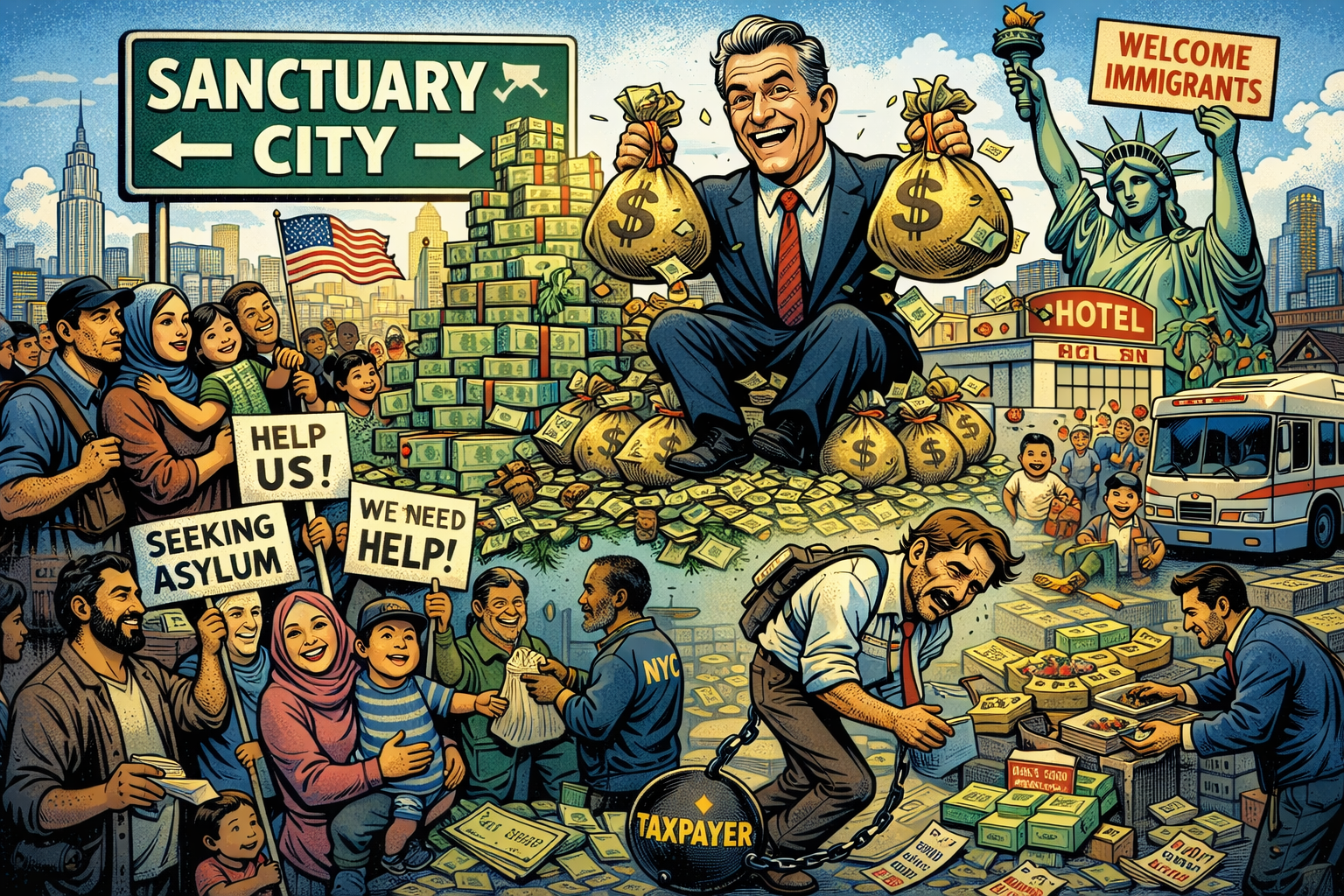
New York’s $6.5 billion spending figure is the largest reported, but other sanctuary jurisdictions have also committed substantial public funds, typically recorded as spending on migrant shelter, housing, healthcare, food assistance, and legal services rather than a single labeled “sanctuary” budget.
In Chicago, city data shows at least $138 million was spent in 2023 on migrant housing and care, with total spending reaching approximately $434 million between mid-2022 and mid-2024, according to reporting cited by the Migration Policy Institute and local media.
Washington, D.C. reported spending $36.4 million on migrant services by mid-2023, with projections rising to nearly $56 million as arrivals continued, based on city disclosures summarized by the Migration Policy Institute.
In Denver, emergency declarations allowed the city to allocate tens of millions of dollars toward temporary housing, shelters, and support services for migrants. While the city has not published a single cumulative total, budget documents show sustained emergency spending tied to migrant arrivals.
Los Angeles and San Francisco have allocated millions annually toward immigrant legal defense funds, healthcare access, and housing assistance. These costs are distributed across city departments and nonprofit partnerships rather than centralized in one line item.
Seattle and Boston similarly fund sanctuary-related services through a mix of municipal budgets and state support, with spending rising during periods of increased migrant arrivals.
Policy analysts note that most cities do not track sanctuary spending as a standalone category. Instead, costs appear across housing, health, emergency management, and social services budgets. A peer-reviewed study published by the National Institutes of Health found that sanctuary policies often shift short-term and long-term financial responsibility to local governments during migration surges.
How Sanctuary Cities Are Funded
There is no federal funding program specifically designed to support sanctuary policies. Instead, funding typically comes from:
Local tax revenue
State emergency appropriations or grants
Limited federal reimbursements tied to specific services
Partnerships with nonprofit organizations
The Congressional Research Service notes that federal funds generally cannot be withheld solely because a jurisdiction adopts sanctuary policies, following multiple federal court rulings.
Are Sanctuary City Policies Legal?
Yes. Courts have consistently upheld the legality of sanctuary policies.
Legal analysis from Albany Law School explains that the federal government cannot require state or local governments to enforce federal immigration law, as outlined in Sanctuary Jurisdictions and the Law
Sanctuary cities reflect a choice made at the local level, but the cost of that choice is carried largely by American taxpayers. In New York and other major cities, billions and millions of public dollars have been spent on shelter, healthcare, food, and basic services, all funded through the same tax base that supports schools, infrastructure, and public safety. For many working taxpayers, the question is not rooted in opposition to humanitarian aid, but in whether the financial responsibility is being shared fairly and transparently. As immigration remains a federal issue, the growing reliance on local budgets raises a broader reflection about accountability, sustainability, and whether those who fund these systems should receive clearer answers, stronger oversight, and greater support in return.
References:
U.S. Department of Justice. Justice Department Publishes List of Sanctuary Jurisdictions.
Congressional Research Service. Immigration Enforcement and Sanctuary Jurisdictions.
National Institutes of Health. Sanctuary Policies and Public Health Outcomes.
Albany Law School. Sanctuary Jurisdictions and the Law.
Georgetown Law. The Legality of Sanctuary Cities.

- A Supreme Court Case You Probably Missed Could Open the Door to a Lot More Election Lawsuits - October 9, 2026
- Dark Money Is Pouring Into the 2026 Midterms. Here Are Five Myths About How It Actually Works - September 21, 2026
- The Supreme Court Just Blocked Trump’s Mail Ballot Restrictions. Here’s What That Means - September 17, 2026