

For more than two centuries, the White House has symbolized the heart of American democracy, and within its storied walls, the East Wing of the White House stands as a beacon of grace and accessibility. Unlike the high-stakes corridors of the West Wing, where policy is forged amid the intricacies of U.S. elections and presidential powers, the East Wing has long served as an apolitical haven—a space for family, diplomacy, and public connection. Home to the First Lady’s office White House and initiatives, it embodies “soft power” through its gardens, galleries, and gathering rooms. This enduring structure, shaped by generations of leaders and their spouses, offers a window into the human side of the presidency, inviting visitors to walk in the footsteps of political history of the United States and government explained.
Origins in Vision and Resilience: East Wing History and East Wing Construction Date
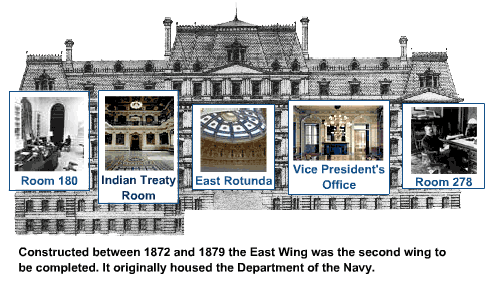
George W. Bush White House Archives. (2005). East Wing colonnade and Jacqueline Kennedy Garden [Photograph].
The East Wing history traces back to the White House’s earliest days. In the early 1800s, President Thomas Jefferson dreamed of enhancing the mansion’s elegance with colonnaded terraces on both its east and west sides. The East Terrace, constructed in 1807, was a graceful addition that lent the building a sense of classical symmetry. Over time, however, wear and evolving needs led to its removal in 1866. It was rebuilt in 1902 on its original foundation under President Theodore Roosevelt, who also cleared away long-standing greenhouses that had dotted the east grounds since the mansion’s inception.1
The wing’s modern form took shape in 1942—the East Wing construction date—when President Franklin D. Roosevelt commissioned a second story to conceal an underground East Wing bunker during World War II—a pragmatic response to wartime threats that doubled as a forward-thinking expansion.23 This addition transformed the East Wing into a bustling yet serene appendage, channeling visitors past blooming landscapes and into the Residence. From Jefferson’s terraces to FDR’s fortifications, the East Wing reflects the White House’s adaptive spirit, evolving with the nation’s challenges while preserving its architectural poise, much like the expansions that have marked White House expansion history.
A Tapestry of Spaces: What is Inside the East Wing and East Wing Architecture
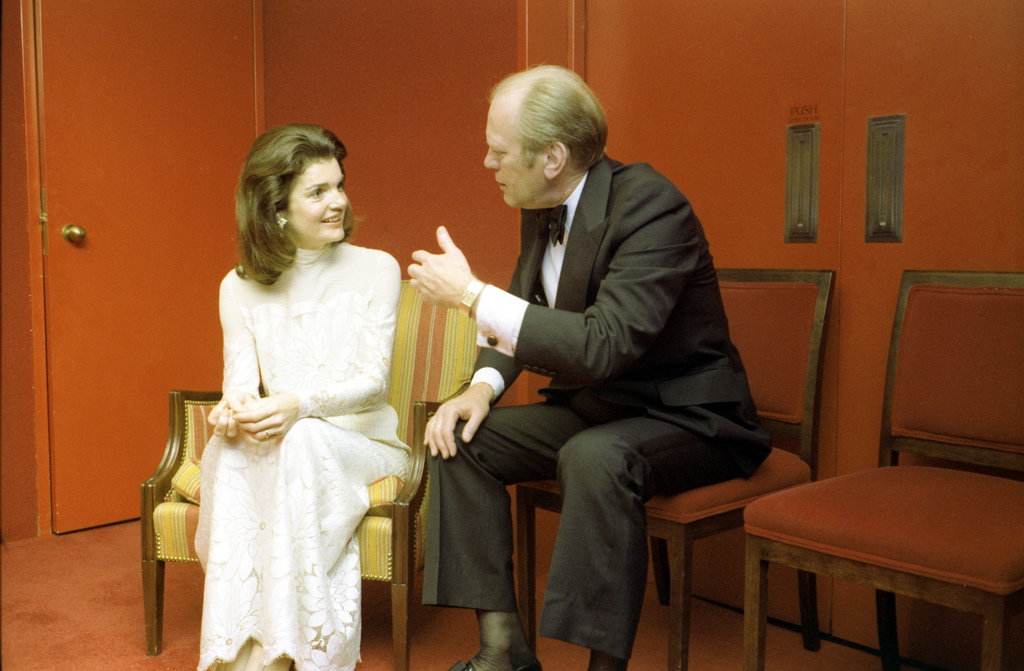
“President Ford and Jacqueline Kennedy Onassis.” Photograph. NARA & DVIDS Public Domain Archive, 1976
At its core, the East Wing is a mosaic of intimate and inspiring venues, blending functionality with artistry. The East Colonnade, with its arched elegance, serves as a welcoming promenade, guiding guests from the visitor entrance toward the Jacqueline Kennedy Garden—a verdant oasis designed under First Lady Jacqueline Kennedy and later honored with its name by Lady Bird Johnson.1 This garden, framed by seasonal blooms, has hosted countless informal receptions, offering a peaceful counterbalance to the presidency’s demands.
Inside, the wing houses practical yet picturesque spaces. The President’s Theater provides a cozy retreat for family film nights, while upstairs suites accommodate dignitaries. Public areas shine with historical charm: the Vermeil Room displays a gilded collection of presidential portraits; the Library, with its wood-paneled walls and leather-bound tomes, evokes quiet reflection; and the China Room showcases exquisite tableware from administrations past, each piece a chapter in White House entertaining.4 These rooms, rich in art and artifacts, underscore the purpose of the East Wing as a living museum—accessible, approachable, and alive with stories. The East Wing architecture, with its neoclassical lines and integrated bunker elements, exemplifies resilience and refinement.
The First Ladies’ Domain: Roles and Lasting Contributions
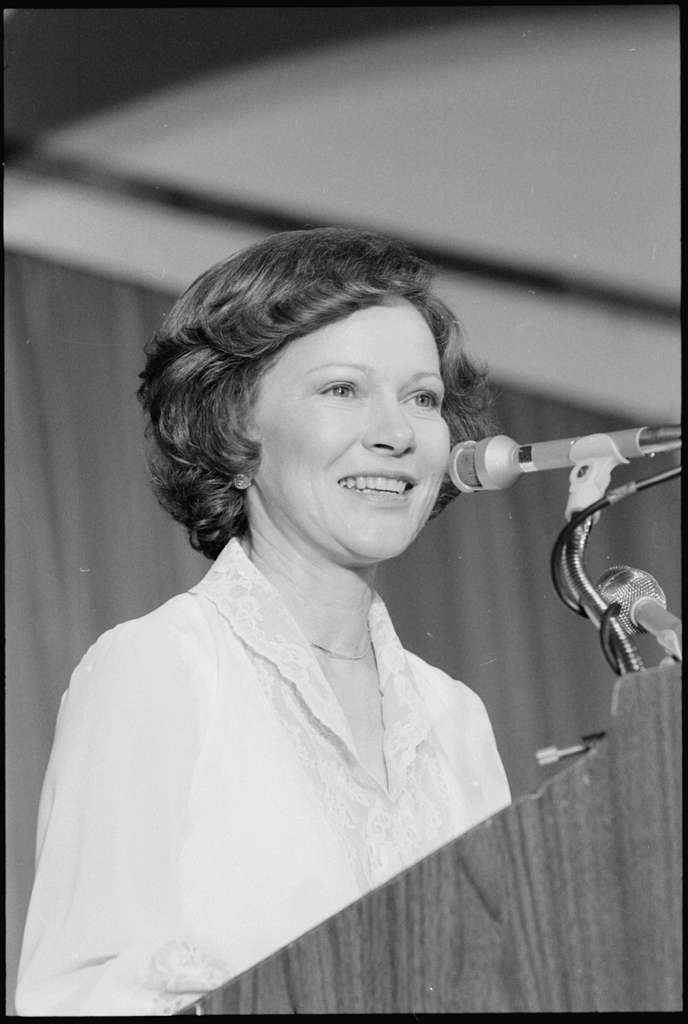
Since its expansion, the East Wing has been synonymous with the First Lady’s office White House, providing dedicated office space for her and her staff to champion causes beyond politics.2 This tradition solidified in 1977, when Rosalynn Carter became the first to maintain a permanent office there, marking a shift toward structured support for initiatives in education, health, and the arts.5
Generations of First Ladies have left indelible marks. Jacqueline Kennedy’s vision brought sophisticated gardens and cultural restorations, elevating the wing’s aesthetic legacy. Lady Bird Johnson not only renamed the garden in her predecessor’s honor but also used the space to advance environmental advocacy. Laura Bush, during the George W. Bush administration, leveraged her East Wing offices to promote literacy programs, hosting events that blended policy with personal passion.1 From Edith Wilson’s input on early rose gardens to Michelle Obama’s nearby Kitchen Garden promoting wellness, these women have woven threads of compassion and creativity into the wing’s fabric, making it a platform for quiet yet profound impact.
Welcoming the World: Public Tours and Access
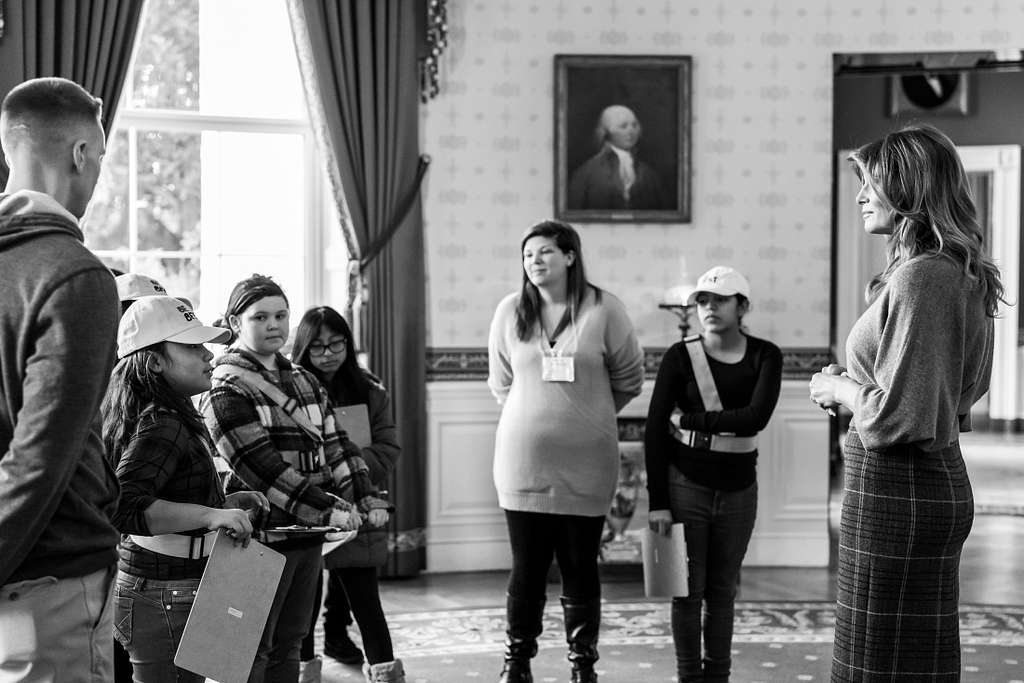
One of the East Wing‘s greatest gifts is its openness to the public, democratizing the White House experience. Free tours, requested through a Member of Congress up to 90 days in advance, begin at the East Entrance—a symbolic gateway where everyday Americans join world leaders.6 Available Tuesday through Saturday (with extended hours on weekends), these 45-minute journeys are led by knowledgeable Secret Service officers who share tales of each room’s lore, from artistic treasures to evolving uses.
Visitors first explore the East Wing‘s public rooms—the Vermeil Room’s portraits, the Library’s scholarly hush, and the China Room’s delicate displays—before proceeding via the East Colonnade past the Kennedy Garden into the Residence’s State Floor highlights: the Blue, Red, and Green Rooms, and the grand State Dining Room.6 It’s a route that demystifies the presidency, fostering a sense of shared heritage. For the latest on availability, a 24-hour information line ensures smooth planning, rain or shine.
A Legacy of Adaptation: Renovations Through the Ages and White House East Wing Facts
The White House, including its East Wing, is no static monument—it’s a canvas for presidential ingenuity. Renovations have punctuated its history, balancing preservation with progress. The 1902 rebuild under Roosevelt modernized the terraces amid broader executive expansions, while FDR’s 1942 addition addressed security without sacrificing style.3 Subsequent updates, from Truman’s post-fire reconstructions to Kennedy’s garden overhauls, reflect each era’s priorities—be it structural fortitude or aesthetic renewal.
These changes, often blending historic furnishings with contemporary needs, ensure the East Wing remains a functional gem. As one of the nation’s most cherished structures, it continues to evolve, honoring its past while serving the future—key White House East Wing facts include its role as the primary visitor entry and First Lady hub.
Current Developments: What’s Happening in the East Wing as of October 2025
As of October 24, 2025, the East Wing of the White House is undergoing its most significant transformation in decades: full demolition to pave the way for a new 90,000-square-foot state ballroom, announced by President Donald Trump in July 2025.8 Construction crews began demolishing the facade on October 20, with the entire wing expected to be razed within two weeks, according to administration officials.9 The $250–300 million project, funded privately by “patriot donors” and Trump himself, will create a grand venue seating up to 650 (with standing room for 999), mimicking the White House’s neoclassical architecture to host larger state dinners and events—addressing longstanding space constraints.10
First Lady offices and staff have been temporarily relocated during the work, which the White House describes as a “modernization” in line with historical precedents like FDR’s 1942 addition.11 However, the rapid pace has sparked controversy: Preservation groups, including the U.S. Commission of Fine Arts, have called for a pause, citing insufficient public review, while critics decry the loss of a historic structure tied to decades of American democracy moments.12 The West Wing and Residence remain unaffected, and the project is projected for completion by the end of Trump’s term. This bold step underscores the ongoing White House expansion history, blending progress with the presidency’s adaptive legacy.
An Enduring Symbol of Grace
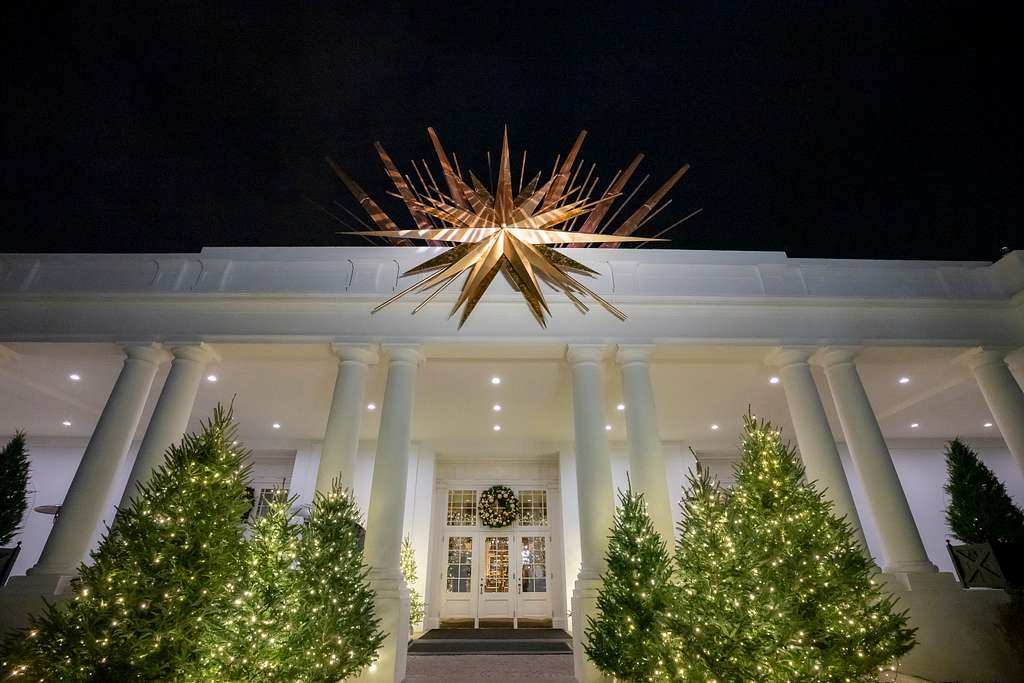
U.S. Department of Defense. (2024). White House East Wing holiday decorations, December 2024 [Photograph]. Picryl.com
The East Wing endures not just as bricks and blooms, but as a testament to the presidency’s multifaceted soul where diplomacy meets domesticity, and history whispers to all who enter. Through the visions of Jefferson and Kennedy, the stewardship of countless First Ladies, and the footsteps of millions of visitors, it reminds us that leadership’s true measure lies in its warmth and welcome. Whether strolling its colonnades or studying its stories from afar, the East Wing of the White House invites us to reflect on America’s ongoing journey: resilient, refined, and remarkably approachable.
References:
White House. Visitor Information.
White House. White House Ballroom: A Proud Presidential Legacy (2025).
George W. Bush White House Archives. The East Wing.
George W. Bush White House Archives. East Executive Building Tour.
Time Magazine. A Brief History of the East Wing of the White House.
The New York Times. White House East Wing Faces Partial Demolition Amid Major Expansion Plans.

- Five Myths About States Banning ICE From Polling Places - October 12, 2026
- The Secret Ballot Is Newer Than You Think, and It Took a Body Count to Get Here - October 6, 2026
- Why Is Election Day Always a Tuesday in November? - September 4, 2026