
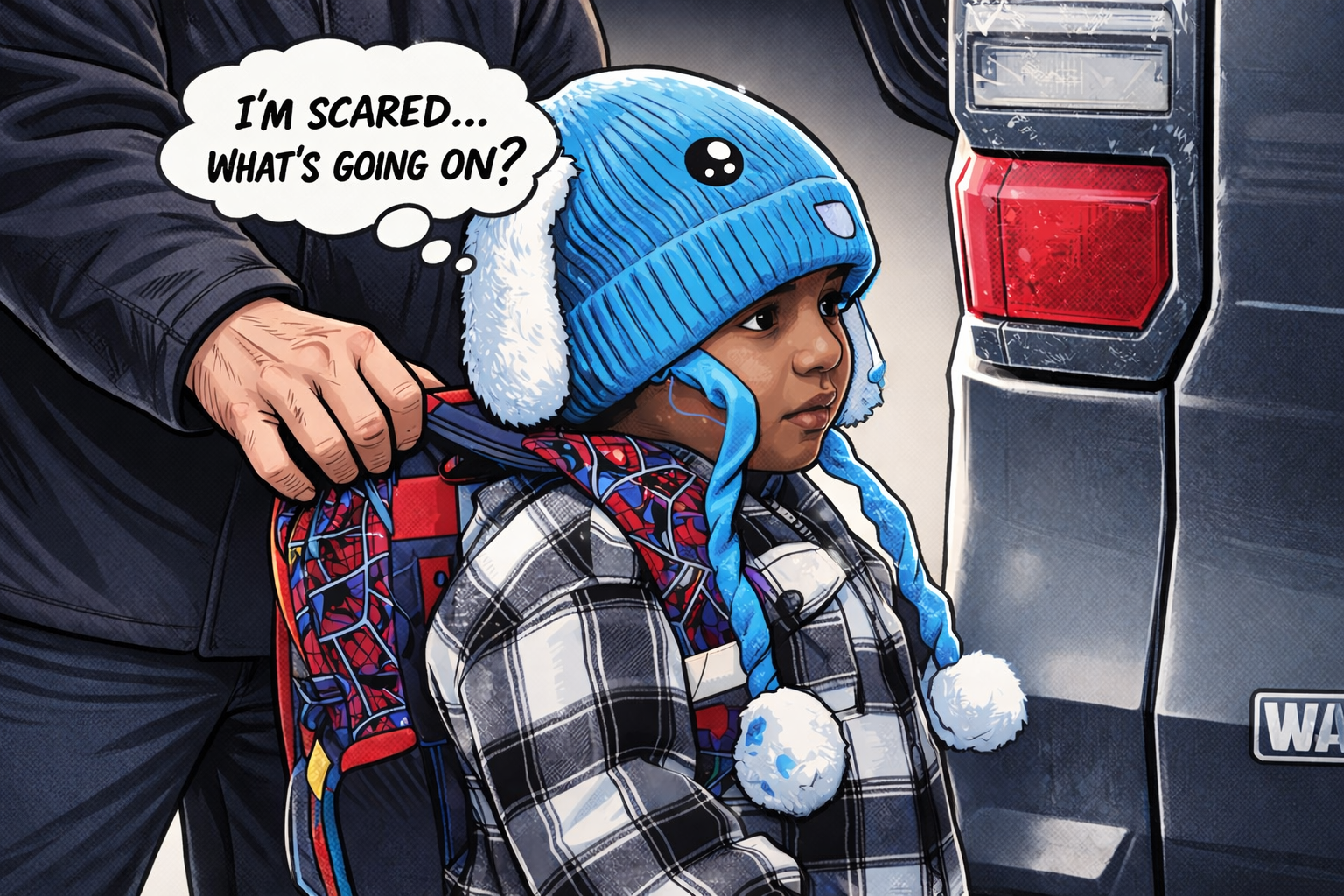
In January 2026, a 5-year-old boy in Minnesota was detained by U.S. Immigration and Customs Enforcement during an operation targeting his father, according to reporting by ABC News. The child was taken into custody alongside his parent and later transferred to a family detention facility in Texas, a move that immediately drew national attention and public concern.
While the case shocked many Americans, it also raised a broader question that has surfaced repeatedly throughout U.S. history: are children allowed to be detained under U.S. immigration law, and if so, under what limits?
The answer is more complex than a simple yes or no.
Children and Immigration Enforcement: The Legal Reality
Under U.S. law, immigration violations are civil, not criminal. Children cannot be charged with immigration offenses, but they can still be taken into immigration custody when they are traveling with a parent or guardian who is subject to enforcement.
According to a Congressional Research Service report, federal immigration authorities have long held discretion to detain families together during immigration proceedings, particularly when no alternative caregiver is immediately available. However, that authority is constrained by court rulings, settlement agreements, and child welfare standards that recognize children as a vulnerable population.
(Congressional Research Service. Unaccompanied Alien Children: An Overview.)
The Flores Settlement and Limits on Child Detention
The most important legal safeguard governing the immigration detention of children is the Flores Settlement Agreement, a court-approved agreement dating back to 1997.
Under Flores, the federal government agreed to:
Hold children in the least restrictive setting appropriate
Release minors without unnecessary delay to parents, relatives, or licensed facilities
Maintain standards for care, safety, and access to services
The agreement does not prohibit detention entirely, but it places strict limits on how long children may be held and under what conditions. Courts have repeatedly ruled that prolonged or inappropriate detention of minors violates these standards.
Family Detention and the Role of Discretion
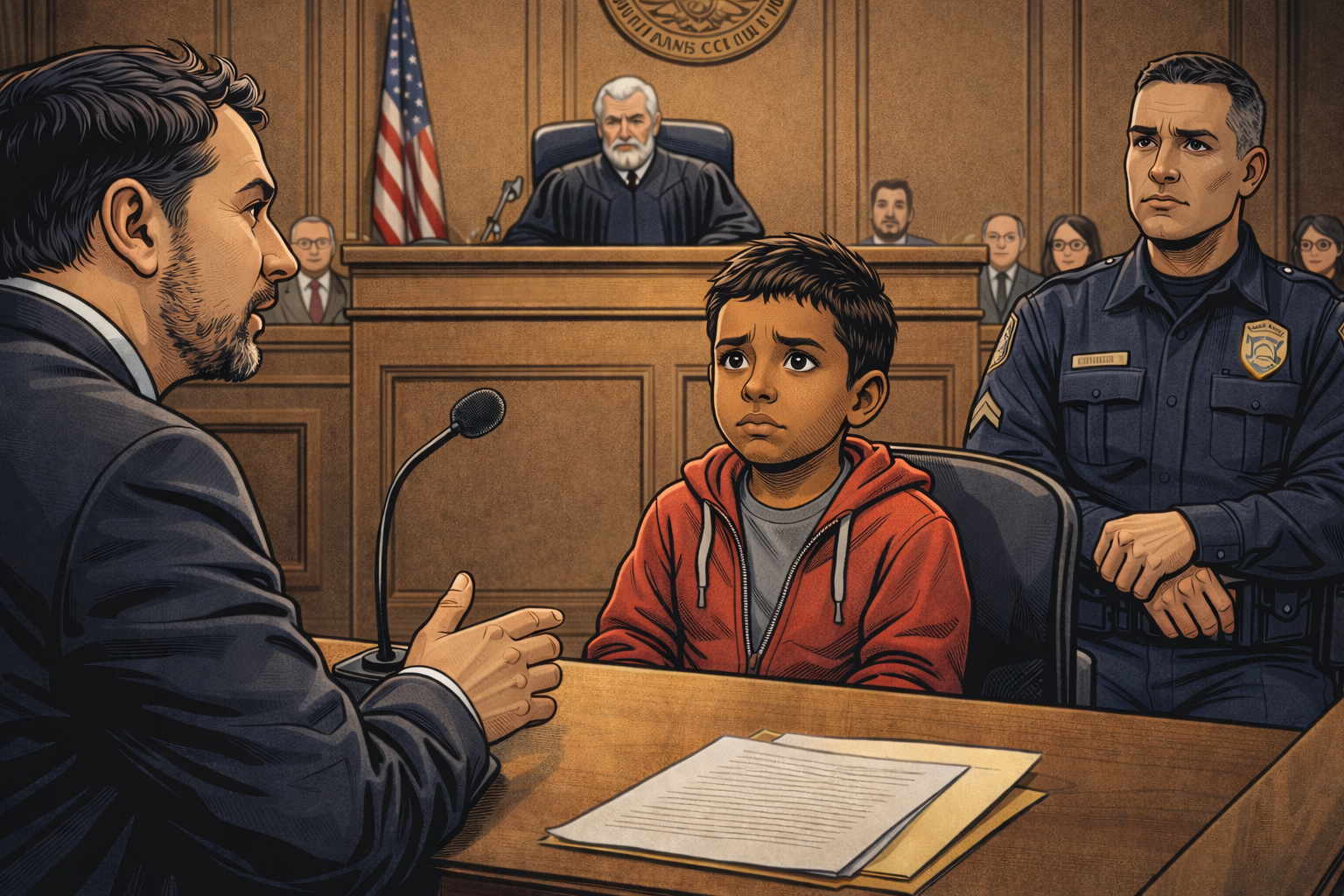
In practice, children most often enter immigration custody as part of family detention, rather than as independent detainees.
According to research published in the National Institutes of Health’s PubMed Central, family detention expanded significantly during periods of increased migration, particularly in the 2010s. Studies have found that even short periods of detention can have measurable psychological and developmental impacts on children, including anxiety, sleep disruption, and regression in behavior.
(PubMed Central. Psychological Effects of Detention on Immigrant Children.)
Federal agencies have argued that detaining families together avoids separation, but child welfare experts counter that detention itself, even when parents are present, carries risks.
When Enforcement Reaches Children in the Interior
ICE detained a 5-year-old child in Minnesota to use as "bait."
— Ken Martin (@kenmartin73) January 22, 2026
An innocent child.
America, let this sink in. This is what the government is doing right in front of our eyes. pic.twitter.com/KQ7FWLoEEy
Cases like the Minnesota incident typically occur during interior immigration enforcement, not at the border.
In these situations, children may be temporarily detained because officers are required to ensure a child’s safety while a parent is taken into custody. Federal officials have stated that officers ask parents whether they want their children to remain with them or be released to another caregiver.
However, school districts and local officials have repeatedly raised concerns about enforcement actions occurring near schools or residential areas, arguing that such actions can create fear, disrupt education, and erode trust in public institutions.
The Child Welfare System and Deportation
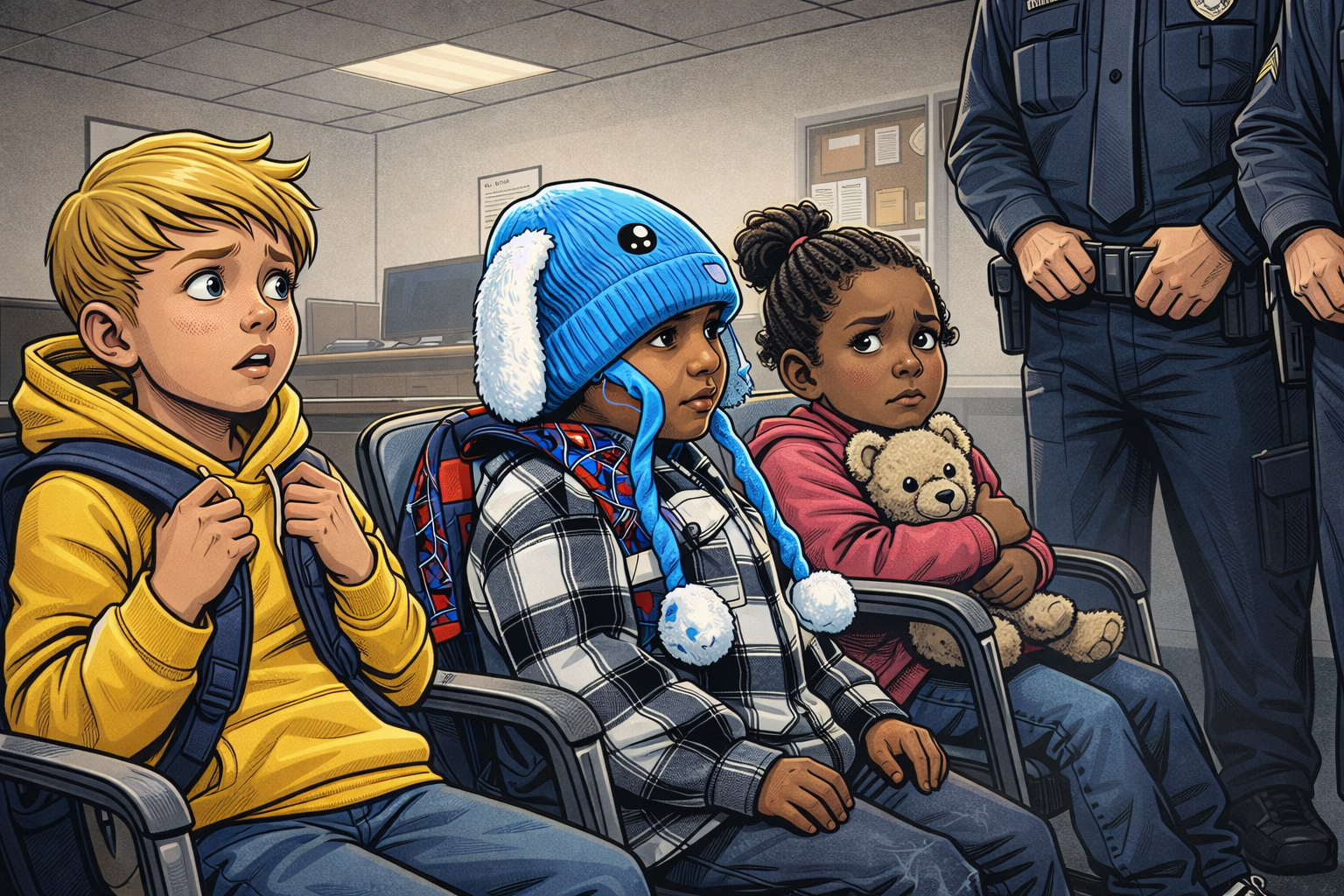
One often-overlooked consequence of immigration enforcement involving parents is its impact on the child welfare system.
According to an analysis by Brookings, deportations can place children at risk of entering foster care when parents are detained or removed and no immediate caregiver is available. The report notes that child welfare agencies are often unprepared to handle the legal and cultural complexities that arise when immigration enforcement intersects with family custody issues.
(Brookings Institution. What Will Deportations Mean for the Child Welfare System?.)
In some cases, prolonged detention or removal proceedings can permanently alter family structures, even when children themselves are U.S. citizens.
Why These Cases Continue to Resurface
Incidents involving children tend to become flashpoints because they highlight the human consequences of enforcement decisions.
Even when actions fall within legal authority, the presence of children reframes the debate. Questions shift from legality alone to proportionality, necessity, and long-term impact. Courts, lawmakers, and advocacy groups have repeatedly wrestled with how to enforce immigration law while minimizing harm to minors.
The Minnesota case fits into this long-running tension, serving as a reminder that immigration enforcement does not occur in a vacuum.
The immigration detention of children sits at the intersection of federal authority and child welfare.
U.S. law allows limited detention of minors, but only within strict boundaries shaped by court rulings, settlement agreements, and evolving standards of care. Each time a child is detained, those boundaries are tested in real-world conditions.
As immigration enforcement continues nationwide, cases involving children will likely remain a defining measure of how the system balances enforcement priorities with the obligation to protect vulnerable populations.
References:
ABC News. ICE officers detain five-year-old Minnesota boy as he and his father are taken to a Texas facility.
Brookings Institution. What Will Deportations Mean for the Child Welfare System?.
PubMed Central. Psychological Effects of Detention on Immigrant Children.
Congressional Research Service. Unaccompanied Alien Children: An Overview.

- Five Myths About States Banning ICE From Polling Places - October 12, 2026
- The Secret Ballot Is Newer Than You Think, and It Took a Body Count to Get Here - October 6, 2026
- Why Is Election Day Always a Tuesday in November? - September 4, 2026