

For decades, immigration enforcement in the United States has followed a familiar script. Federal agents locate undocumented immigrants, arrests are made, detention follows, and removal proceedings begin. In May 2025, the Trump administration introduced a different option. Instead of waiting to be caught, undocumented immigrants were given a chance to leave on their own.
The program is called Project Homecoming, and according to the White House, it allows undocumented immigrants to voluntarily depart the United States with government assistance rather than face arrest and forced removal. The administration describes the initiative as a lawful, orderly approach to Trump immigration policy, aimed at reducing risk, cost, and confrontation. Critics see something else entirely. But for those affected, the choice is now clear and immediate.
A Different Choice Than Before
Project Homecoming was formally established through a presidential action signed by President Donald J. Trump in early May 2025. The White House framed the initiative as a practical voluntary departure program, not an amnesty and not a pathway to legal status.
According to the official White House fact sheet, the program encourages undocumented immigrants to depart voluntarily while immigration enforcement operations continue nationwide, as outlined in Fact Sheet: President Donald J. Trump Establishes Project Homecoming.
For individuals without legal status, the message is direct: leave voluntarily with assistance, or risk arrest, detention, and formal removal.
How Voluntary Self-Deportation Works
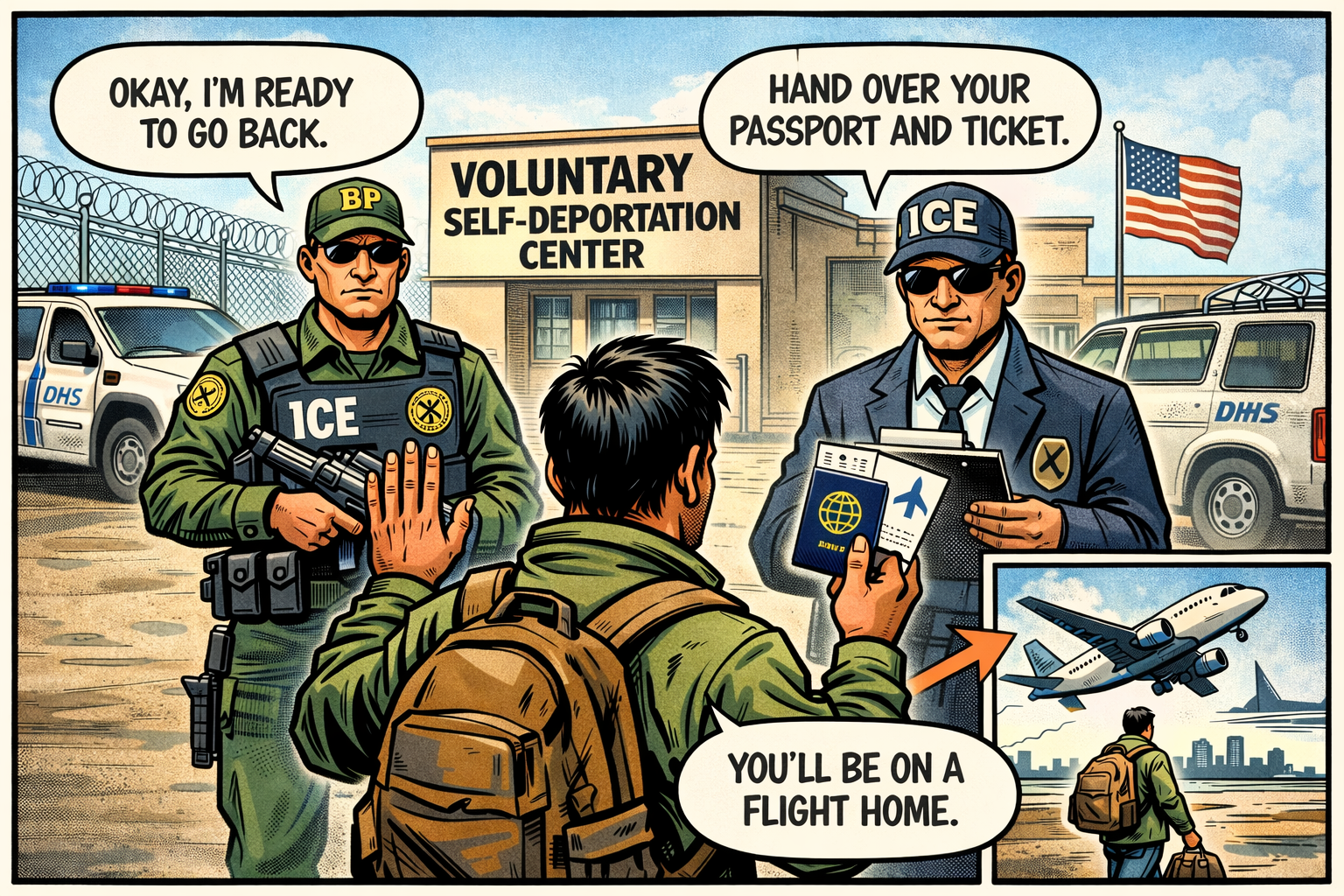
Participation in voluntary self-deportation begins with a decision. Individuals who are in the United States unlawfully must register their intent to depart through Department of Homeland Security channels and agree to leave within the program’s required timeframe.
According to the Department of Homeland Security, those who choose voluntary self-deportation in the U.S. are not placed into detention or removal proceedings. Instead, they exit the country through a coordinated departure process managed by federal authorities, as detailed in DHS Announces Historic Travel Assistance and Stipend for Voluntary Self-Deportation.
Federal officials argue that this approach reduces dangerous encounters between agents and immigrants while easing pressure on detention facilities and immigration courts.
What the Government Is Offering

To make voluntary self-deportation feasible, Project Homecoming includes tangible support.
According to DHS and White House fact sheet documentation, participants may receive government-funded transportation, assistance securing travel documents, and a financial stipend intended to cover costs associated with departure and reintegration. Officials describe the program as the largest Trump voluntary self-deportation program ever implemented by the federal government, as explained in the DHS announcement here.
The administration says the assistance removes practical barriers that often prevent people from leaving, such as lack of funds or valid travel paperwork.
What the Program Does Not Do
Despite its incentives, Project Homecoming does not change immigration law.
The White House is explicit that the program does not grant legal status, does not offer amnesty, and does not guarantee future reentry. Immigration enforcement operations continue, and individuals who do not participate may still be arrested and formally removed, according to the White House fact sheet.
Officials emphasize that voluntary departure may preserve the possibility of lawful return in the future, depending on eligibility, while formal removal can trigger longer or permanent bars to reentry.
The Legal Framework Behind Project Homecoming

Project Homecoming was created through a presidential action directing federal agencies to prioritize voluntary departure as part of Trump immigration policy.
The order outlines coordination among DHS and other agencies, public outreach, and expanded use of voluntary departure tools already permitted under existing law, as set out in Establishing Project Homecoming.
The administration maintains that the program operates entirely within existing immigration statutes and does not alter eligibility standards for visas, asylum, or lawful entry.
What Happens After Someone Leaves
According to the White House, individuals who depart voluntarily under Project Homecoming may, in some cases, remain eligible to seek lawful entry in the future, subject to immigration law and individual circumstances.
Those who are apprehended and formally removed face more severe consequences, including longer bars on reentry. Federal officials stress that outcomes depend heavily on immigration history and legal status, and that individuals should seek legal advice before making a decision, as outlined in the White House fact sheet.
Why It Matters
This policy matters because it changes how immigration enforcement is experienced, not just how it is enforced.
Instead of relying only on arrests and detention, the federal government is now asking undocumented immigrants to make the first move. The choice is straightforward: leave voluntarily with assistance, or risk being removed later through enforcement actions. That shift places decision-making earlier in the process and reframes how Project Homecoming works in everyday life.
For the immigration system, voluntary departures reduce pressure on detention facilities, courts, and enforcement personnel. Success is no longer measured solely by arrests, but by how many people leave without entering the removal system at all.
For the public, the policy signals a broader strategic shift. Enforcement remains firm, but it is now paired with incentives designed to encourage compliance rather than confrontation. Whether viewed as practical or coercive, the approach reflects how future Trump immigration policy may balance authority, cost, and public stability.
The significance lies not in the assistance offered, but in what it represents: a redefinition of how compliance is achieved and how immigration law is experienced in everyday life.
References
- Department of Homeland Security. DHS Announces Historic Travel Assistance and Stipend for Voluntary Self-Deportation.
- The White House. Fact Sheet: President Donald J. Trump Establishes Project Homecoming.
- The American Presidency Project. White House Fact Sheet: President Donald J. Trump Establishes Project Homecoming.
- The White House. Establishing Project Homecoming.

- What Is Actually Happening in France Right Now, and Why It Matters for the Race to Replace Macron - October 19, 2026
- How a 1971 Supreme Court Case Still Decides Who Makes Your Local Ballot - October 14, 2026
- The Supreme Court Is About to Decide a Major Voter Roll Case. Here Is the Timeline That Got Us Here - September 24, 2026