
On April 29, 2026, the U.S. Supreme Court issued a ruling in Louisiana v. Callais that significantly revised how the Voting Rights Act applies to congressional redistricting. The decision did not eliminate the law, but it changed the legal standard that states, voters, and courts use to identify violations. For anyone tracking election updates in the US, this ruling is one of the most consequential developments in voting law in over a decade.
To understand what changed, and why it matters, it helps to understand what the Voting Rights Act was designed to do, how courts have interpreted it over 60 years, and what this ruling now requires that is different from before.
What Is the Voting Rights Act?
The Voting Rights Act was signed into law on August 6, 1965, by President Lyndon Johnson. It was passed in direct response to the systematic exclusion of Black Americans from the electoral process in the South — through poll taxes, literacy tests, intimidation, and outright violence.

The law’s passage was not inevitable. It followed years of civil rights organizing and, most immediately, the events of March 7, 1965 — “Bloody Sunday” — when 600 peaceful demonstrators attempting to march from Selma to Montgomery, Alabama, were attacked by state troopers using tear gas, night sticks, and whips. The U.S. Senate passed the Voting Rights Act on August 4, 1965, following that national reckoning.
Among Selma’s 15,000 Black residents of voting age at the time, only 335 were registered to vote. That number captures what the law was created to address.
What the Law Did in 1965
The Voting Rights Act outlawed literacy tests as a prerequisite to voting, authorized the appointment of federal examiners to register voters directly in covered jurisdictions, and — under Section 5 — required those jurisdictions to obtain federal “preclearance” before changing any voting rule or procedure. Section 2 established a nationwide prohibition on denying or abridging the right to vote on account of race or color.
According to the National Archives, the impact was immediate: by the end of 1965, a quarter of a million new Black voters had been registered — one-third of them by federal examiners. By the end of 1966, only four of thirteen southern states had fewer than 50 percent of Black residents registered to vote.
How the Law Evolved Over 60 Years
The Voting Rights Act has been reauthorized and amended multiple times since 1965. Each reauthorization expanded or clarified its reach.
1970First reauthorization. Extended the ban on literacy tests nationwide and lowered the voting age to 18 for federal elections.
1975Extended protections to language minority groups, requiring bilingual election materials in jurisdictions with significant non-English-speaking populations.
1982Congress amended Section 2 to establish a “results test” — meaning a voting practice could be challenged based on its discriminatory effect, not just discriminatory intent. This was a significant expansion of the law’s reach.
1986The Supreme Court first interpreted the amended Section 2 in Thornburg v. Gingles, establishing a multi-part test — the Gingles preconditions — for proving a redistricting map violated minority voting rights.
2006Congress reauthorized the law for another 25 years, preserving the Section 5 preclearance requirement.
2013In Shelby County v. Holder, the Supreme Court effectively disabled Section 5 by striking down the formula used to determine which states were subject to preclearance. This removed federal pre-approval requirements for voting law changes in states with histories of discrimination.
2026In Louisiana v. Callais, the Supreme Court significantly revised the standard for proving a Section 2 violation in redistricting cases, as explained in the sections below.
As the NAACP has documented, the law has faced sustained legal challenges since its enactment — and each Supreme Court ruling has shifted how the law’s protections function in practice.
The 2026 Ruling: What Happened in Louisiana v. Callais
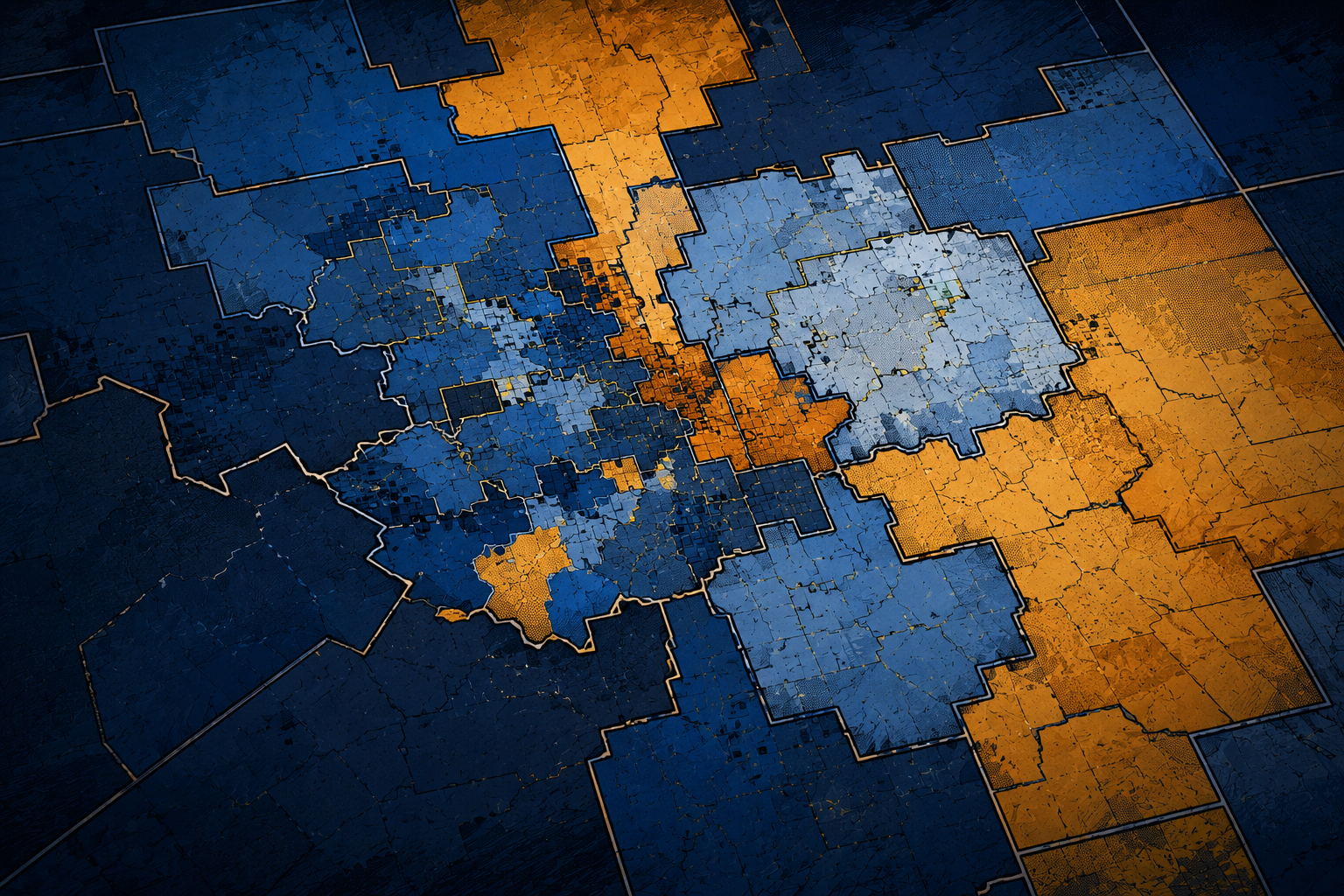
The case that produced the April 29, 2026 ruling began with Louisiana’s congressional district map. Following years of litigation over whether Louisiana’s previous map violated Section 2 of the Voting Rights Act, lower courts held that the prior map likely did violate the law by giving Black voters only a single majority-minority district. Louisiana redrew the map in 2024 — via State Senate Bill 8 — to include two majority-minority districts, giving Black voters a stronger opportunity to elect candidates of their choice.
That new map was then challenged on different grounds: that drawing districts with race as a primary criterion violated the Equal Protection Clause of the 14th Amendment. The Supreme Court agreed. According to the ruling, the SB 8 map impermissibly prioritized race in drawing congressional districts, thereby violating Equal Protection principles.
Key Finding
The Court held that Section 2 of the Voting Rights Act does not require states to draw congressional districts based on race — unless the plaintiff can show that the redistricting is intended to address recent and intentional discrimination against minorities. This is a higher bar than the previous standard.
What Changed: The Gingles Preconditions Before and After
To understand the ruling’s impact, it helps to understand the legal framework it revised. Since 1986, Section 2 redistricting cases have been governed by the Thornburg v. Gingles preconditions — a four-part test that plaintiffs must satisfy to prove a map violates minority voting rights in redistricting.
| Gingles Precondition | Standard Before Callais | Standard After Callais |
| 1st Precondition | Show the minority group is large enough and compact enough to form a majority in a district. | Plaintiffs cannot use race as a districting criterion. The proposed district must meet all of the state’s legitimate objectives — including partisan and incumbent-protection goals — without race as the driver. |
| 2nd Precondition | Show the minority group is politically cohesive (votes together). | Must now also show that political cohesion is not simply explained by partisanship — a significantly harder showing. |
| 3rd Precondition | Show that white majority voters vote as a bloc in a way that typically defeats the minority group’s preferred candidate. | Must show this bloc voting is not better explained by partisan affiliation rather than race — again, a higher evidential standard. |
| 4th Precondition | Show the totality of circumstances indicates the political process is not equally open to minority voters. | This factor remains but is now considered alongside the stricter standards applied to the first three preconditions. |
In plain terms: before this ruling, a map that created a possible majority-minority district was generally considered to satisfy the first precondition. After Callais, plaintiffs must show that a proposed district works without race as a criterion — it must meet the state’s redistricting goals on its own terms, including partisan goals.
What the Court Said About Partisan vs. Racial Gerrymandering
One of the most significant aspects of the ruling is what the Court explicitly permitted alongside what it restricted. The decision makes clear that while racial gerrymandering is — in the Court’s words — “almost always prohibited,” politically partisan gerrymandering is constitutionally allowed.
The Court stated that states may draw maps to achieve partisan goals — such as targeting a specific partisan distribution of voters, protecting incumbents, or securing a particular margin of victory in certain districts. These goals, the Court held, are not prohibited by the Constitution. Race, however, cannot serve as the primary basis for drawing district lines.
This creates a distinction with direct electoral consequences: a district that produces a majority-minority outcome because of how partisan data was used in drawing it may be constitutionally permissible. The same district, drawn with race as the explicit criterion, may not be — even if the final map looks identical.
Practical Impact
States can still draw districts that result in minority-majority communities having representation — but the legal mechanism for doing so has changed. States must now demonstrate their maps are driven by legitimate, race-neutral criteria. Challengers who believe a map dilutes minority voting power face a harder legal road to proving it under Section 2.
What the Ruling Did Not Do
The ruling in Louisiana v. Callais did not strike down the Voting Rights Act. Section 2 remains federal law. The law’s core prohibition — that no state may deny or abridge the right to vote on account of race or color — remains intact and unchanged.
What the ruling changed is the evidentiary standard required to prove a violation in redistricting cases. A plaintiff can still bring a Section 2 challenge to a congressional district map. But to succeed, the plaintiff must now satisfy a stricter version of the Gingles preconditions — one that requires separating racial discrimination from partisan discrimination in ways that courts previously did not require.
Section 5 preclearance — which required certain states to get federal approval before changing voting rules — remains disabled. That was addressed in the 2013 Shelby County ruling and was not part of Callais.
Why This Matters for the 2026 Midterms
The timing of the ruling — April 29, 2026, less than six months before the November 3, 2026, general election — makes it directly relevant to this election cycle. Louisiana’s congressional district map, which the ruling invalidated, affected the state’s primary schedule. Louisiana’s U.S. House primaries were suspended pending a court-ordered redraw of the map, meaning Louisiana’s entire congressional delegation is operating on an uncertain timeline heading into November.
Beyond Louisiana, the ruling sets a new legal baseline for redistricting challenges across all 50 states. States currently defending their congressional maps against Section 2 Voting Rights Act challenges now operate under a different standard. Plaintiffs and advocacy organizations challenging maps in court must revise their legal strategies.
For voters following election updates in the US, the downstream effects are concrete: which districts exist, how competitive they are, and which communities have the opportunity to elect candidates of their choice are all questions shaped by how redistricting law is interpreted. The Callais ruling changes that interpretation.
How the Voting Rights Act Has Been Interpreted Over Time: A Summary
| Case / Event | Year | What It Changed |
| Voting Rights Act enacted | 1965 | Outlawed literacy tests; established federal examiners; created Section 5 preclearance for covered states |
| South Carolina v. Katzenbach | 1966 | Supreme Court upheld the constitutionality of Section 5 and the preclearance requirement |
| Section 2 amended by Congress | 1982 | Established the “results test” — violations provable by discriminatory effect, not just intent |
| Thornburg v. Gingles | 1986 | Created the four-part Gingles preconditions test for Section 2 redistricting claims |
| Shelby County v. Holder | 2013 | Struck down the Section 5 coverage formula, effectively disabling preclearance requirements |
| Brnovich v. Democratic National Committee | 2021 | Narrowed the scope of Section 2 challenges to non-redistricting voting rules |
| Louisiana v. Callais | 2026 | Revised the Gingles preconditions, prohibiting race as a redistricting criterion and raising the evidentiary bar for Section 2 claims |
What Voters and Advocates Should Know
For voters, the most direct consequence is that the legal tools available to challenge congressional district maps on minority representation grounds are now more difficult to use. That does not mean those tools are gone — it means the standard of proof is higher, and the legal arguments must be constructed differently.
For states drawing or defending congressional maps, the ruling provides clearer guidance: race cannot be the explicit basis for a district, but partisan goals and traditional criteria — compactness, contiguity, community of interest, and incumbency protection — remain available as legitimate, race-neutral justifications.
For advocates and legal organizations working on congressional district map voting rights cases, the ruling requires a fundamental reassessment of how Section 2 litigation is structured. The Gingles framework still exists, but its first three preconditions now require a more demanding showing — one that disentangles racial and partisan explanations for voting patterns.
The Voting Rights Act was described by the National Archives as “the most significant statutory change in the relationship between the federal and state governments in the area of voting since the Reconstruction period.” Sixty years later, its scope continues to be defined by the courts — and the 2026 ruling in Louisiana v. Callais is the latest chapter in that ongoing process.
The Bottom Line
The Voting Rights Act has not been repealed. What Louisiana v. Callais changed is the legal test courts apply when a congressional district map is challenged on the grounds that it dilutes minority voting power. Under the new standard, plaintiffs cannot use race as a redistricting criterion in building their case, and the Gingles preconditions now require a cleaner separation between racial and partisan explanations for voting patterns.
That change has real consequences — for Louisiana’s suspended primaries, for redistricting litigation now underway in other states, and for the long-term structure of how congressional representation is determined. As this cycle of election updates in the US continues to unfold, Callais will be cited, tested, and litigated in courts across the country through November and beyond.
References:
National Archives. Voting Rights Act
United States Senate. Senate Passes Voting Rights Act
NAACP. Voting Rights Act of 1965
PublicCEO. U.S. Supreme Court Reshapes Voting Rights Act Landscape in Louisiana v. Callais

- A Supreme Court Case You Probably Missed Could Open the Door to a Lot More Election Lawsuits - October 9, 2026
- Dark Money Is Pouring Into the 2026 Midterms. Here Are Five Myths About How It Actually Works - September 21, 2026
- The Supreme Court Just Blocked Trump’s Mail Ballot Restrictions. Here’s What That Means - September 17, 2026