
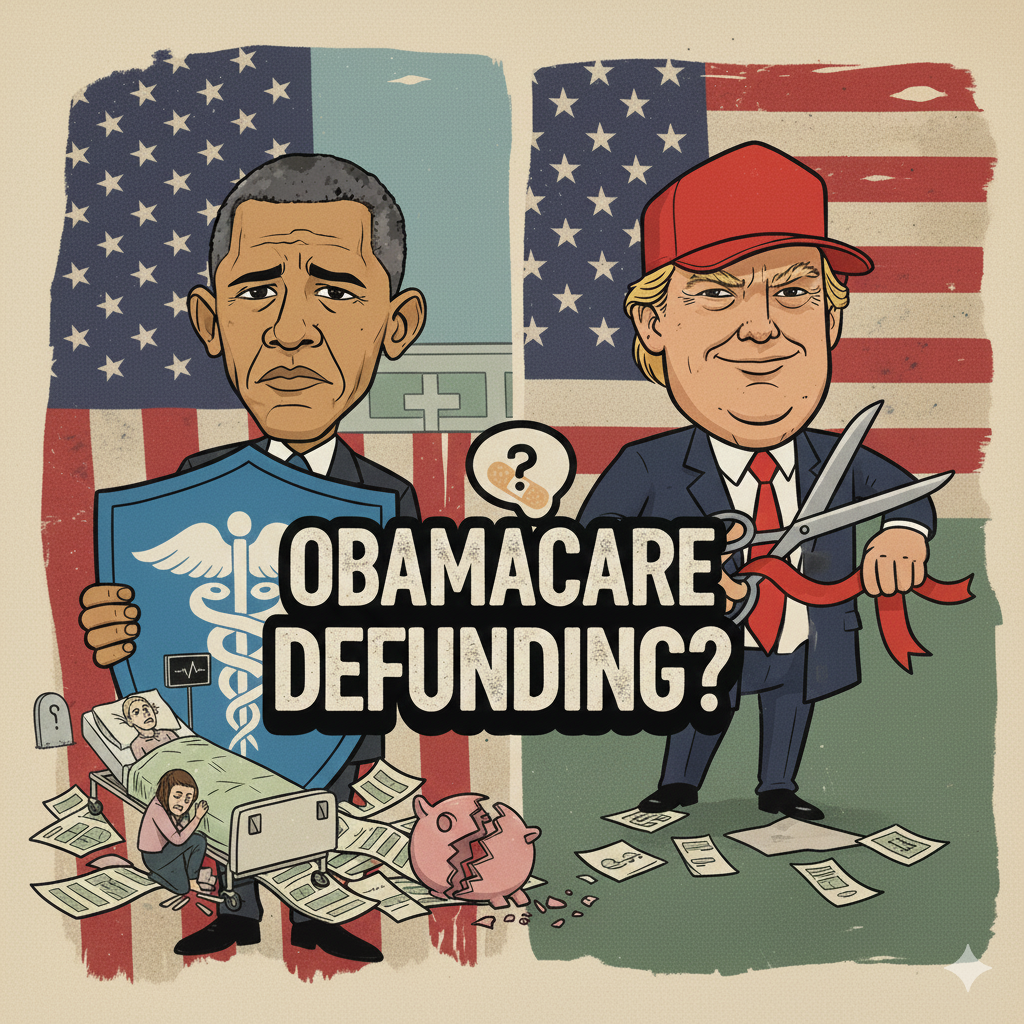
In a pointed December 18, 2025, exchange with ABC News correspondent Mary Bruce, President Donald Trump doubled down on his Trump healthcare policy vision, framing the impending expiration of Obamacare subsidies as a long-overdue opportunity to defund Obamacare and reclaim control for everyday Americans. With enhanced Affordable Care Act subsidies set to vanish at year’s end, Trump warned that premiums “will skyrocket because it was never any good,” spotlighting what he called a system funneling “hundreds of billions of dollars” to insurance giants at taxpayer expense. His solution cuts to the heart of U.S. healthcare reform: redirect those government-funded healthcare dollars directly to individuals, empowering them to shop the private health insurance market for individual health insurance plans that fit their lives, not D.C. mandates.
This stance arrives amid the 2026 premium crunch, where families brace for 25% to 30% effective hikes without subsidy buffers, fueling the ongoing healthcare subsidies debate. Trump, speaking on the heels of a narrow House vote to block extensions, envisioned a consumer-driven healthcare era where “the people buy their own health care” and secure “much better” options than under the “unaffordable care act.” As Republicans navigate internal rifts and midterm pressures, his words signal a pivotal shift: from propping up marketplaces to unleashing market competition. Below, we unpack Obamacare’s foundations, the rising costs, and how this defund Obamacare blueprint could reshape coverage for 20 million enrollees.
What Is Obamacare?
The Affordable Care Act, often called Obamacare, reshaped U.S. healthcare reform when it became law in March 2010. This sweeping legislation sought to make health coverage more accessible and affordable for millions, tackling the uninsured crisis head-on. It introduced key tools like online insurance marketplaces, bans on denying coverage for pre-existing conditions, and an expansion of Medicaid to cover low-income adults. These changes aimed to curb skyrocketing medical costs while ensuring essential protections for families across the country. For a clear breakdown, check the official ACA glossary.
Today, Obamacare remains a cornerstone of government-funded healthcare, though debates rage on about its long-term viability. With over a decade under its belt, the law has enrolled tens of millions, but rising costs and policy shifts continue to test its promise of affordability.
Who Are the Participants in Obamacare?

Obamacare primarily serves Americans who fall outside traditional employer-sponsored plans, creating a safety net for the self-employed, gig workers, and families navigating gaps in coverage. Premium tax credits, a hallmark of Affordable Care Act subsidies, target households earning between 100% and 400% of the federal poverty level, helping them afford private plans without breaking the bank.
Medicaid expansion under the ACA further broadens reach, offering free or low-cost insurance to adults with incomes up to 138% of the poverty line in 40 states and Washington, D.C., as of 2026. This includes early retirees, part-time employees, and those in unstable job markets. All told, around 30 million people sign up for ACA marketplace plans each year, forming the backbone of this consumer-driven healthcare ecosystem.
How Does Obamacare Work?
At its core, Obamacare funnels users into state or federal marketplaces, digital hubs where shoppers browse and buy private health insurance from competing carriers. Insurers are required to include a standard set of essential benefits, from hospital stays to preventive care, and they cannot turn away applicants based on health history. This setup levels the playing field in the private health insurance market.
Subsidies sweeten the deal: Premium tax credits slash monthly bills for qualifying buyers, while cost-sharing reductions ease out-of-pocket hits like deductibles for lower earners. In expansion states, Medicaid steps in with near-free coverage. During the 2021-2025 boost period, these Obamacare subsidies covered up to 93% of benchmark premiums, all bankrolled by taxpayers to keep enrollment steady and costs in check.
Why Are Obamacare Premiums Rising?
Obamacare premiums have climbed steadily, fueled not by overuse of services but by broader pressures on the healthcare system. Provider mergers, soaring prescription drug prices, and ballooning hospital bills drive up what insurers pay out, passing those expenses straight to policyholders. These structural issues in U.S. healthcare reform have compounded over years, making coverage feel like an ever-growing burden.
The real kicker comes from policy: Enhanced Obamacare subsidies, set to expire in 2025, have hidden the pain by shouldering 80% or more of premium hikes since 2020. Without them, families face the full brunt, turning masked increases into wallet-draining realities. Dive deeper into these trends with Johns Hopkins’ cost analysis or Paragon Institute’s subsidy breakdown.
Obamacare Premium Increases for 2026
Heading into 2026, the numbers paint a stark picture of strain. Insurers have filed for median hikes of 18% on marketplace plans, with outliers pushing as high as 59% in some regions. The subsidy cliff amplifies this, delivering 25% to 30% effective jumps for enrollees once Affordable Care Act subsidies vanish.
Consider a typical 50-year-old earning 200% of the federal poverty level: Their benchmark premium could hit $8,000 yearly, with unsubsidized shares surging overnight. Analysts forecast a 57% drop in marketplace enrollment as affordability crumbles, leaving many to weigh coverage against other essentials in an already tight economy.
Trump’s Plan to Defund Obamacare and Redirect Funds
President Trump’s 2026 Trump healthcare policy marks a bold turn in the healthcare subsidies debate, centering on efforts to defund Obamacare subsidies by allowing enhanced credits to lapse without extension. The House sealed this path with a narrow 216-211 vote on a Republican bill that sidelined renewal, aligning with Trump’s push for leaner government-funded healthcare.
This move could trim $35.6 billion from federal outlays over the next decade, according to Congressional Budget Office estimates. Instead of propping up marketplaces, the savings would flow into consumer-driven healthcare tools like beefed-up Health Savings Accounts or direct premium rebates. Dubbed the “One Big Beautiful Bill,” it lets individuals roam the private health insurance market freely, shopping for individual health insurance plans that fit their needs. Tensions within the GOP, including calls for short-term patches, underscore the stakes—see Reuters’ coverage of the infighting.
How Trump’s Plan Would Work If Implemented

If Trump’s U.S. healthcare reform takes hold, the shift would dismantle ACA premium tax credits in favor of flexible, portable options like HSAs or lump-sum payments. Americans could then bankroll high-deductible policies or basic catastrophic coverage, tailoring choices to personal budgets and lifestyles in the individual health insurance plans arena.
Cross-state shopping would unlock competitive pricing, fostering a more dynamic private health insurance market and potentially easing costs through pure supply-and-demand forces. Pre-existing condition safeguards stay locked in, but the subsidy cutoff hits December 31, 2025, nudging 20 million users toward self-funded setups by summer 2026. Early projections from the Congressional Budget Office flag 100,000 initial coverage dips, cushioned somewhat by small-business association plans and Medicaid tweaks. For historical parallels on Obamacare’s evolution, explore Georgetown’s dismantling timeline.
As 2026 begins, Trump’s defund Obamacare move invites Americans to ponder a future where Obamacare premiums no longer dictate family budgets, and consumer-driven healthcare replaces government-funded healthcare with choices that truly fit—affordable individual health insurance plans in a freer private health insurance market.
Will this U.S. healthcare reform deliver the empowerment promised, or spark new challenges in the healthcare subsidies debate? The answer lies in how swiftly Congress acts and how markets respond, offering a moment to reflect on what healthcare freedom really means for you.
References:
Affordable Care Act. (n.d.). Healthcare.gov. Retrieved January 9, 2026, from HealthcareAffordable Care Act (ACA) – Glossary
Republican infighting on healthcare erupts in US House as subsidy expiration approaches. (2025, December 17). Reuters. Retrieved January 9, 2026, from Reutersreuters.com/legal/litigation/republican-infighting-healthcare-erupts-us-house-subsidy-expiration-approaches-2025-12-17
What’s behind rising health insurance costs. (2025). Johns Hopkins Bloomberg School of Public Health. Retrieved January 9, 2026, from Jhupublichealth.jhu.edu/2025/whats-behind-rising-health-insurance-costs
Almost entire Obamacare premium increases paid for by taxpayers. (n.d.). Paragon Health Institute. Retrieved January 9, 2026, from ParagoninstituteAlmost Entire Obamacare Premium Increases Paid for By Taxpayers
The dismantling of Obamacare starts August 25 unless litigation can stop it. (n.d.). Georgetown University Center for Children and Families. Retrieved January 9, 2026, from GeorgetownThe Dismantling of Obamacare Starts August 25 – Unless Litigation Can Stop It | Center on Health Insurance Reforms

- Five Myths About How the Electoral College Actually Works - September 29, 2026
- Why Does the President’s Party Almost Always Lose Seats in the Midterms? - September 9, 2026
- Why Is Congress Racing to Fund the Government Before the Midterms? - August 31, 2026