

The creation of Trump Accounts marks a significant shift in U.S. family and economic policy. Under a new federal law backed by President Donald Trump, eligible newborn Americans may qualify for a one-time $1,000 government seed contribution placed into a long-term savings and investment account.
Rather than expanding recurring cash benefits, the program focuses on early asset-building, with the goal of giving children a financial foundation that can grow over time. According to official guidance released by the federal government, Trump Accounts are designed to encourage saving, investment, and long-term financial participation rather than immediate consumption.
What Are Trump Accounts?
Trump Accounts are federally authorized savings accounts created under a new law and administered through the U.S. Treasury and Internal Revenue Service. As outlined on the official government portal, the program provides a $1,000 initial deposit for eligible newborn U.S. citizens once an account is properly established (Trump Accounts official site).
The White House describes the initiative as a way to give the “next generation a jump start on saving,” emphasizing long-term growth and financial responsibility rather than short-term assistance (White House policy overview).
How Trump Accounts Work Under the Law

According to the Internal Revenue Service, Trump Accounts function as restricted savings and investment vehicles with specific rules governing contributions, growth, and withdrawals (IRS Trump Accounts guidance).
Key features include:
A one-time $1,000 federal seed contribution
Required account creation by a parent or guardian
Investment-based growth over time
Limitations on when and how funds may be accessed
The structure mirrors other long-term savings programs, but with the notable difference that the federal government provides the initial funding, rather than relying solely on private contributions.
Who Is Eligible for Trump Accounts?
Eligibility for Trump Accounts is defined clearly in federal guidance. In general, the benefit applies to:
Newborn U.S. citizens
Births occurring within the program’s authorized time window
Accounts that are properly opened and registered
Importantly, the $1,000 contribution is not automatic. As the IRS explains, families must take action to establish the account in order to receive the government deposit (IRS program explanation).
This distinction matters, especially when evaluating early claims that suggested every newborn would automatically receive funds at birth.
Why the Policy Focuses on Savings Instead of Cash Payments
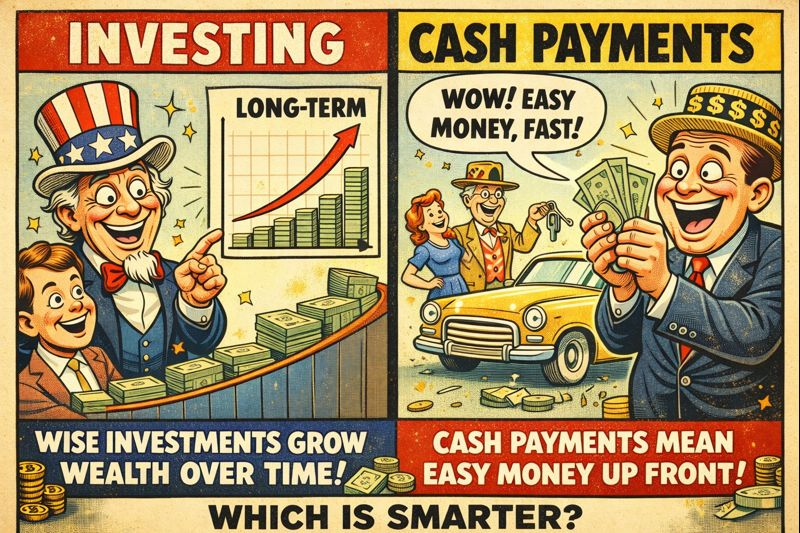
The administration’s decision to create Trump Accounts reflects a broader ideological preference for asset-based policy rather than recurring cash transfers.
In its official policy document, the White House argues that early investment can:
Encourage long-term financial planning
Reduce future dependence on government assistance
Promote personal responsibility and ownership (White House PDF)
Supporters view this as a structural alternative to expanding child tax credits or monthly benefits.
Trump Accounts Compared to Existing Child Savings Options
While families already have access to tools like 529 education savings plans, those programs rely entirely on private contributions. Trump Accounts differ by introducing federal seed money, particularly for families who may not otherwise invest early.
The official program site highlights this distinction, noting that the account is meant to complement, not replace, existing savings vehicles (Trump Accounts program overview).
Criticisms and Open Questions
Policy experts generally agree that the impact of Trump Accounts will depend less on the $1,000 seed deposit itself and more on who participates and how the accounts are used over time.
Research from the Urban Institute shows that asset-building programs often grow fastest in households with higher incomes. These families are more likely to add private contributions, which can widen long-term gaps even when programs begin with equal starting amounts.
Economists at the Brookings Institution emphasize a different dimension: behavior and expectations. Their research finds that even modest savings held in a child’s name can influence long-term planning, increasing the likelihood that families and children view education, training, or homeownership as attainable goals.
Studies reviewed by Prosperity Now highlight participation as the critical variable. Their evaluations of child savings account programs show that:
Automatic or default enrollment leads to significantly higher participation across income groups
Opt-in systems tend to benefit families already familiar with financial institutions
Awareness and simplicity matter as much as the dollar amount itself
Taken together, experts view Trump Accounts as a potentially meaningful head start, particularly as a signal of early investment. However, most agree the program’s long-term effectiveness will be shaped by enrollment design, accessibility, and follow-through, not by the initial $1,000 alone.
Why Trump Accounts Matter

Beyond the $1,000, Trump Accounts represent a rare moment where federal policy reaches Americans at the very beginning of life, rather than in response to hardship. The program acknowledges that opportunity compounds just like money does, and that starting earlier, even modestly, can make a difference over time. For many families, this may be the first time government support feels proactive rather than reactive, offering a tangible reminder that the future is being planned for, not just talked about.
References:
Internal Revenue Service. Trump Accounts.
Trump Accounts. Official Trump Accounts Program Website.
The White House. Trump Accounts: Give the Next Generation a Jump Start on Saving.

- A Supreme Court Case You Probably Missed Could Open the Door to a Lot More Election Lawsuits - October 9, 2026
- Dark Money Is Pouring Into the 2026 Midterms. Here Are Five Myths About How It Actually Works - September 21, 2026
- The Supreme Court Just Blocked Trump’s Mail Ballot Restrictions. Here’s What That Means - September 17, 2026