
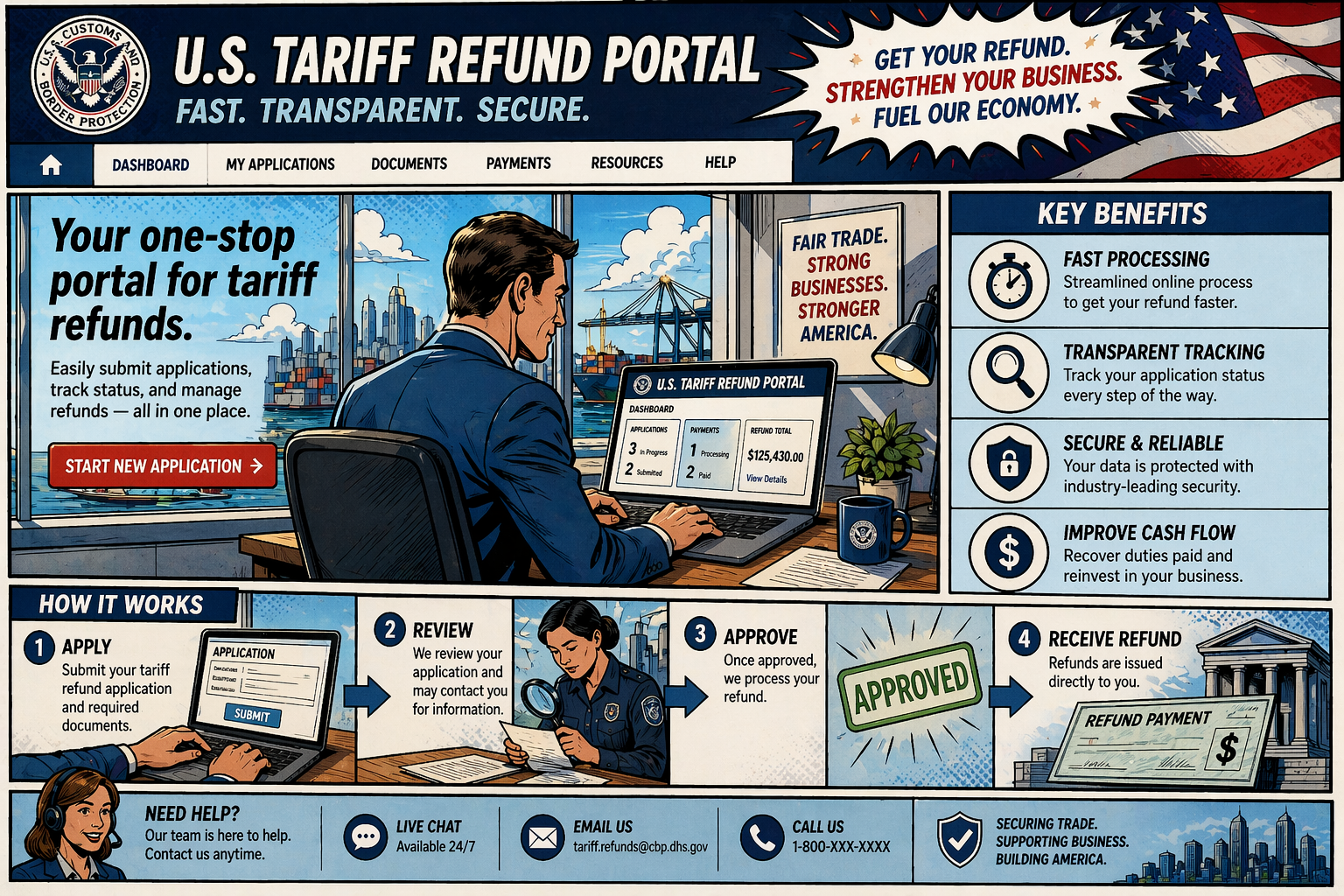
The tariff refund system allows businesses to recover duties paid on imported goods under specific conditions. In the United States, this system operates through programs managed by federal agencies and supported by trade laws.
Recent developments have brought renewed attention to tariff refunds. A newly opened refund portal, reported in Refund Portal Opens for Tariffs Struck Down by Supreme Court, allows eligible importers to claim back duties linked to tariffs that were later invalidated or revised.
These updates highlight how the U.S. tariff refund system continues to evolve. For businesses involved in importing and exporting, understanding how tariff refunds work can reduce costs and improve cash flow.
What Is the Tariff Refund System
The tariff refund system refers to government processes that allow importers to claim back duties they have already paid.
Refunds apply when:
Duties were overpaid
Goods are later exported
A legal or policy change allows reimbursement
In the United States, tariff refunds are primarily administered by U.S. Customs and Border Protection.
How the Tariff Refund Process Works
The tariff refund process follows a structured process.
Step 1: Identify Eligibility
Confirm that your goods qualify under an approved refund program or legal basis.
Step 2: Submit a Claim
Claims are filed through official systems, often electronically.
Step 3: Provide Documentation
You must submit:
Import records
Proof of duties paid
Export documentation if applicable
Step 4: Government Review
Authorities review the claim for compliance and accuracy.
Step 5: Refund Issuance
Approved claims are paid through systems such as the Automated Clearing House, as outlined in Automated Clearing House Refund.
Who Qualifies for a Tariff Refund
The tariff refund system is primarily designed for businesses involved in trade.
Businesses (Primary Users)
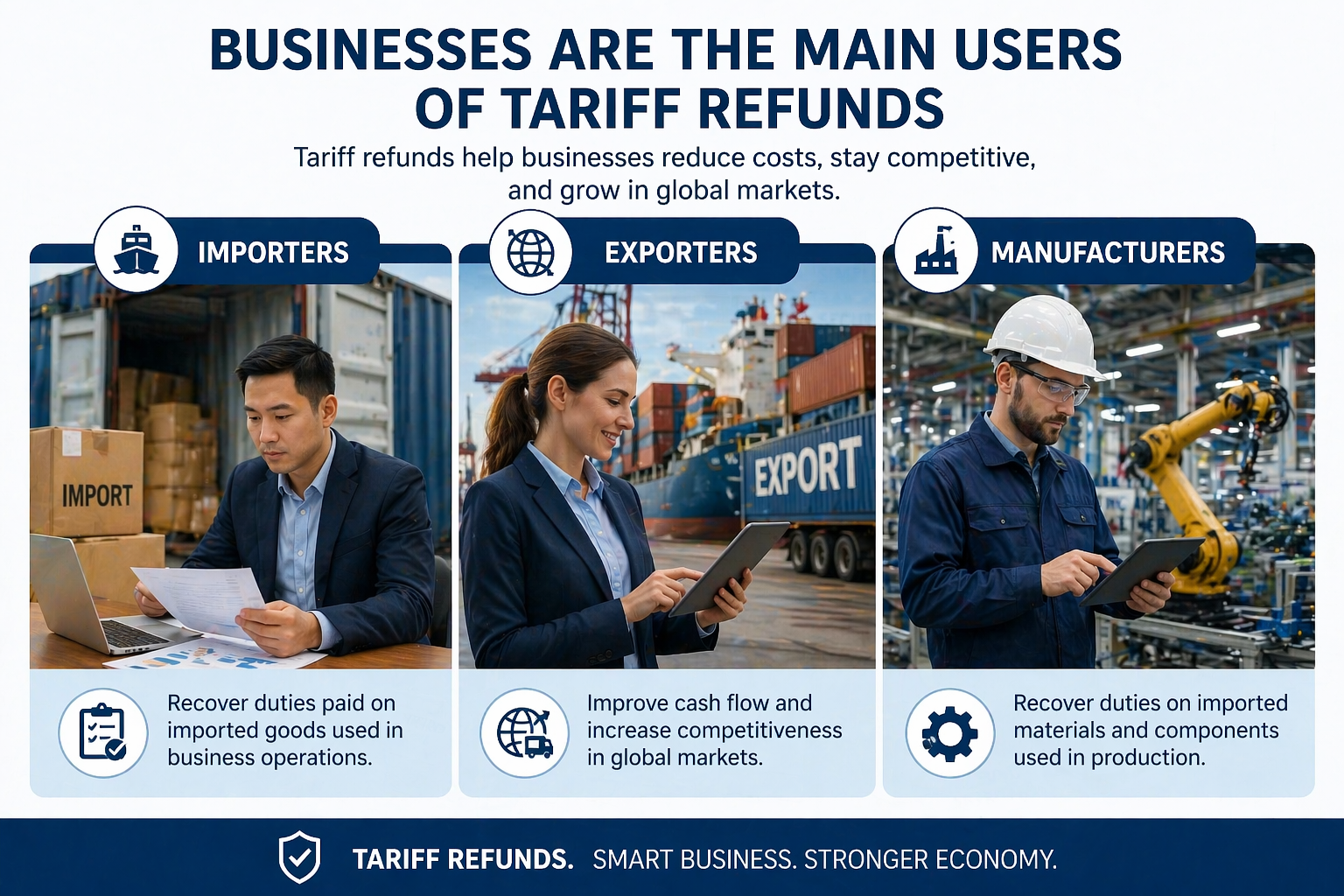
Businesses are the main users of tariff refunds, including:
Importers
Exporters
Manufacturers
These entities can qualify under programs like the duty drawback program U.S., which allows recovery of duties when goods are exported or used in exported products.
Individuals (Limited Cases)
Individuals may qualify only in specific situations:
You directly paid tariffs on imported goods
You were overcharged
You returned or exported the goods
A legal or policy change allows a refund
These cases are less common.
What You Need to Qualify
All applicants must provide:
Proof of duties paid
Import and entry records
Export documentation where applicable
Compliance with deadlines
Without documentation, claims are not approved.
Duty Drawback Program Explained
The most common form of customs duty refund in the United States is the duty drawback program.
Key Features
Allows recovery of up to 99 percent of duties paid
Applies to goods that are exported or destroyed
Requires matching import and export records
This program is a core part of the U.S. tariff refund system.
Tariff Refund Portal and Recent Developments
New systems are improving how refunds are processed.
According to Refund Portal Opens for Tariffs Struck Down by Supreme Court, refund portals now allow businesses to claim back duties tied to tariffs that have been overturned or adjusted.
Federal updates in Electronic Refunds support electronic filing and payment systems, reducing processing time.
Guidance from IEEPA Duty Refunds outlines specific cases where refunds apply due to trade policy changes.
How Long Does a Tariff Refund Take
Processing times vary based on:
Claim complexity
Documentation quality
Volume of applications
Simple claims may be processed faster, while complex cases can take several months or longer.
Why the Tariff Refund System Matters

The tariff refund system has direct financial and policy impact.
For Businesses
Reduces import costs
Improves cash flow
Supports export activity
For Trade Policy
Ensures compliance with legal rulings
Adjusts for policy changes
Maintains fairness in tariff enforcement
These issues are often part of broader trade discussions reflected in election updates in the US, where tariffs and trade policies remain key topics.
Tariff policies often reflect broader economic decisions made at the federal level. Changes in trade rules, enforcement, and refund systems can shift depending on leadership priorities and legislative direction. These shifts are closely tied to ongoing election updates in the US, where economic policy remains a central issue. To see how policy decisions can influence even the design and symbolism of U.S. currency, read Trump’s Signature on Money Confirmed: What It Means for Future U.S. Bills.
Key Insights
The tariff refund system allows recovery of duties under specific conditions
Businesses are the primary users
Duty drawback is the most widely used refund program
Refunds require documentation and formal claims
New digital systems are improving access and processing
References:
U.S. Customs and Border Protection. IEEPA Duty Refunds
Yahoo Finance. Refund Portal Opens for Tariffs Struck Down by Supreme Court
U.S. Customs and Border Protection. Automated Clearing House Refund
Congressional Research Service. Congressional Research Reports
Federal Register. Electronic Refunds

- Five Myths About States Banning ICE From Polling Places - October 12, 2026
- The Secret Ballot Is Newer Than You Think, and It Took a Body Count to Get Here - October 6, 2026
- Why Is Election Day Always a Tuesday in November? - September 4, 2026