
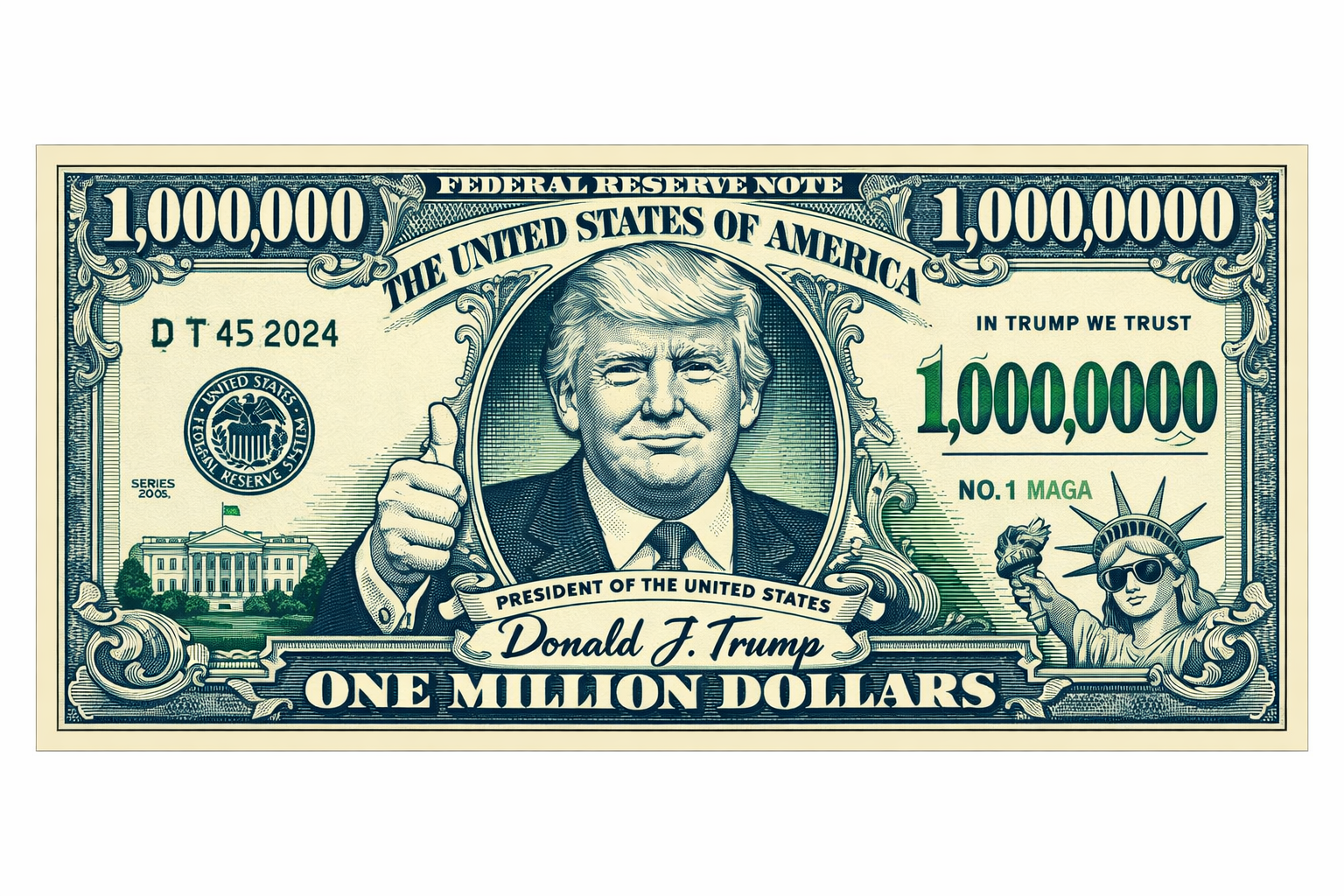
U.S. currency tells the story of American leadership and national identity. On March 26, 2026, the U.S. Treasury Department announced a historic change. President Donald J. Trump’s signature will now appear on future dollar bills along with the Secretary of the Treasury. This is the first time a sitting president’s signature will feature on U.S. currency. The change marks the 250th anniversary of the United States.
The announcement fits into a long history of U.S. currency that stretches from colonial times to today. Below is how paper money developed in America and what the new presidential signature means.
Early Paper Money in the Colonies
Paper currency started in America out of necessity.
In 1690, Massachusetts Bay Colony printed notes to pay for military expeditions.
Other colonies soon created their own notes.
In the 1730s, Benjamin Franklin used nature prints from real leaves to fight counterfeiting.
During the Revolutionary War, the Continental Congress issued Continental Currency in 1775 to fund the fight for independence. The first $2 notes appeared on June 25, 1775 — nine days before the Declaration of Independence. Severe inflation and counterfeiting made many notes nearly worthless, leading to the phrase “not worth a Continental.”
After independence, the nation standardized its money. The dollar sign was adopted in 1785, and the Mint Act of 1792 created the decimal coin system still used today.
The Civil War and Modern U.S. Currency
The biggest changes happened during the Civil War.
In 1861–1862, the government issued Demand Notes — the first federal $10 notes featuring Abraham Lincoln.
These notes were called “greenbacks” because of the green ink on the back.
All U.S. currency printed since 1861 is still legal tender today.
United States Notes (Legal Tender notes) with a red seal replaced Demand Notes and circulated until 1971. The Treasury seal first appeared in 1862. Congress also created key institutions:
Office of the Comptroller of the Currency and National Currency Bureau in 1863
United States Secret Service in 1865 to fight counterfeiting
Centralized Production
In 1869, the Bureau of Engraving and Printing took over engraving and printing U.S. currency. Laws in 1874 and 1877 made it the only official producer.
Today the Bureau of Engraving and Printing produces all paper money under Treasury Department oversight. The paper is 75% cotton and 25% linen. Each note weighs about one gram and can handle roughly 4,000 double folds before tearing.
Portraits and Symbols on Dollar Bills
Current Federal Reserve notes feature these standard designs:
$1: George Washington (front), Great Seal of the United States (back)
$2: Thomas Jefferson (front), Signing of the Declaration of Independence (back)
$5: Abraham Lincoln (front), Lincoln Memorial (back)
$10: Alexander Hamilton (front), U.S. Treasury Building (back)
$20: Andrew Jackson (front), White House (back)
$50: Ulysses S. Grant (front), U.S. Capitol (back)
$100: Benjamin Franklin (front), Independence Hall (back)
Notable facts about symbols on American money:
Martha Washington is the only woman pictured on U.S. currency (on $1 Silver Certificates in 1886, 1891, and 1896).
Four African American Registers of the Treasury and Treasurer Azie Taylor Morton signed earlier notes.
The Great Seal on the $1 bill includes a bald eagle, olive branch, 13 arrows, pyramid, and Eye of Providence.
“In God We Trust” is required by law and first appeared regularly in 1963.
Trump’s Signature on Money Confirmed
Since 1861, dollar bills have carried only the signatures of the Treasury Secretary and the Treasurer.
The Treasury announcement on March 26, 2026 changes this. President Trump’s signature will now appear on new U.S. currency. This is the first time for a sitting president. NBC News reported that the change celebrates the nation’s 250th anniversary.
What This Means for Future U.S. Bills
Follow the latest election updates in the US to see how political leadership shapes everyday institutions like the nation’s money. The recent Treasury announcement that President Trump’s signature will appear on future dollar bills demonstrates how election outcomes directly affect U.S. currency design and decisions at the Bureau of Engraving and Printing. This adds a fresh chapter to the long history of U.S. currency and its symbols on American money.
New notes with the presidential signature will start entering circulation in 2026, likely beginning with the $100 bill. Older dollar bills remain fully valid and will circulate together with the new ones.
For a deeper look at American monetary power, read our guide on What Is the Petrodollar: Understanding the World’s Most Powerful Financial System.
The Treasury Department and Bureau of Engraving and Printing will handle production and distribution through the Federal Reserve. Every note in circulation continues to carry part of America’s political and economic history.
References:
U.S. Department of the Treasury. Treasury Announces President Donald J. Trump’s Signature to Appear on Future U.S. Paper Currency
NBC News. Trump’s Signature to Appear on U.S. Dollar Bills for First Time as Sitting President
U.S. Currency Education Program. History of U.S. Currency
Federal Reserve Bank of Philadelphia. Symbols on American Money
Bureau of Engraving and Printing. Currency FAQs
U.S. Department of the Treasury. Currency and Coins

- Early Voting Just Started for the 2026 Midterms, and the Story Behind It Goes Back Further Than You’d Think - September 18, 2026
- When Elections End in a Dead Heat: The Wild (and Totally Legal) Ways America Breaks a Tie - August 19, 2026
- China vs America AI 2026: The Race That Closed Overnight and the Election Claim That Divides Washington - July 21, 2026