
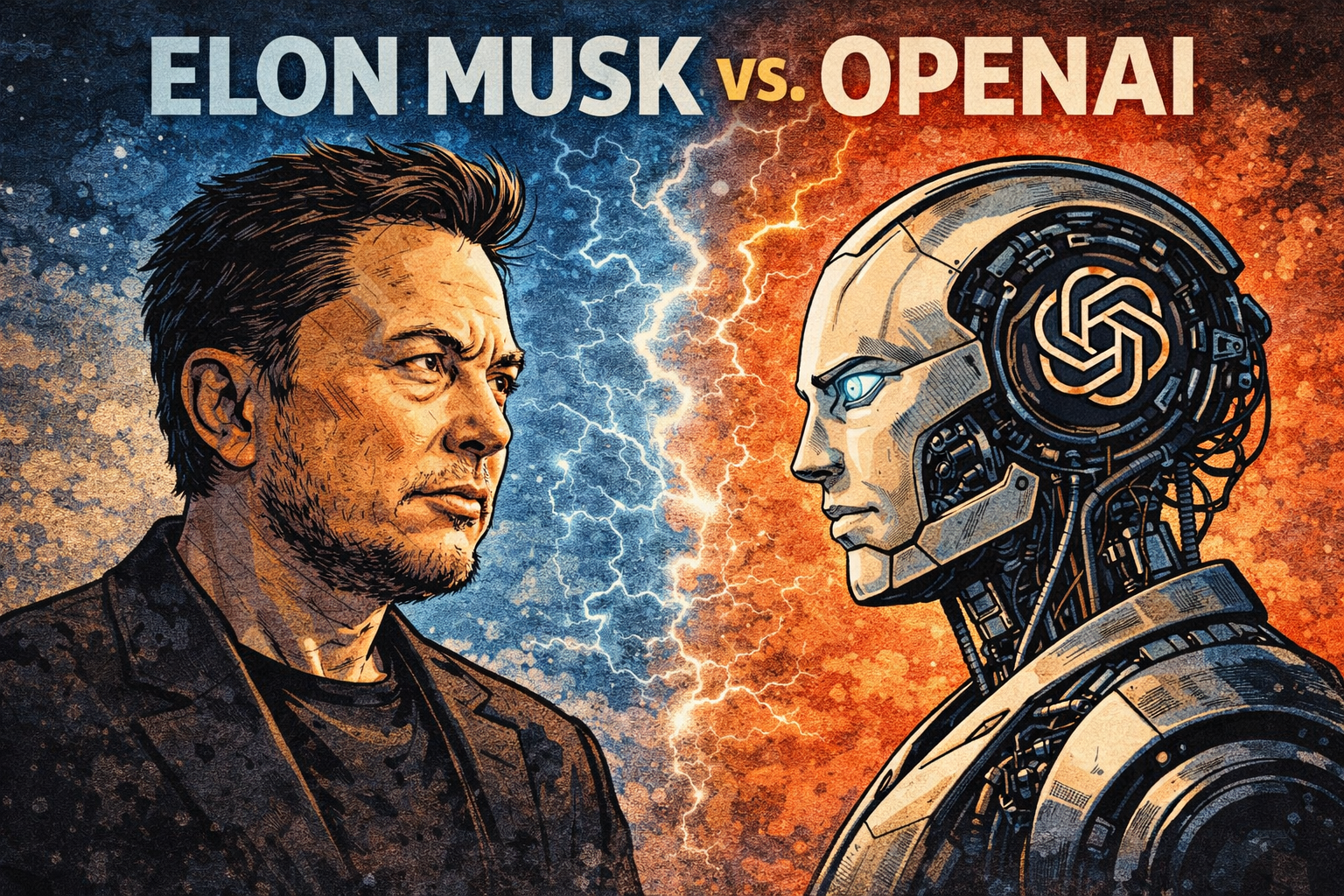
The OpenAI case is a federal lawsuit filed by Elon Musk against OpenAI, CEO Sam Altman, co-founder Greg Brockman, other OpenAI entities, and Microsoft. It centers on allegations that OpenAI violated its founding nonprofit commitments by adopting a hybrid and later restructured model, closing access to advanced technologies, and granting significant advantages to Microsoft through investments and partnerships.
Founding of OpenAI (2015)
OpenAI was incorporated in December 2015 as a nonprofit corporation. Its Certificate of Incorporation stated the purpose was to develop artificial general intelligence (AGI) that benefits humanity, with technology open-sourced where applicable and no private inurement of assets. The mission emphasized public benefit over profit.
Elon Musk co-founded OpenAI with Sam Altman, Greg Brockman, and others. Musk contributed more than $44 million in funding between 2016 and 2020 (including $15 million in 2016, $20 million in 2017, $3.5 million in 2018, and $3.48 million in 2019). He assisted in recruiting talent (such as Ilya Sutskever), provided strategic input, leased office space, and served on the board until resigning in February 2018.
Shift to Hybrid Structure (2019) and Later Changes
In 2019, OpenAI established a hybrid model: a nonprofit parent (OpenAI, Inc.) controlled a for-profit subsidiary structured as a capped-profit entity (limited liability company with profit caps for investors). This allowed capped returns for investors while the nonprofit retained governance control and mission oversight. OpenAI stated this change addressed the need for massive capital to fund compute-intensive AI development.
Discussions about a for-profit component occurred as early as 2017. OpenAI asserts Musk agreed to such a model but negotiations ended when he demanded majority equity, absolute control, additional board seats, non-quit and non-solicit agreements, and proposed merging OpenAI into Tesla. OpenAI rejected these terms.
In October 2025, OpenAI further evolved the structure to a public benefit corporation (PBC) under nonprofit control (now OpenAI Foundation), with the Foundation holding equity (reported around 26% in some accounts) and appointing the board to ensure mission alignment while enabling conventional capital raising.
The Lawsuit (Filed 2024)
Musk filed the complaint in the U.S. District Court for the Northern District of California (Case No. 4:24-cv-04722, Musk v. Altman et al.). The claims include:
Breach of contract: OpenAI violated founding agreements by shifting away from nonprofit principles, closing source models (e.g., GPT series), and granting exclusive licensing to Microsoft.
Promissory estoppel: Musk relied on nonprofit promises when providing funds and support.
Breach of fiduciary duty: Actions prioritized profit and private gain over humanity.
Unfair competition under California law.
Demand for accounting of funds, IP use, and personal benefits.
Specific points from the complaint:
GPT-4 (released 2023) was alleged to approach AGI levels (e.g., 90th percentile on Uniform Bar Exam, 99th on GRE Verbal, 77% on Advanced Sommelier exam).
Models remained closed-source and licensed exclusively to Microsoft, contrary to open-source commitments.
Musk seeks specific performance (open-sourcing technology), injunctive relief, restitution, disgorgement of alleged wrongful gains, compensatory and punitive damages (estimated $79-134 billion based on gains from early contributions), and other remedies. He stated winnings would go to charity.
Microsoft is named as a defendant for allegedly aiding breaches through investments and exclusive arrangements.
Full complaint: Musk v. Altman OpenAI Complaint (PDF) Case docket: USCOURTS-cand-4_24-cv-04722
OpenAI’s Defense
OpenAI denies the claims, describing the suit as baseless harassment (Musk’s fourth version of similar allegations). It states Musk endorsed a for-profit path in 2017 for sustainability but left after his control demands were rejected.
Official response: The Truth Elon Left Out
Analysis of the public-benefit to profit shift: Musk v Altman OpenAI Lawsuit: From Public Benefit to Profit
Microsoft OpenAI Partnership
Microsoft began investing in 2019 (initial $1 billion), with cumulative commitments reaching around $13 billion by later years. It provides Azure infrastructure for training and deployment, integrates OpenAI models into products (e.g., Copilot), and holds economic interests (previously significant, though diluted by subsequent funding rounds like a $110 billion round in February 2026 involving other investors such as Amazon, Nvidia, and SoftBank).
The partnership grants Microsoft exclusive cloud provider status and revenue-sharing elements, but OpenAI and Microsoft confirmed in 2026 that core terms remain unchanged despite new capital inflows.
Key Players
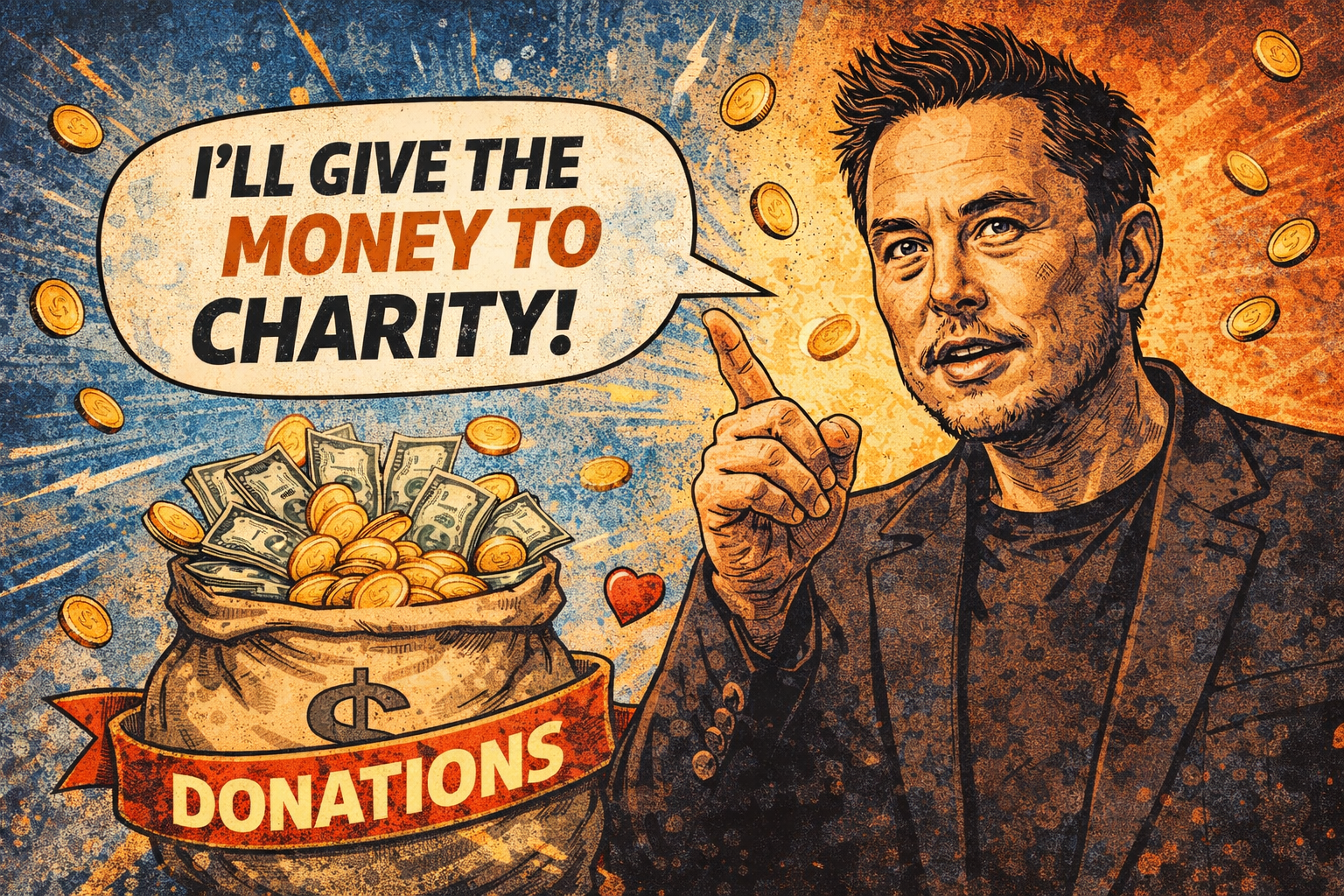
Elon Musk: Plaintiff, co-founder, board member until 2018; leads xAI.
Sam Altman: CEO and defendant; oversees strategy and restructuring.
Greg Brockman: Co-founder and defendant.
OpenAI: Hybrid entity evolving to PBC under nonprofit control.
Microsoft: Investor, infrastructure partner, and co-defendant.
Court: U.S. District Court, Northern District of California; Judge Yvonne Gonzalez Rogers.
Legal Developments and Current Status
In early 2026, the judge denied dismissal motions from OpenAI and Microsoft, finding sufficient evidence (including circumstantial) for fraud and breach claims to proceed to jury trial.
Pretrial hearings (e.g., March 13, 2026) addressed evidentiary motions and damages theories; the judge expressed skepticism on some high damages figures but allowed advancement.
Trial schedule:
Jury selection: April 27, 2026
Trial start: April 28, 2026
Expected duration: Up to four weeks (through late May 2026), in Oakland, California.
A separate xAI trade-secrets suit against OpenAI was dismissed without prejudice in February 2026 (amendable until mid-March 2026).
Related motions include efforts to exclude certain evidence (e.g., WilmerHale investigation into 2023 board events) and accusations of evidence spoliation.
Broader Categories and Implications
Governance Evolution OpenAI transitioned from pure nonprofit (2015) to capped-profit hybrid (2019) to PBC under nonprofit control (2025). This reflects adaptation to funding needs for AGI-scale compute while maintaining mission oversight via nonprofit equity and board authority.
Nonprofit vs For-Profit Tension The OpenAI lawsuit examines enforcement of founding nonprofit charters in tech requiring exponential capital. It questions whether initial promises bind indefinitely or allow evolution for sustainability.
Partnership and Influence The Microsoft OpenAI partnership highlights how deep investments and exclusive deals affect independence in AI development. The suit probes whether such arrangements compromise governance.
Fiduciary and Contract Law in AI Claims test application of breach of fiduciary duty, promissory estoppel, and unfair competition to hybrid entities balancing mission and commerce.
Damages and Remedies Musk’s figures ($79-134 billion) derive from alleged wrongful gains tied to early contributions and model value. The court evaluates methodologies without excluding expert testimony.
Competition in AI Landscape The dispute occurs amid rival efforts (e.g., xAI) and industry shifts toward scaled funding. Outcomes could influence how AI organizations structure for capital, talent, and accountability.
Policy and Regulation Relevance The OpenAI governance dispute contributes to discussions on AI governance, oversight of private innovation, and frameworks for transformative technologies. It underscores tensions between rapid advancement and safeguards, with potential ties to broader debates including national security first: why the U.S. restricts Nvidia’s AI chips to China and emerging election updates in the U.S. on tech policy.
This article compiles verified facts from court filings, official statements, and established reports. It avoids speculation on trial outcomes. The case remains active and unresolved as of March 2026.
References:
GovInfo. Musk v. Altman et al. Case Filing (US District Court).
CourtHouse News. Musk v. Altman OpenAI Complaint (Full PDF Filing).
Financial Times. Elon Musk’s Legal Battle With OpenAI Explained.
FinTech Weekly. Elon Musk OpenAI Lawsuit Heads Toward Trial in 2026.
LinkedIn. Musk v Altman OpenAI Lawsuit: From Public Benefit to Profit.
OpenAI. The Truth Elon Left Out.

- A Supreme Court Case You Probably Missed Could Open the Door to a Lot More Election Lawsuits - October 9, 2026
- Dark Money Is Pouring Into the 2026 Midterms. Here Are Five Myths About How It Actually Works - September 21, 2026
- The Supreme Court Just Blocked Trump’s Mail Ballot Restrictions. Here’s What That Means - September 17, 2026