
Why the U.S. Holds Elections All Year Round
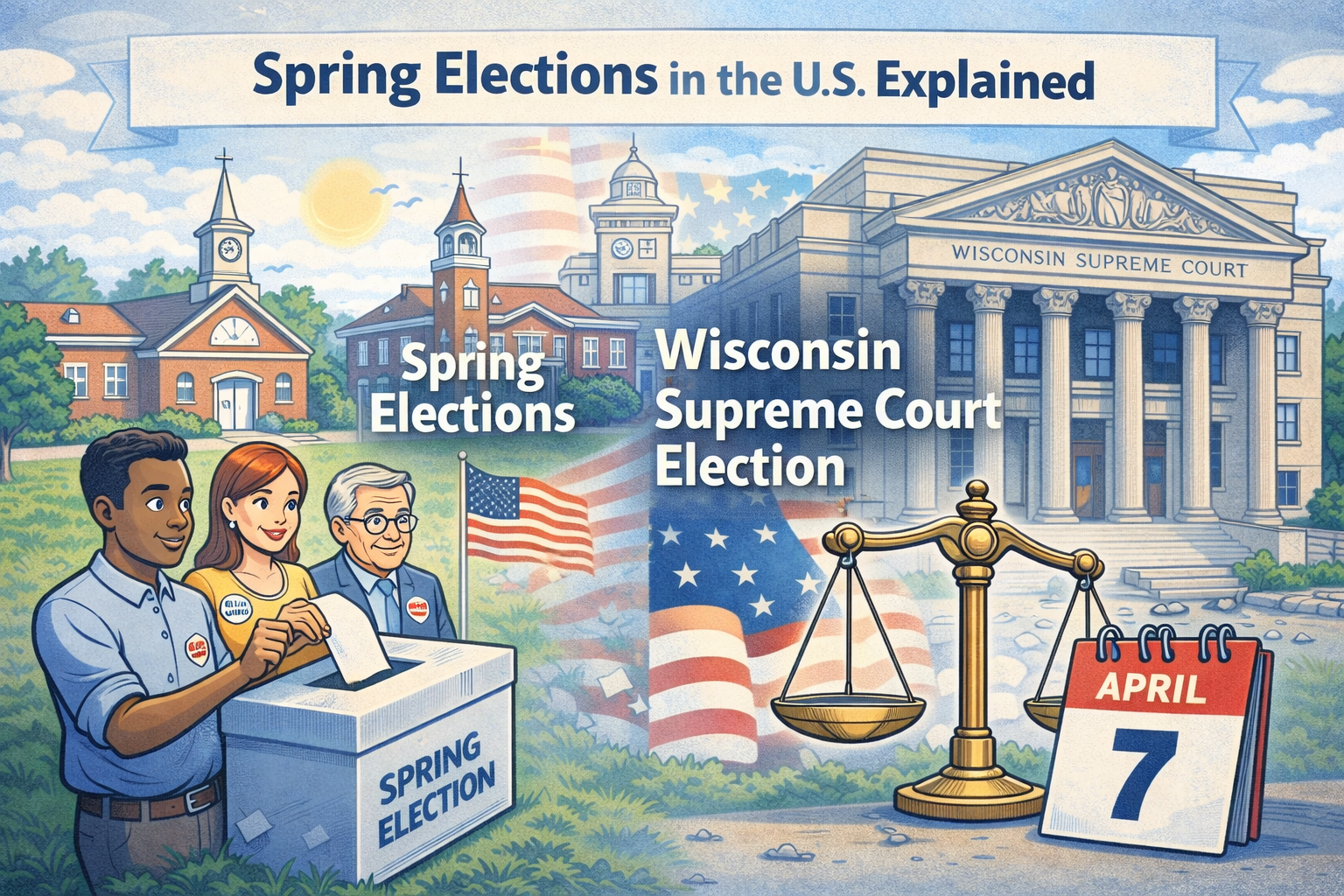
Most people picture Election Day as the big November vote for president or Congress. American elections actually spread throughout the year. States and cities run their own contests for jobs that affect daily life. Spring elections in the U.S. fit this pattern. They usually take place between February and April and keep the focus on local and state matters instead of national politics.
This spread-out calendar comes from America’s federalist system. The Constitution sets rules for federal races but leaves most other elections to the states. The result is a flexible schedule that lets communities handle their own affairs. It works well for local needs, though it can mean some important races get less attention.
Wisconsin’s Standout Spring Election Tradition
Wisconsin does spring elections like no other state. Every year on the first Tuesday in April, voters across the state head to the polls. In 2026, that date was April 7. The tradition dates back to statehood in 1848 and is written into the Wisconsin Constitution.
The simple goal: keep judges and school leaders away from the loud partisan fights of fall elections. State law requires separation so judicial races do not overlap with November partisan votes. This setup aims to protect the courts and let people focus on community issues without national drama. In recent years, big money and outside groups have still found their way in.
On April 7, 2026, every Wisconsin voter saw the same top contest: the Wisconsin Supreme Court election. Two Court of Appeals judges ran for a ten-year term to replace retiring conservative Justice Rebecca Bradley. Maria Lazar, backed by conservative groups, faced Chris Taylor, supported by liberal organizations and the Democratic Party of Wisconsin. A Taylor win would expand the current 4-3 liberal majority to 5-2 and lock it in through at least 2030. A Lazar win would keep the balance unchanged.
What Else Showed Up on the Spring Ballot
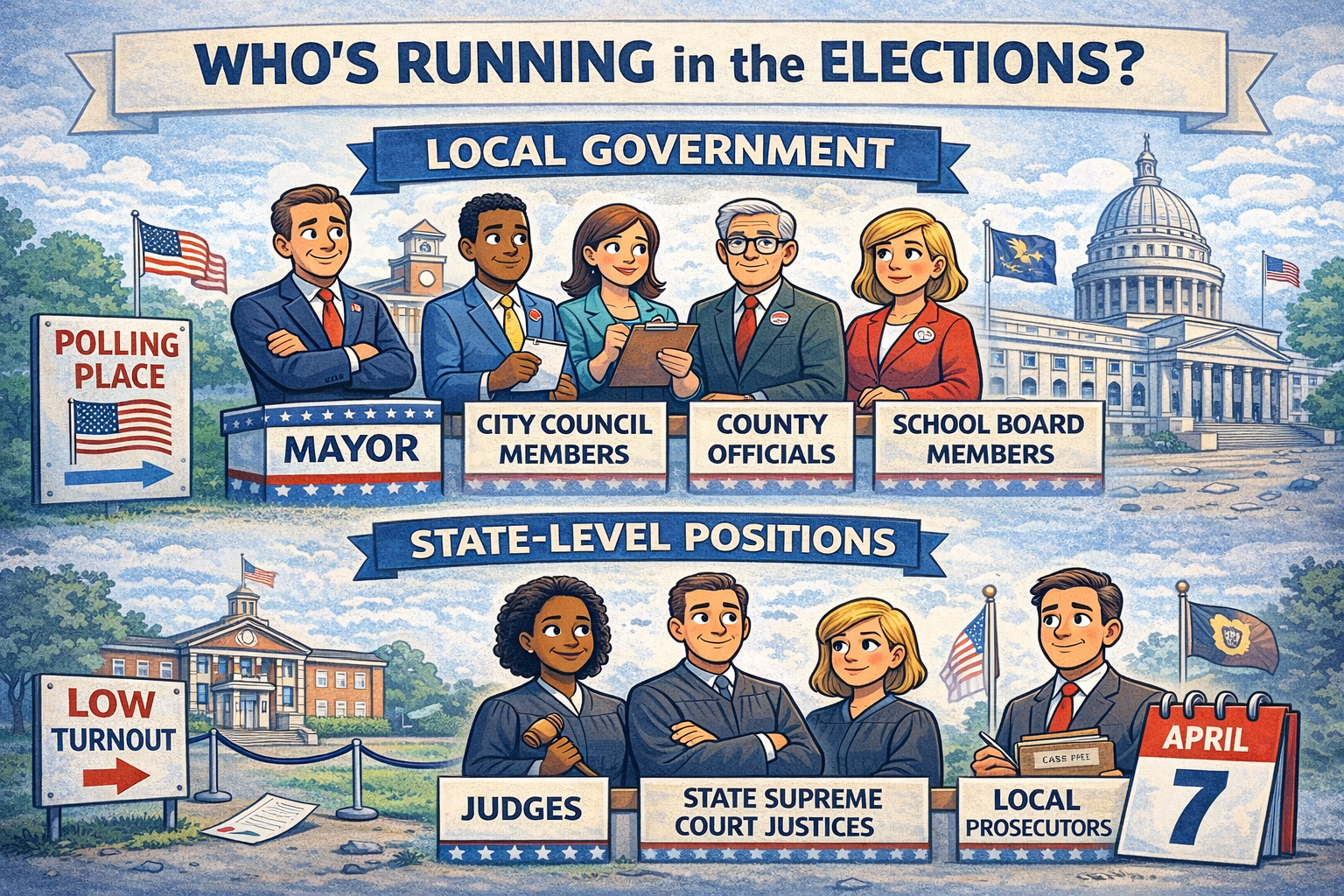
The Wisconsin Supreme Court election often grabbed headlines, but it was only one piece. Ballots also packed in many local races that changed depending on where you lived. These were the decisions that hit closest to home.
Here is what often appeared:
School board members who control budgets, curricula, and classroom rules
Mayors and city council members who manage taxes, zoning, and public safety
County board supervisors who oversee roads, health programs, and local services
Lower court judges for circuit and appeals courts
Referendums on school funding or community projects
In 2026, for example, the city of Waukesha held an open mayoral race. Other areas picked town board members or voted on bonds for local improvements. A ballot in Milwaukee looked very different from one in a small rural county. This mix showed federalism in action: one statewide race united everyone, while local races let neighborhoods set their own priorities.
Spring Elections Versus the Big November Contests
Spring elections feel different from the loud November votes. Fall ballots bring partisan battles for president, Senate, and House seats with heavy media coverage and high turnout. Spring races are usually labeled nonpartisan and focus on jobs seen as more day-to-day.
Quick side-by-side look:
Timing — Spring: early April. November: first Tuesday after the first Monday in November.
Focus — Spring: judges, schools, cities. November: president, Congress, partisan offices.
Turnout — Spring: often half or less of November levels because fewer people tune in.
Style — Spring: quieter and community-focused. November: high-energy national campaigns.
The separation gives voters breathing room to think about local needs without presidential noise. But lower turnout means each vote carries extra weight. A small, motivated group can shape school policy or court direction for years.
Pre-election polls showed Chris Taylor leading among likely voters, with a significant fundraising and advertising advantage. However, lower-turnout spring races can shift once all absentee and provisional ballots are counted. The winner will serve a full ten-year term starting later in 2026.
Local races (school boards, mayors, county boards) are also rolling in gradually by municipality. Other April 7 contests around the country, including a special runoff in Georgia’s 14th Congressional District, follow similar timelines for final counts.
For the most current numbers:
Check your county clerk’s site or the MyVote Wisconsin portal for Wisconsin races.
Visit Ballotpedia’s 2026 Wisconsin elections page for ongoing updates.
National overviews appear on sites like AP News or local outlets such as PBS Wisconsin.
The Turnout Challenge — And Why It Creates Opportunity
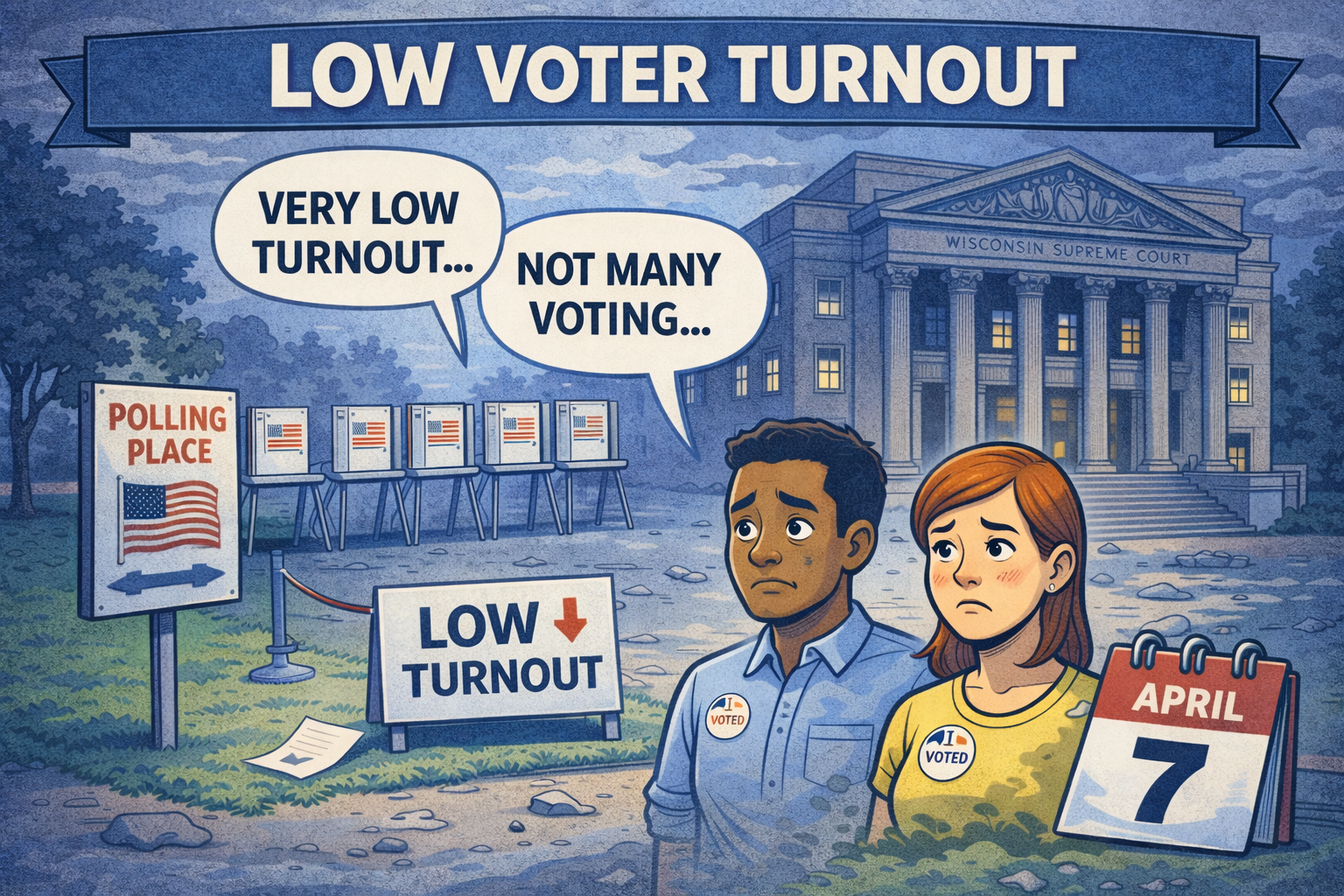
One common issue with spring elections is low voter participation. Without flashy national candidates, many people sit them out. Less media coverage and busy spring schedules do not help. Yet the stakes stay high exactly because fewer votes are cast.
Civic groups work hard to boost turnout. They remind everyone that these contests set the ground rules for November elections. Who sits on the court can decide future map-drawing or ballot access. Who joins the school board can influence education for years. Skipping spring hands more power to whoever does show up.
If you live in Wisconsin, the easiest way to check your personalized ballot, polling place, and registration is at the official MyVote Wisconsin portal. Same-day registration is available in many places, and early or absentee options exist. A few minutes of your time can make a real difference.
Spring Elections in the Wider U.S. Picture
Wisconsin offers the clearest example of spring elections in the U.S., but other states hold their own off-cycle local votes. Some schedule school board or municipal races in spring or odd years. Special elections for congressional vacancies or state referendums can also pop up in April.
This variety is a strength of American federalism. It lets states and cities customize their election calendars. At the same time, national money and hot-button issues often spill over, especially into judicial races. The 2026 Wisconsin contest followed expensive recent supreme court battles and gave early signals ahead of the November 3, 2026 midterms that will decide control of Congress and many state offices.
Simple Steps to Get Involved and Stay Informed
Living in or near Wisconsin? Mark your calendar for future April dates. Visit MyVote Wisconsin to see exactly what is on your ballot. Talk with neighbors about school or city issues that matter to you. Even if you cannot vote in every race, learning the system helps you participate when the moment arrives.
For everyone else, following Wisconsin provides a useful window. A court decision made in Madison can eventually affect voting rules that influence Congress or the Electoral College. Local leaders nationwide quietly keep communities running smoothly.
Why Spring Elections Strengthen American Democracy
Spring elections in the U.S. prove that governance is not only about Washington or flashy national headlines. It happens in school board meetings, city halls, and state courtrooms every single day. These contests decide who controls budgets, who interprets laws, and who sets policies that affect your family, your wallet, and your neighborhood.
In Wisconsin, the Wisconsin Supreme Court election on April 7 carried special importance in a swing state. Its outcome helps write the rules for future votes and shapes the balance on issues that touch millions. Local races add the personal layer: better schools, safer streets, and fairer taxes.
Lower turnout creates both a challenge and a chance. When fewer people vote, each ballot carries more power. Citizens who show up and stay informed help ensure decisions reflect the whole community, not just the most organized voices.
At heart, American democracy depends on this steady, layered work. Spring elections keep the system rooted in local accountability while connecting to the larger constitutional framework. They test whether people care enough to vote when the cameras are off.
Understanding these elections equips you to engage at every level. Next time April comes around, remember: those quieter spring ballots help set the stage for the louder November ones. Your voice in both keeps the entire American experiment in self-government responsive and alive.
References:
Ballotpedia. Wisconsin elections, 2026
Ballotpedia. Wisconsin Supreme Court elections, 2026
Wisconsin Courts. Spring Election 2026: Judicial offices on the ballot
MyVote Wisconsin. Official voter portal
PBS Wisconsin. Wisconsin’s 2026 Supreme Court candidates get out the vote
AP News. April 7, 2026 Election Results: Georgia and Wisconsin
Wikipedia. 2026 Wisconsin Supreme Court election

- A Supreme Court Case You Probably Missed Could Open the Door to a Lot More Election Lawsuits - October 9, 2026
- Dark Money Is Pouring Into the 2026 Midterms. Here Are Five Myths About How It Actually Works - September 21, 2026
- The Supreme Court Just Blocked Trump’s Mail Ballot Restrictions. Here’s What That Means - September 17, 2026