

While America and Europe wage wars of politics, China continues its rise. Quietly, confidently, and without a single missile fired.In a world distracted by elections, sanctions, and ideology, Beijing’s strategy unfolds not on battlefields but in boardrooms, classrooms, and city skylines.
In Part 1, we saw how Western paralysis and constant political infighting created a vacuum that China eagerly filled through trade and technology.
Now, in Part 2, we explore the second front of that expansion: soft power, diplomacy, and patience, the tools of a modern empire that conquers not by force, but by influence.
From the classrooms of Confucius Institutes to the viral reach of TikTok, China’s message is simple yet potent: partnership without politics, progress without lectures. Across Africa, Southeast Asia, and Latin America, that message is being heard.
Meanwhile, in Washington, Brussels, and London, leaders remain consumed by internal debates over budgets, migration, and ideology, wars of words that weaken the West’s global presence.
This is the quiet century of construction, not destruction.
Where others see confrontation, China sees opportunity.
It doesn’t invade; it invests.
It doesn’t divide; it develops.
And while democracies argue over who should lead, Beijing simply leads.
Section 6: The Soft Power Shift: Culture, Media, and the Global South

China’s global influence now extends far beyond trade. Its government uses education, technology, and media to build long-term relationships across the world.
Key strategies include:
Creating over 140 Confucius Institutes to promote the Chinese language and culture while strengthening political goodwill, as noted by the Harvard Kennedy School.
Providing infrastructure-based aid such as roads, bridges, and hospitals to countries in Africa, Asia, and Latin America. The U.S. Department of State cautions that these projects can lead to economic dependence.
Expanding the Digital Silk Road, which links nations through Chinese-built networks, data centers, and smart-city systems.
Using Chinese media and tech platforms such as CGTN, Xinhua, and TikTok to reach international audiences and shape global narratives.
For developing nations, China offers a partnership without interference. For the West, this represents a loss of narrative control and cultural influence.
Section 7: Western Polarization: The Self-Inflicted Weakness
While China executes a unified strategy, Western countries remain divided.
Current challenges:
In the United States, partisan conflict and legislative delays hinder defense and technology policy.
In Europe, disagreements over migration, defense, and energy weaken the European Union’s unity.
The Center for European Policy Analysis (CEPA) warns that both regions risk losing their technological edge without stronger coordination on cybersecurity and artificial intelligence.
China benefits from this imbalance. Democracies rely on debate and consensus, which often slow action. Authoritarian governments can act quickly and maintain consistency. When Western leaders finish negotiating, China has already completed the project or signed the deal.
Section 8: The Future :The Empire of Patience
China’s success comes from long-term planning and policy consistency. Its leadership prioritizes stability rather than short-term popularity.
Examples of this patience include:
Sustained investment in artificial intelligence, green energy, and advanced manufacturing, regardless of market conditions.
Global leadership in solar panels, electric vehicles, and battery production, which gives China leverage in future energy transitions.
Long-term diplomatic ties that create economic and logistical dependence on Chinese financing.
The Mercator Institute for China Studies (MERICS) explains that China’s state-directed innovation model provides a stable framework for national goals. Western economies, in contrast, often change direction with each election. This difference makes China’s progress steady and predictable.
Section 9: The Crossroads: Can the West Catch Up?
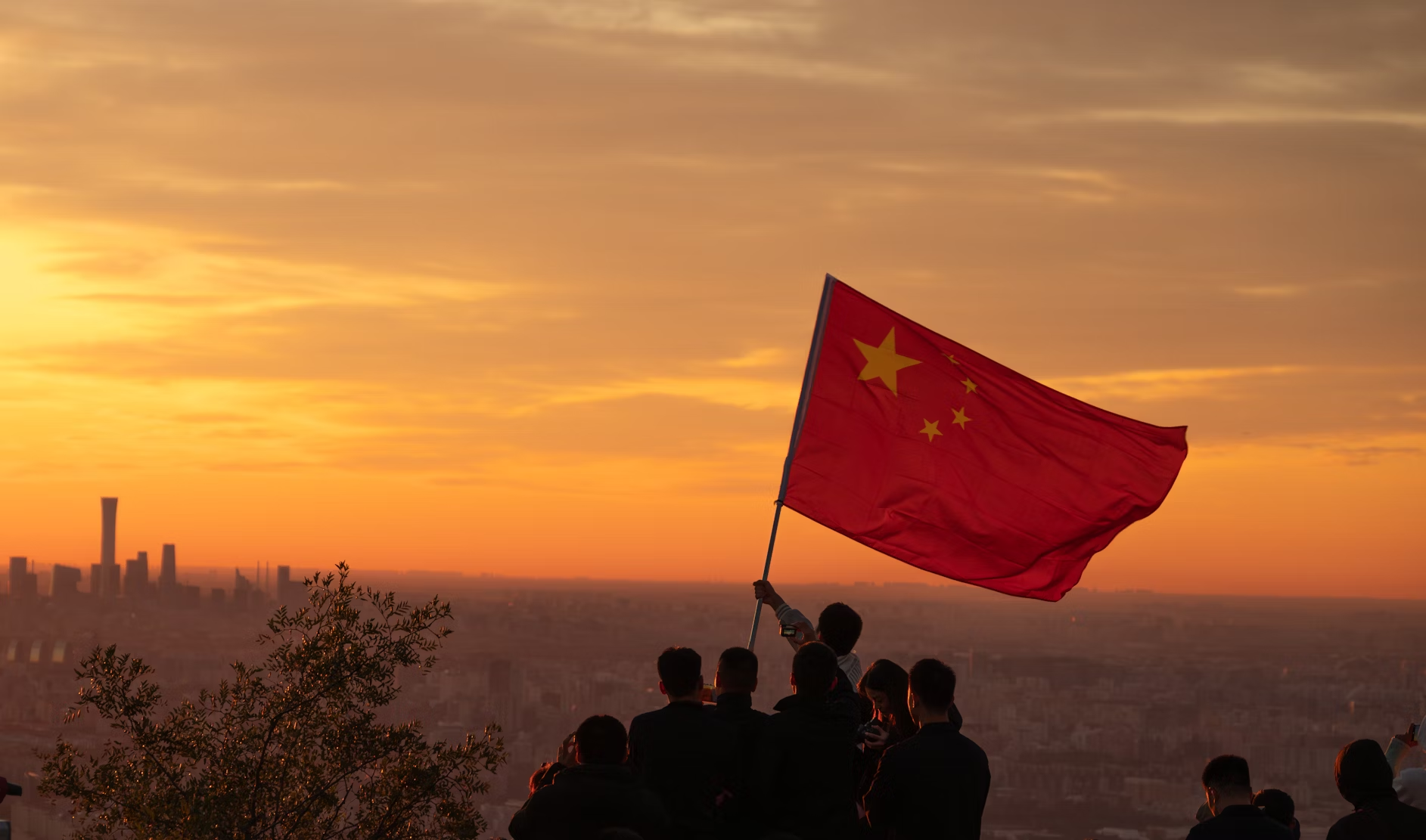
China’s rise exposes weaknesses within Western democracies but does not make recovery impossible. The United States and Europe can still lead if they focus on stability, innovation, and cooperation.
Steps the West must take:
Invest in innovation. Direct resources toward science, technology, and education rather than short-term political goals.
Strengthen alliances. Broaden cooperation across NATO, AUKUS, and the EU to protect economic and technological interests.
Rebuild public trust. Demonstrate that democracy can provide stability, fairness, and progress.
The Brookings Institution notes that success in this new era will depend on integrating diplomacy, technology, and trade rather than relying on military dominance alone.
China has shown that global power today is earned through consistency and results. The West can remain competitive only if it replaces political conflict with coordinated strategy.
References
Harvard Kennedy School. China’s Soft Power Strategy and Global Ambitions
U.S. Department of State. China’s Belt and Road Initiative and Its Global Impact
Center for European Policy Analysis (CEPA). Tech 2030: A Roadmap for Europe-U.S. Tech Cooperation
Brookings Institution. The Future of Global Trade in the Age of China’s Rise

- Early Voting Just Started for the 2026 Midterms, and the Story Behind It Goes Back Further Than You’d Think - September 18, 2026
- When Elections End in a Dead Heat: The Wild (and Totally Legal) Ways America Breaks a Tie - August 19, 2026
- China vs America AI 2026: The Race That Closed Overnight and the Election Claim That Divides Washington - July 21, 2026